ADS NOT DISPLAYED TO REGISTERED USERS.
+ Reply to Thread
Page 1 of 7 1 2 3 4 5 6 7 LastLast
Results 1 to 15 of 92

Captured Aircrafts: EEUU
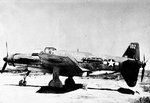
Aircraft Pictures Discuss Captured Aircrafts: EEUU in the World War II - Aviation forums; Messerschmitt Me-262 Schwalbe After the end of the war, the Me 262 and other advanced German technologies were quickly swept ...

  1. #1
    Senior Member gekho's Avatar
    Join Date
    Jan 2010
    Location
    Spain
    Posts
    2,815
    Country
    Spain

    Captured Aircrafts: EEUU

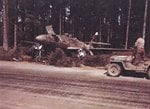
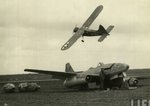
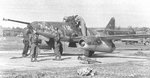
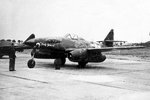
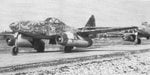
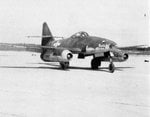
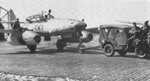
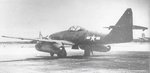
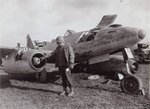
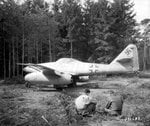
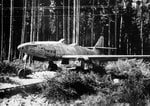
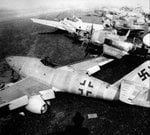
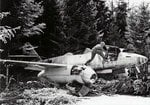
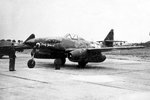
    Messerschmitt Me-262 Schwalbe

    After the end of the war, the Me 262 and other advanced German technologies were quickly swept up by the Americans (as part of the USAAF's Operation Lusty), British, and Soviets. Many Me 262s were found in readily-repairable condition and were confiscated. Both the Soviets and Americans desired the technology to serve as a basis for their own jet fighters. During testing, the Me 262 was found to have advantages over the early models of the Gloster Meteor. It was faster, had better cockpit visibility to the sides and rear (mostly due to the canopy frame and the discoloration caused by the plastics used in the Meteor's construction), and was a superior gun platform, as the early Meteors had a tendency to snake at high speed and exhibited "weak" aileron response.The Me 262 did have a shorter combat range than the Meteor.

    The USAAF compared the P-80 Shooting Star and Me 262 concluding, "Despite a difference in gross weight of nearly 2,000 lb (900 kg), the Me 262 was superior to the P-80 in acceleration, speed and approximately the same in climb performance. The Me 262 apparently has a higher critical Mach number, from a drag standpoint, than any current Army Air Force fighter." The Army Air Force also tested an example of the Me 262A-1a/U3 (US flight evaluation serial FE-4012), an unarmed photo reconnaissance version, which was fitted with a fighter nose and given an overall smooth finish. It was used for performance comparisons against the P-80. During testing between May and August 1946, the aircraft completed eight flights, lasting four hours and 40 minutes. Testing was discontinued after four engine changes were required during the course of the tests, culminating in two single-engine landings. These aircraft were extensively studied, aiding development of early U.S. and Soviet jet fighters. The F-86, designed by engineer Edgar Schmued, used a slat design based on the Me 262's.

    Attached Thumbnails Attached Thumbnails Captured Aircrafts: EEUU-me-262.jpg   Captured Aircrafts: EEUU-s.jpg  

    Captured Aircrafts: EEUU-messerschmitt-me-262-eeuu-002.jpg   Captured Aircrafts: EEUU-messerschmitt-me-262-eeuu-003.jpg  

    Captured Aircrafts: EEUU-messerschmitt-me-262-eeuu-004.jpg   Captured Aircrafts: EEUU-messerschmitt-me-262-eeuu-005.jpg  

    Captured Aircrafts: EEUU-messerschmitt-me-262-eeuu-006.jpg   Captured Aircrafts: EEUU-messerschmitt-me-262-eeuu-007.jpg  

    Captured Aircrafts: EEUU-me262.jpg   Captured Aircrafts: EEUU-me262-002.jpg  

    Captured Aircrafts: EEUU-messerschmitt-me-262-eeuu-0015.jpg   Captured Aircrafts: EEUU-messerschmitt-me-262-eeuu-0016.jpg  

    Captured Aircrafts: EEUU-messerschmitt-me-262-eeuu-0017.jpg   Captured Aircrafts: EEUU-messerschmitt-me-262-eeuu-0018.jpg  

    Last edited by gekho; 03-17-2013 at 05:53 PM.

  2. #2
    Senior Member gekho's Avatar
    Join Date
    Jan 2010
    Location
    Spain
    Posts
    2,815
    Country
    Spain

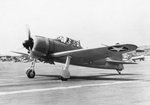
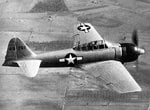
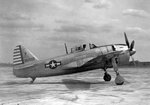
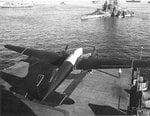
    Mitsubishi A6M Zero (Zeke)

    It has long been believed that the first example of Japan’s vaunted Mitsubishi A6M2 Type Zero carrier fighter to be captured by the Allies in World War II was the one salvaged the United States Navy from an Aleutian island in July of 1942. However, interviews with surviving witnesses and the discovery of pertinent documents in the national and military archives of the United States, Japan, and the Peoples Republic of China have confirmed that the recovery of the very first intact Zero fighter occurred prior to the Japanese attack on Pearl Harbor! The following account traces the events leading to the acquisition of the first Japanese Zero by the Chinese government on 26 November 1941 and its subsequent history.

    For more information: Untitled Document Akutan Zero - Wikipedia, the free encyclopedia
    Attached Thumbnails Attached Thumbnails Captured Aircrafts: EEUU-akutan_zero_in_san_diego.jpg   Captured Aircrafts: EEUU-akutan_zero_shipped.jpg  

    Captured Aircrafts: EEUU-captured-a6m.jpg   Captured Aircrafts: EEUU-mitsubishi-a6m2-zero-estados-unidos-.jpg  

    Last edited by gekho; 03-05-2012 at 04:34 PM.

  3. #3
    Junior Member
    Join Date
    May 2011
    Posts
    1
    Country
    Taiwan
    I think I read somewhere that the local Chinese population stripped the tires to make shoe soles, and they had to hunt around for the closest approximate fit to get the aircraft flying again.

  4. #4
    Senior Member gekho's Avatar
    Join Date
    Jan 2010
    Location
    Spain
    Posts
    2,815
    Country
    Spain

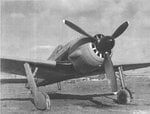
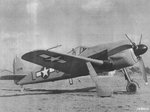
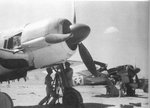
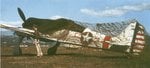
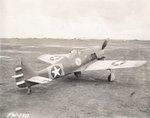
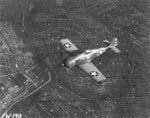
    Focke Wulf Fw-190

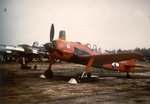
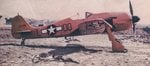
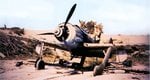
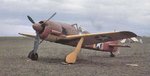
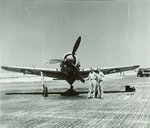
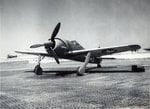
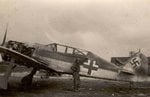
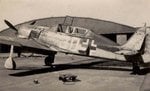
    January 1, 1945 base 404 Fighter Group 508 Squadron at St. Trond airfield was attacked in Operation Bodenplatte to destroy allied aircraft on the ground. Fw-190A-8 Corporal Walter Wagner out of 5 Squadron in Group II of the 4th Fighter Aviation Regiment (Gefreiter Walter Wagner, 5. II/JG4) was slightly damaged by Allied antiaircraft fire and was forced to land at the airport of Saint-Trond. In fact, Wagner made a mistake in choosing targets and attacked Saint-Trond, thinking that it LeCulot. Wagner Group suffered heavy losses on this day - 17 pilots were killed, disappeared or were injured, six were captured. The aircraft was rebuilt and Wagner, to distinguish it from the German machine was completely painted in bright red-orange color. Also suffered a false code of 01/01/45 (date of capture) and an indication of OO (star) L. The new colors of the aircraft did not fly and was left at the airport of Saint Trond after the departure of 404 Fighter Group. The 404th's CO Colonel Leo Moon wrote re this machine;

    " the aircraft was painted red by a crew who had overheard me saying that I had always wanted to own a red airplane ..the OO*L code was placed on it because we had created an 'imaginary' fourth Squadron in the Group, and as in the 508th, we used the first initial of the pilot's name as the last of the three code letters. Since I agreed that we should try and get the 190 into flying condition everyone considered it my aircraft and added the 'L' accordingly..when it was ready I taxied it at all speeds up to near takeoff speed but we had no clearance to fly it from the Anti-Aircraft. After taxiing in I found the tires soaked in hydraulic fluid and they were so deteriorated I felt that they were unsafe..we spent considerable time looking for new tires without success. Then we had to move on and left the Fw 190 at St. Trond. I regret that I wasn't able to get that 190 in the air - I had even learnt the 'offs' and 'ons' of the switch labels in German but I don't feel too bad about not flying it. I did get to fly the Bearcat which I believe was more or less a copy of the 190 -although no-one ever admits it..."
    Attached Thumbnails Attached Thumbnails Captured Aircrafts: EEUU-focke-wulf-fw190.jpg   Captured Aircrafts: EEUU-american-fw-190.jpg  

    Captured Aircrafts: EEUU-moon5.jpg   Captured Aircrafts: EEUU-anotherone.jpg  

    Captured Aircrafts: EEUU-focke-wulf-fw-190-0027.jpg   Captured Aircrafts: EEUU-focke-wulf-fw-190-0026.jpg  

    Captured Aircrafts: EEUU-focke-wulf-fw-190-0028.jpg  
    Last edited by gekho; 03-17-2013 at 05:55 PM.

  5. #5
    Senior Member gekho's Avatar
    Join Date
    Jan 2010
    Location
    Spain
    Posts
    2,815
    Country
    Spain

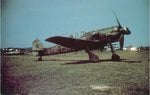
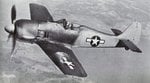
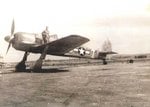
    Focke Wulf Fw-190 Part II

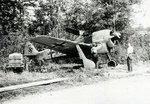
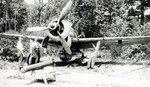
    Picture 1.- Fw-190 F9 captured by the USAAF at Herzogenurach (1945)
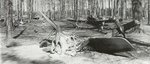
    Picture 2.- Fw-190s destroyed by retreating German forces at Leina Forest (1945)
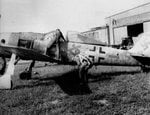
    Picture 3.- Fw-190 A8 White-40 abandoned in Lechfeld, June-1945
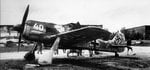
    Picture 4.- Fw 190 at U.S. base in Europe. This may be the A-4 evaluated by the USAAF.
    Attached Thumbnails Attached Thumbnails Captured Aircrafts: EEUU-1-fw-190a8-white-40-abandoned-lechfeld-june-1945-03.jpg   Captured Aircrafts: EEUU-1-fw-190f9-werknr-440401-captured-usaaf-herzogenurach-1945-01.jpg  

    Captured Aircrafts: EEUU-1-fw-190s-destroyed-retreating-german-forces-leina-forest-1945-01.jpg   Captured Aircrafts: EEUU-focke-wulf-fw-190-estados-unidos-001.jpg  

    Last edited by gekho; 03-03-2012 at 04:44 PM.

  6. #6
    Senior Member gekho's Avatar
    Join Date
    Jan 2010
    Location
    Spain
    Posts
    2,815
    Country
    Spain

    Focke Wulf Fw-190 Part III

    More pics
    Attached Thumbnails Attached Thumbnails Captured Aircrafts: EEUU-focke-wulf-fw-190-estados-unidos-002.jpg   Captured Aircrafts: EEUU-focke-wulf-fw-190-estados-unidos-003.jpg  

    Captured Aircrafts: EEUU-focke-wulf-fw-190-estados-unidos-004.jpg   Captured Aircrafts: EEUU-focke-wulf-fw-190-estados-unidos-005.jpg  

    Captured Aircrafts: EEUU-focke-wulf-fw-190-estados-unidos-006.jpg   Captured Aircrafts: EEUU-focke-wulf-fw-190-estados-unidos-007.jpg  

    Captured Aircrafts: EEUU-focke-wulf-fw-190-estados-unidos-008.jpg   Captured Aircrafts: EEUU-fw190.pair.jpg  

    Captured Aircrafts: EEUU-fw190.usa.jpg   Captured Aircrafts: EEUU-o.jpg  

    Captured Aircrafts: EEUU-oo.jpg  
    Last edited by gekho; 03-05-2012 at 04:43 PM.

  7. #7
    Senior Member gekho's Avatar
    Join Date
    Jan 2010
    Location
    Spain
    Posts
    2,815
    Country
    Spain

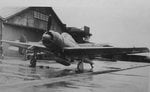
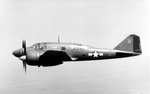
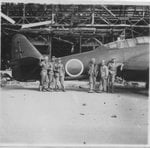
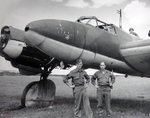
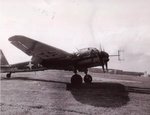
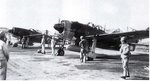
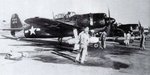
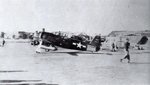
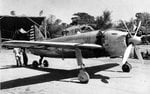
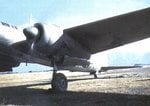
    Mitsubishi Ki-46-III/Type 100 reconnaissance plane (Dinah)

    he Mitsubishi Ki-46 was a twin-engines reconnaissance plane used by the Japanese Imperial Army in World War II. Its Army designation was "Type 100 Command Reconnaissance Aircraft" (百式司令部偵察機); the Allied code name was "Dinah". This aircraft was first used by the Japanese Army in Manchuria and China, where seven units were equipped with it, and also at times by the Japanese Imperial Navy in certain reconnaissance missions over the north coasts of Australia and New Guinea. The Japanese Army used this aircraft for the same type of missions (which were not authorized) over present-day Malaysia, during the months before the Pacific War. Later it was used over Burma, Indochina and Thailand; and in operations over the Indian Ocean area too. In 1944-45, during the last days of the war, it was modified as a high altitude interceptor, with two 20 mm cannons in the nose and one 37 mm cannon in an "upwards-and-forwards" position, almost like the Luftwaffe's Schrage Musik night fighter cannon emplacements, for fighting against the USAAF B-29 over the metropolitan Japanese islands.The United States captured some examples during conflict for evaluations.
    Attached Thumbnails Attached Thumbnails Captured Aircrafts: EEUU-c.jpg   Captured Aircrafts: EEUU-1024020347_7d2d399343_b.jpg  

    Last edited by gekho; 03-05-2012 at 04:42 PM.

  8. #8
    Senior Member gekho's Avatar
    Join Date
    Jan 2010
    Location
    Spain
    Posts
    2,815
    Country
    Spain

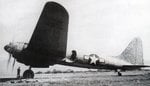
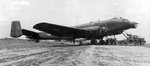
    Messerschmitt Me-261

    In 1937, Messerschmitt began Projekt P. 1064, a study for a long-range reconnaissance aircraft, and took basic design of the Bf 110 twin-engine heavy fighter as its basis. The P. 1064 had a long, slim fuselage with two wing-mounted engines. Planned from the outset as a record-breaking aircraft, after becoming convinced that the aircraft was capable of taking the world long-distance flight record, the Air Ministry approved the project and gave it the designation of 8-261.

    The intended goal of the project was for a completed example of the aircraft to carry the Olympic Flame from Garmisch-Partenkirchen, Germany (site of the 1936 Winter Olympics) to Tokyo, Japan for the 1940 Summer Olympics in what would be a record-breaking nonstop flight (5870mi / 9445km). The plan captured the imagination of Adolf Hitler at an early stage in its design and in tribute, the aircraft carried the unofficial name: Adolfine.

    The Me 261 incorporated a number of features which were highly advanced for its day. The single-spar all-metal wing was designed to serve as a fuel tank and its depth at the wing root was only slightly less than the height of the fuselage. The fuselage itself was of virtually rectangular section, with space for five crew members, consisting of two pilots seated side-by-side with the radio operator directly behind in the front compartment, while a navigator and a flight engineer were housed in the rear fuselage under a stepped, glazed station.
    Attached Thumbnails Attached Thumbnails Captured Aircrafts: EEUU-me261-09.jpg  

  9. #9
    A4K
    A4K is offline
    Senior Member A4K's Avatar
    Join Date
    Dec 2007
    Location
    The back of beyond
    Posts
    10,412
    Country
    New Zealand
    Country II
    Hungary
    Great stuff mate, thanks for posting!

  10. #10
    Senior Member gekho's Avatar
    Join Date
    Jan 2010
    Location
    Spain
    Posts
    2,815
    Country
    Spain

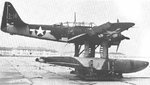
    Aichi E16A Zuiun (Paul)

    Production totalled 193 E16A1 production aircraft by Aichi Kokuki KK at Eitoku and 59 E16A1 production aircraft by Nipon Hikoki KK at Tomioka. Unfortunately for the navy, by the time the E16A1 entered service the Allies had gained air superiority and in consequence these aircraft, allocated the Allied codename 'Paul', suffered very heavy losses during 1944. The majority which survived were used for Kamikaze operations in the Okinawa area.
    Attached Thumbnails Attached Thumbnails Captured Aircrafts: EEUU-aichi-e16a-zuiun-paul-estados-unidos-001.jpg   Captured Aircrafts: EEUU-aichi-e16a-zuiun-paul-estados-unidos-002.jpg  


  11. #11
    Senior Member gekho's Avatar
    Join Date
    Jan 2010
    Location
    Spain
    Posts
    2,815
    Country
    Spain

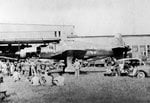
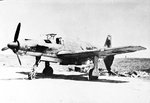
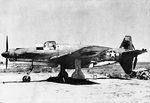
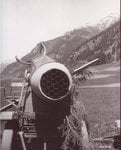
    Dornier Do-335 Pfeil

    The Dornier Do 335 Pfeil ("Arrow") was a World War II heavy fighter built by the Dornier company. The two-seater trainer version was also called Ameisenbär ("anteater"). The Pfeil's performance was much better than other twin-engine designs due to its unique "push-pull" layout and the much lower drag of the in-line alignment of the two engines. The Luftwaffe was desperate to get the design into operational use, but delays in engine deliveries meant only a handful were delivered before the war ended.

    When the US Army overran the Oberpfaffenhofen factory in late April 1945, only 11 Do 335A-1 single seat fighter-bombers and two Do 335A-12 conversion trainers had been completed. A further nine A-1′s, four A-4′s and two A-12′s were in final assembly, and components and assemblies for nearly 70 more had been completed. Heinkel at Vienna had been unable to build any Do 335A-6 night fighters. A number of planned developments of the Do 335 were on the drawing board when the war ended, including several big-winged high altitude fighter versions, the Do 535 with a jet rear engine, the Do 635 (later Ju 8-635) long range reconnaissance version which featured twin fuselages linked by a common wing centre section, and the P.256 twin jet fighter. As part of Operation Seahorse, two of the surviving A-0 single seaters were put aboard the US aircraft carrier ‘Reaper’ and shipped back to the USA, for detailed evaluation by the US Navy and USAAF. An airworthy A-12 two seater was flown to Britain and flight tested at RAE Farnborough, but a companion A-1 force-landed in France on its delivery flight and was abandoned. Two of the B-series prototypes were also evaluated by the CEV in France.

    Source: Aeroflight » Dornier Do 335
    Attached Thumbnails Attached Thumbnails Captured Aircrafts: EEUU-dornier-do-335-pfeil-estados-unidos-001.jpg   Captured Aircrafts: EEUU-dornier-do-335-pfeil-estados-unidos-002.jpg  

    Captured Aircrafts: EEUU-dornier-do-335-pfeil-estados-unidos-003.jpg   Captured Aircrafts: EEUU-dornier-do-335-pfeil-estados-unidos-004.jpg  

    Captured Aircrafts: EEUU-dornier-do-335-pfeil-estados-unidos-005.jpg   Captured Aircrafts: EEUU-dornier-do-335-pfeil-estados-unidos-006.jpg  

    Captured Aircrafts: EEUU-dornier-do-335-pfeil-estados-unidos-007.jpg  

  12. #12
    Senior Member gekho's Avatar
    Join Date
    Jan 2010
    Location
    Spain
    Posts
    2,815
    Country
    Spain

    Bachem Ba 349 Natter

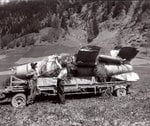
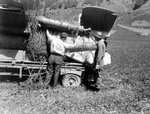
    The Bachem Ba 349 Natter (English: Viper, Adder) was a World War II German point-defence rocket powered interceptor, which was to be used in a very similar way to a manned surface-to-air missile. After vertical take-off, which eliminated the need for airfields, the majority of the flight to the Allied bombers was to be controlled by an autopilot. The primary mission of the relatively untrained pilot, perhaps better called a gunner, was to aim the aircraft at its target bomber and fire its armament of rockets. The pilot and the fuselage containing the rocket motor would then land under separate parachutes, while the nose section was disposable. The only manned vertical take-off flight on 1 March 1945 ended in the death of the test pilot Lothar Sieber.

    French forces were in place in Waldsee by 25 April 1945 and presumably took control of the Bachem-Werk. Shortly before the French troops arrived, a group of Bachem-Werk personnel set out for Austria with five A1 Natters on trailers. At Bad Wörishofen, the group waited for another group retreating from Nabern unter Teck with one completed Natter. Both groups then set out for the Austrian Alps. One group with two Natters ended up at the junction of the Inn River and a tributary, the Oetztaler Ache, at Camp Schlatt. The other group went to St. Leonhard in the beautiful Pitztal with four aircraft. US troops captured the first group at Camp Schlatt around 4 May and the second group on the following day.
    Attached Thumbnails Attached Thumbnails Captured Aircrafts: EEUU-ba3491.jpg   Captured Aircrafts: EEUU-ba3492.jpg  

    Captured Aircrafts: EEUU-ba3493.jpg  

  13. #13
    Senior Member gekho's Avatar
    Join Date
    Jan 2010
    Location
    Spain
    Posts
    2,815
    Country
    Spain

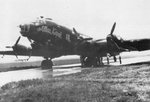
    Junkers Ju-88!188/388

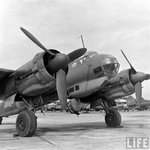
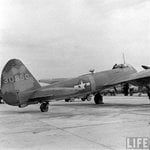
    The Junkers Ju 88 was a World War II German Luftwaffe twin-engine, multi-role aircraft. Designed by Hugo Junkers' company through the services of two American aviation engineers in the mid-1930s, it suffered from a number of technical problems during the later stages of its development and early operational roles, but became one of the most versatile combat aircraft of the war. Affectionately known as "The Maid of all Work" (a feminine version of "jack of all trades"), the Ju 88 proved to be suited to almost any role. Like a number of other Luftwaffe bombers, it was used successfully as a bomber, dive bomber, night fighter, torpedo bomber, reconnaissance aircraft, heavy fighter, and even as a flying bomb during the closing stages of conflict.
    Attached Thumbnails Attached Thumbnails Captured Aircrafts: EEUU-junkers-ju-88-estados-unidos-001.jpg   Captured Aircrafts: EEUU-junkers-ju-88-estados-unidos-002.jpg  

    Captured Aircrafts: EEUU-ju188.jpg  

  14. #14
    Benevolens Magister Airframes's Avatar
    Join Date
    Aug 2008
    Posts
    33,179
    Country
    United Kingdom
    Great pics, and I didn't know about the Me- 261.

  15. #15
    Senior Member gekho's Avatar
    Join Date
    Jan 2010
    Location
    Spain
    Posts
    2,815
    Country
    Spain

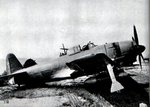
    Kawanishi N1K1 George

    - N1K1-J George Manufacture Number 5511 Tail 201-53: Built by Kawanishi at Naruo some time between November 12 - 18, 1944 Assigned to the 201st Kōkūtai, with tail code 201-53 painted in yellow. Stationed at Clark Field or maybe at Mabalacat East where the 201st was stationed. Captured at Clark Field on January 30, 1945. Evaluated and flight tested by TAIU-SWPA at Clark Field, assigned tail number S7, but only 7 was applied to the tail. This aircraft was scrapped or otherwise disappeared.
    - N1J1-J George 5638 Captured Tarlac Airfield January 1945
    - N1K1-J Model 11 George Manufacture Number 7102 Tail 341-S23: Built by Kawanishi at Himeji sometime between August 13 to October 16, 1944. Propeller installed on September 15, 1944. Assigned to the 341st Kokutai, Fighter Flying Unit 402, with tail code 341-S23. Captured at Clark Field on January 30, 1945. Allied intelligence TAIC-SWPA repaired this George and applied US markings and tail stripes. Assigned tail code S9. Flying from Clark Field during April 1945, it was tested with the underwing and fusealge mounted guns removed, to resemble the N1K2-J configuration.Afterwards (or postwar) this aircraft was scrapped or otherwise disappeared.
    - N1K1-J George 7287 Captured taken to United States on USS Barnes
    - N1K1-J George 7317 Captured taken to United States on USS Barnes
    - N1K2-J Model 21 George Manufacture Number 5368 Tail 341S-49: Built by Kawanishi in 1944. Captured at Clark Field on January 30, 1945.
    - N1K1-J Model 11 George Manufacture Number ? Tail 341S-6. Built by Kawanishi in 1944. Captured at Clark Field on January 30, 1945.
    - N1K1-J Model 11 George Manufacture Number ? Tail 2-56. Built by Kawanishi. Assigned to the 762nd Kōkūtai, with tail code 2-56 painted in yellow. Stationed at Clark Field. Although the 762nd Kōkūtai was a bomber unit, the 762nd had a hikotai of fighter that were armed with the early Shidens." Painted dark green over natural metal and the flaking of the paint is caused by the lack of primer in the aircraft. Captured at Clark Field on January 30, 1945.

    Source: Pacific Wrecks - N1K1-J Model 11 George Manufacture Number ? Tail 2-56
    Attached Thumbnails Attached Thumbnails Captured Aircrafts: EEUU-kawanishi-n1k1-george-estados-unidos-001.jpg   Captured Aircrafts: EEUU-kawanishi-n1k1-george-estados-unidos-002.jpg  

    Captured Aircrafts: EEUU-kawanishi-n1k1-george-estados-unidos-003.jpg   Captured Aircrafts: EEUU-captured_kawanishi_n1k1-j_on_ground_1945.jpg  

    Captured Aircrafts: EEUU-kawanishi-n1k1-george-estados-unidos-006.jpg   Captured Aircrafts: EEUU-kawanishi-n1k1-george-estados-unidos-009.jpg  

    Last edited by gekho; 03-17-2013 at 05:56 PM.

+ Reply to Thread
Page 1 of 7 1 2 3 4 5 6 7 LastLast

Bookmarks

Posting Permissions

  • You may not post new threads
  • You may not post replies
  • You may not post attachments
  • You may not edit your posts

1 2 3 4 5 6 7 8 9 10 11 12 13 14 15 16 17 18 19 20 21 22 23 24 25 26 27 28 29 30 31 32 33 34 35 36 37 38 39 40 41 42 43 44 45 46 47 48 49 50 51 52 53 54 55 56 57 58 59 60 61 62 63 64 65 66 67 68 69 70 71 72 73 74 75 76 77 78 79 80 81 82 83 84 85 86