ADS NOT DISPLAYED TO REGISTERED USERS.
+ Reply to Thread
Page 1 of 2 1 2 LastLast
Results 1 to 15 of 28
Like Tree1Likes

Captured Aircrafts: France

Aircraft Pictures Discuss Captured Aircrafts: France in the World War II - Aviation forums; Soon after the close of the Second World War, French forces in Indochina found themselves with out air support. Pending ...

  1. #1
    Senior Member gekho's Avatar
    Join Date
    Jan 2010
    Location
    Spain
    Posts
    2,815
    Country
    Spain

    Captured Aircrafts: France

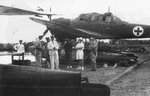
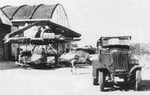
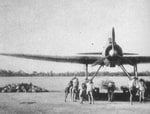
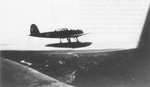
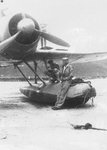
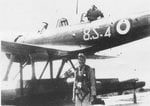
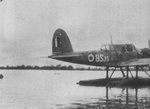
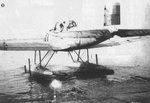
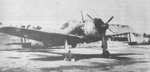
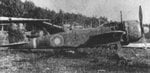
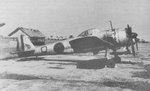
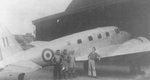
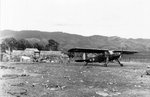
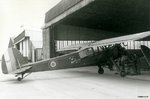
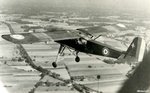
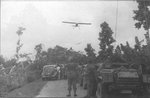
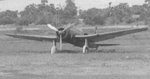
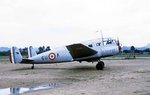
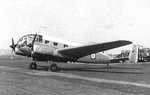
    Soon after the close of the Second World War, French forces in Indochina found themselves with out air support. Pending the arrival of aircraft transferred from France, and ex-British Spitfires, attempts were made to press into a service a number of war-weary Japanese aircraft. Although there were numerous Japanese airstrips located throughout Indochina, only a handful of serviceable front-line modern aircraft were located. For the most part, these aircraft performed second-line duties with the French, as transports and liason aircraft. The notable exceptions were the Nakajima Ki.43 Oscars, which formed the backbone of two fighter squadrons until their replacment with Spitfires. It appears many of the aircraft were in relatively poor condition, and in the unfamiliar hands of French pilots the attrition rate was high, with at least two aircraft being lost during their only flights! Though most aircraft lasted only until 1946, it is likely that a few soldiered on in French hands until 1949.


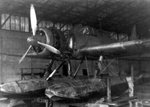
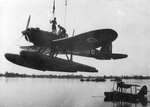
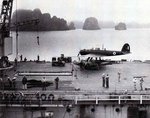
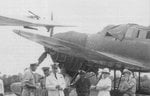
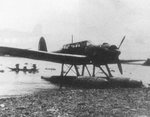
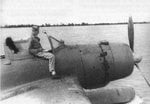
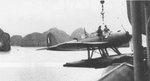
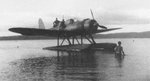
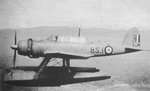
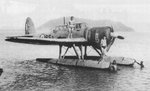
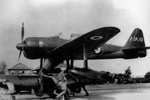
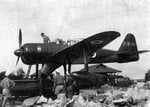
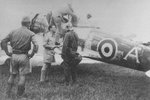
    Photographs of these few aircraft are relatively rare. Those that I have seen depict a Jake and a Rufe. These show the aircraft in standard Japanese colour schemes of dark green over grey. Note that the cocardes on the Rufe appear very large, possibly sized to cover the hinomarus in these positions. The cocardes in the Rufe photo actually look more like RAF roundels, however this may be due to the use of orthochromatic film, or it is possile that this photo actually depicts the aircraft before its hand over to the French from ATAIU-SEA (Allied Technical Aircraft Intelligence Unit - South East Asia, if I recall correctly). It appears that most if not all of the aircraft were not repainted aside from the elimination of hinomarus and other Japanese markings, and the addition of the appropriate cocardes (generally without the yellow surround). Profiles of Oscars show a natural metal or silver finish, with some of the aircraft, as noted in table 3, wearing a large capital Roman letter on the aft fuselage. Beyond this, the modeller may take some artistic license to depict the aircraft as they choose, given the serial information in tables 1 through 3, and the appropriate Japanese colour schemes.

    Source: Japanese Aircraft used by the French in the Indochina War
  2. #2
    Senior Member gekho's Avatar
    Join Date
    Jan 2010
    Location
    Spain
    Posts
    2,815
    Country
    Spain

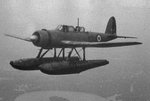
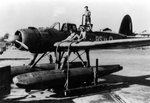
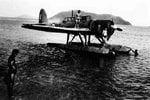
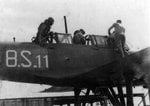
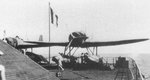
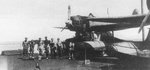
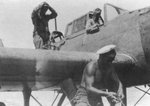
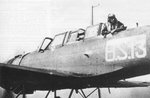
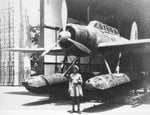
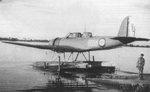
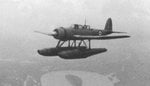
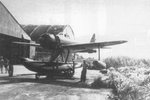
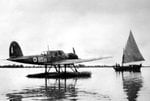
    Aichia E1A3 Jake

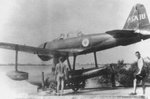
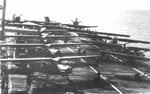
    This twin-float seaplane, code name 'Jake', performed its tasks almost anonymously, but it was effective, and very popular with its crews. It was motorized with a Mitsubishi Kinsei 43 engine of 1,080 hp. The Jake was ordered in 1940 and notably took part in recce missions before the famous strike of Pearl Harbor on December 7th 1941. Some 1,350 aircraft had been built. In 1945, when French troops came back to Indochina ; pilots and mechanics found some surviving Japenese aircraft of the World War II. Among them there was the "Jake" (code invented by Capt. Frank T. Mc Coy, in charge of identification and naming Japanese aircraft using first names). Eight examples were operated by the 8S squadron in Indochina alongside Loire-130s and an A6M-2N Rufe between 1945 and late August 1948. Unlike Japanese examples based aboard cruisers and battle cruisers, they were ground-based.
    Attached Thumbnails Attached Thumbnails Captured Aircrafts: France-aichi-e13a-jake-001.jpg   Captured Aircrafts: France-aichi-e13a-jake-002.jpg  

    Captured Aircrafts: France-aichi-e13a-jake-003.jpg   Captured Aircrafts: France-aichi-e13a-jake-004.jpg  

    Captured Aircrafts: France-aichi-e13a-jake-005.jpg   Captured Aircrafts: France-aichi-e13a-jake-006.jpg  

    Captured Aircrafts: France-aichi-e13a-jake-007.jpg   Captured Aircrafts: France-aichi-e13a-jake-008.jpg  

    Captured Aircrafts: France-aichi-e13a-jake-009.jpg   Captured Aircrafts: France-aichi-e13a-jake-0010.jpg  

    Captured Aircrafts: France-aichi-e13a-jake-0011.jpg   Captured Aircrafts: France-aichi-e13a-jake-0012.jpg  

    Captured Aircrafts: France-aichi-e13a-jake-0013.jpg   Captured Aircrafts: France-aichi-e13a-jake-0014.jpg  

    Captured Aircrafts: France-aichi-e13a-jake-0015.jpg   Captured Aircrafts: France-aichi-e13a-jake-0016.jpg  


  3. #3
    Senior Member gekho's Avatar
    Join Date
    Jan 2010
    Location
    Spain
    Posts
    2,815
    Country
    Spain

    Aichia E1A3 Jake Part II

    More pics
    Attached Thumbnails Attached Thumbnails Captured Aircrafts: France-aichi-e13a-jake-0019.jpg   Captured Aircrafts: France-aichi-e13a-jake-0018.jpg  

    Captured Aircrafts: France-aichi-e13a-jake-0017.jpg   Captured Aircrafts: France-aichi-e13a-jake-0020.jpg  

    Captured Aircrafts: France-aichi-e13a-jake-0021.jpg   Captured Aircrafts: France-aichi-e13a-jake-0022.jpg  

    Captured Aircrafts: France-aichi-e13a-jake-0023.jpg   Captured Aircrafts: France-aichi-e13a-jake-0024.jpg  

    Captured Aircrafts: France-aichi-e13a-jake-0025.jpg   Captured Aircrafts: France-aichi-e13a-jake-0026.jpg  

    Captured Aircrafts: France-aichi-e13a-jake-0027.jpg   Captured Aircrafts: France-aichi-e13a-jake-0028.jpg  

    Captured Aircrafts: France-aichi-e13a-jake-0029.jpg   Captured Aircrafts: France-aichi-e13a-jake-0030.jpg  

    Captured Aircrafts: France-aichi-e13a-jake-0031.jpg   Captured Aircrafts: France-aichi-e13a-jake-0032.jpg  


  4. #4
    Senior Member gekho's Avatar
    Join Date
    Jan 2010
    Location
    Spain
    Posts
    2,815
    Country
    Spain

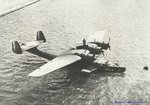
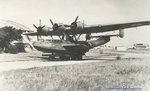
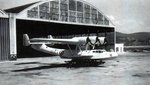
    Dornier Do-24

    The Do 24 flying-boat was designed before World War II and series built to order of the Dutch government for use in the East Indies by the Naval Air Service. With licence production in Holland, a total of 37 were operated as Do 24K. From May 1940 Do-24 on the production lines were completed under German occupation and these - together with later Do 24T and French-built examples - were used by the Luftwaffe as reconnaissance and search-and-rescue aircraft. This line was operated by SNCA and was able to produce another 48 Do 24s. After the liberation, this facility produced a further 40 Do 24s, which served in the French Navy until 1952.
    Attached Thumbnails Attached Thumbnails Captured Aircrafts: France-dornier-do-24-francia-003.jpg   Captured Aircrafts: France-dornier-do-24-francia-002.jpg  

    Captured Aircrafts: France-dornier-do-24-francia-001.jpg  

  5. #5
    Senior Member gekho's Avatar
    Join Date
    Jan 2010
    Location
    Spain
    Posts
    2,815
    Country
    Spain

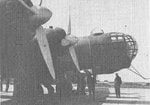
    Heinkel He-274

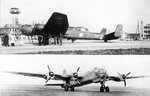
    The Heinkel He 274 was a four-engine bomber designed during World War II as a high altitude variant of the Heinkel He 177 for the German Luftwaffe. Normally a major new version would be numbered by adding 100 to the original model number, but the He 277 was yet another different version of the He 177, which was itself being developed as early as September 1943 into the He 177B four engined bomber, four prototypes of which were converted from He 177A airframes with all-new wings, over the 1943-44 winter season at Heinkel's southern factories near Vienna. The main differences between the He 274 and the He 177 was the abandoning of the twin coupled engine arrangement in favor of four independent turbocharged units, an extended fuselage with a modified wingspan, a twin tail empennage tail surface unit, and a more conventional set of twin-wheel main gear units, abandoning the cumbersome four-strut main gear system of the He 177A.

    Originally designated He 177H on October 11, 1941, the He 274 was a high-altitude development of the He 177 A-3. The He 274 dispensed with coupled engines in order to provide room for the installation of DVL exhaust driven TK 11B turbo-superchargers. The He 274 featured a pressurized compartment for a crew of four, this employing double walls of heavy-gauge alloy, hollow sandwich-type glazing and inflatable rubber seals, a pressure equivalent to that at 2,500 m (8,200 ft) being maintained at high altitude. Defensive armament was restricted to a single forward-firing 13 mm (.51 in) MG 131 machine gun and remotely-controlled dorsal and ventral gun turrets each containing a pair of 13 mm (.51 in) MG 131s and directed from a slightly offset plexiglass dome in the roof of the flight deck or the rear of the ventral Bola gondola. First envisioned as being fully in the He 177's eventual line of development as the He 177H ("H" likely an abbreviation for "Höhe", meaning high-altitude in German), the growing incompatibility of parts led to the redesignation to He 274. By 1941, Heinkel was engrossed by other urgent projects that left the company seriously short of detail design capacity. The He 274 project was therefore reassigned to SAUF at Suresnes, France.

    Construction of the two prototypes, the He 274 V1 and V2 did not commence until 1943. They were to have been built in France by SAUF at Suresnes, France, but the prototypes were never completed in time. The He 274 V1 was being readied for flight testing at Suresnes in July 1944 when the approach of Allied forces necessitated the evacuation of Heinkel personnel working on the project. Minor difficulties had delayed the flight testing and transfer of the aircraft to Germany, and orders were therefore given to destroy the virtually completed prototype. Only minor damage was actually done to the airframe of the He 274 V1, and repairs were begun after the Allied occupation. The He 274 V1 was repaired by Ateliers Aéronautiques de Suresnes and used by the Armée de l'Air (French Air Force) for several years as a high-altitude research plane. It was renamed the AAS 01A. The He 274 V2 was eventually completed as the AAS 01B, complete with the TK 11 turbochargers, and eventually flew exactly two years (on December 27, 1947) after the AAS 01A. By this time, the AAS organization had been absorbed into the French SNCASO aviation conglomerate. Both of the AAS 01 completed and airworthy versions of the He 274 were eventually broken up in late 1953, after serving as "mother ships" for aerial launching of a number of early French advanced jet and rocket test aircraft.
    Attached Thumbnails Attached Thumbnails Captured Aircrafts: France-heinkel-he-274.jpg   Captured Aircrafts: France-heinkel-he-274-v1-001.jpg  

    Captured Aircrafts: France-heinkel-he-274-v1-002.jpg  

  6. #6
    Senior Member gekho's Avatar
    Join Date
    Jan 2010
    Location
    Spain
    Posts
    2,815
    Country
    Spain

    Nakajima A6M2-N/Navy Type 2 Interceptor/Fighter-Bomber (Rufe)

    The A6M2-N floatplane was developed from the Mitsubishi A6M Zero Type 0, for the purposes of supporting amphibious operations and defending remote bases. It was based on the A6M-2 Model 11 fuselage, with a modified tail and added floats. This aircraft was the brainchild of Shinobu Mitsutake, Nakajima Aircraft Company's Chief Engineer, and Atsushi Tajima, one of the company's designers. A total of 327 were built, including the original prototype. The last A6M2-N in military service was a single example recovered by the French forces in Indochina after the end of World War II. It crashed shortly after being overhauled.
    Attached Thumbnails Attached Thumbnails Captured Aircrafts: France-nakajima-a6m2n-rufe-001.jpg   Captured Aircrafts: France-nakajima-a6m2n-rufe-002.jpg  

    Captured Aircrafts: France-nakajima-a6m2n-rufe-003.jpg   Captured Aircrafts: France-nakajima-a6m2n-rufe-004.jpg  

    Captured Aircrafts: France-nakajima-a6m2n-rufe-005.jpg   Captured Aircrafts: France-nakajima-a6m2n-rufe-006.jpg  


  7. #7
    Senior Member gekho's Avatar
    Join Date
    Jan 2010
    Location
    Spain
    Posts
    2,815
    Country
    Spain

    Focke Wulf Fw-190/SNCA NC-900

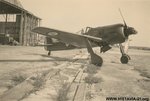
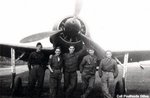
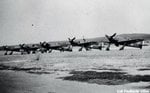
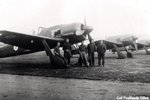
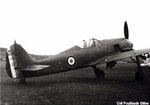
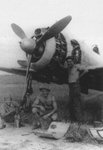
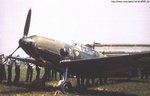
    In the immediate post-war period, the French Armee de l'Air operated FW 190 fighters (French designation NC.900). 65 FW 190s were built in 1945 and 1946 by the Société Nationale de Construction Aéronautiques du Centre (S.N.C.A.C) at Cravant. Between 600 and 900 people worked at Cravant, and the facility was also known as camp 918. Cravant had been a Luftwaffe repair facility, and 127 FW 190 fuselages and 162 wings of FW 190 A-4s, A-5s, and A-8s were captured there by the Allies in October 1944. About 100 BMW 801s were found at Dordogne, and the French planned to assemble 125, under the designation AACr-6, or NC.900. The first NC.900 was flown on 1 March 1945, but there were many problems with the new aircraft. Sabotaged airframe parts and the use of hastily recycled metals meant many aircraft were of poor quality. Armee de l'Air FW 190s only saw service for a few years, before more modern fighters were acquired. The principal operator of the NC.900 was GC 111/5 Normandie Niemen, which received just fourteen NC.900s. They flew with the unit for 18 months. A majority of the remaining 51 NC.900s were used by the CEV (centre d'essais en vol) at Brétigny. The final flight by a French NC.900 was on 22 June 1949.
    Attached Thumbnails Attached Thumbnails Captured Aircrafts: France-snca-nc-900.jpg   Captured Aircrafts: France-crews.jpg  

    Captured Aircrafts: France-lignee_1.jpg   Captured Aircrafts: France-lignee_nc_900.jpg  

    Captured Aircrafts: France-nc_900_37.jpg  
    Last edited by gekho; 03-03-2012 at 04:16 PM.

  8. #8
    World Travelling Doctor? Gnomey's Avatar
    Join Date
    Nov 2004
    Location
    Royal Deeside/Swansea, UK
    Posts
    28,840
    Country
    United Kingdom
    Good stuff!


    "Success is not Final, Failure is not Fatal, it is the Courage to Continue that Counts"
    Sir Winston Churchill

    "To him the People of the World Largely owe the Freedom and Liberties they Enjoy Today"
    Enscription on Hugh Dowding's (AOC Fighter Command 1936-40) statue in London


    My Photo Collections on Flickr

  9. #9
    Member PatCartier's Avatar
    Join Date
    Jan 2011
    Location
    Paris
    Posts
    57
    Country
    France
    Great pics !
    Have you got some of ki43 Hayabusa ?

  10. #10
    Senior Member gekho's Avatar
    Join Date
    Jan 2010
    Location
    Spain
    Posts
    2,815
    Country
    Spain

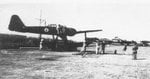
    Nakajima Ki-43 Hayabusa (Oscar)

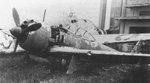
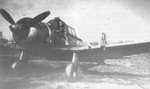
    In Indochina pending arrival of the French to reclaim their former territory, a Gremlin Task Force was formed by the RAF utilizing surrendered Japanese aircraft and crews to fly in supplies as well as disarm and repatriate surrendering troops. Types used included DINAH, HICKORY, IDA, Ki-79, LILY, PEGGY, SALLY, TABBY and TOPSY. The unit was disbanded in early 1946 when the French arrived and they took over some of the aircraft. They also quickly found the need for combat aircraft to use against Vietnamese Nationalists. Prior to arrival of Spitfires purchased from England, a number of other surrendered Japanese aircraft including JAKE and OSCAR types were restored to flying order and used for a few more months.
    Attached Thumbnails Attached Thumbnails Captured Aircrafts: France-nakajima-ki-43-oscar-francia-001.jpg   Captured Aircrafts: France-ki-43.jpg  

    Captured Aircrafts: France-ki-43-002.jpg   Captured Aircrafts: France-ki-43-1-.jpg  

    Last edited by gekho; 02-12-2012 at 10:00 AM.

  11. #11
    Senior Member gekho's Avatar
    Join Date
    Jan 2010
    Location
    Spain
    Posts
    2,815
    Country
    Spain

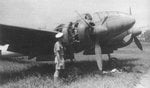
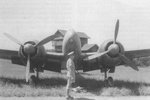
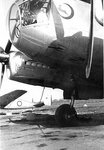
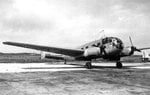
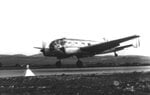
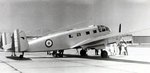
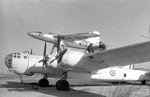
    Mitsubishi Ki-46 Dinah

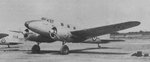
    The Mitsubishi Ki-46 was a twin-engine reconnaissance aircraft used by the Imperial Japanese Army in World War II. Its Army Shiki designation was Type 100 Command Reconnaissance Aircraft (一〇〇式司令部偵察機); the Allied nickname was "Dinah". The French obtained a Dinah (the one with the streamlined nose) to use in Indochina, but during the ferry flight back to base, they couldn't lower one of the wheels and ended up writing off the plane. According to my sources, it served from 18/02/46 to 01/04/46.

    Source: Japanese Aircraft used by the French in the Indochina War
    Attached Thumbnails Attached Thumbnails Captured Aircrafts: France-mitsubishi-ki-46-dinah-francia-001.jpg   Captured Aircrafts: France-mitsubishi-ki-46-dinah-francia-002.jpg  


  12. #12
    Senior Member gekho's Avatar
    Join Date
    Jan 2010
    Location
    Spain
    Posts
    2,815
    Country
    Spain

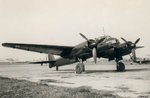
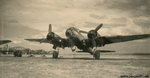
    Junkers Ju-88

    No info
    Attached Thumbnails Attached Thumbnails Captured Aircrafts: France-junkers-ju-88-francia-001.jpg   Captured Aircrafts: France-junkers-ju-88-francia-002.jpg  


  13. #13
    Senior Member gekho's Avatar
    Join Date
    Jan 2010
    Location
    Spain
    Posts
    2,815
    Country
    Spain

    Junkers Ju-52/AAC-1 Toucan

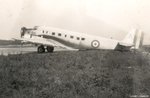
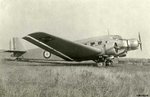
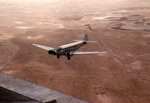
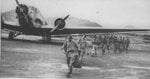
    When France was free by the Allies, many Ju-52 were captured and used against their own owners.Many others were destroyed after the war, but 585 were manufactured after 1945. In France, the machine had been manufactured during the war by the Junkers-controlled Amiot company, and production continued afterwards as the Amiot AAC 1 Toucan. These aircrafts were widely used in not only in France, but also in Algeria, Vietnam and Thailand, being employed as a parachuters platform, transport aircraft and bombers. They were finally replaced by the american C-47 Dakota.
    Attached Thumbnails Attached Thumbnails Captured Aircrafts: France-junkers-ju-52-001.jpg   Captured Aircrafts: France-junkers-ju-52-003.jpg  

    Captured Aircrafts: France-junkers-ju-52-0011.jpg   Captured Aircrafts: France-nord-aac-1-toucan-001.jpg  

    Captured Aircrafts: France-nord-aac-1-toucan-003.jpg  

  14. #14
    Senior Member gekho's Avatar
    Join Date
    Jan 2010
    Location
    Spain
    Posts
    2,815
    Country
    Spain

    Nakajima Ki-44 Shōki/Army Type 2 Single-Seat Fighter (Tojo)

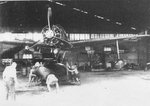
    The Nakajima Ki-44 Shōki (鍾馗, Zhong Kui) was a single-engine fighter aircraft used by the Imperial Japanese Army Air Force in World War II. The type first flew in August 1940 and entered service in 1942. The Allied reporting name was "Tojo"; the Japanese Army designation was "Army Type 2 Single-Seat Fighter" (二式単座戦闘機). It was less maneuverable than its predecessor, the nimble Ki-43, and pilots disliked its poor visibility on the ground, its higher landing speed, and severe restrictions on maneuvering. Yet, the Ki-44 was superior in flight tests. It was an outstanding interceptor and could match Allied types in climbs and dives, giving pilots far more flexibility in combat. Moreover, the armament (including in some versions two 40 mm cannons) was far superior to the older Ki-43. These characteristics made the fighter an effective B-29 Superfortress destroyer and one of the Japanese High Command priorities during the last year of war. But poor pilot training in the last part of the conflict often made them easy targets for Allied pilots.
    Attached Thumbnails Attached Thumbnails Captured Aircrafts: France-ki-44-tojo-001.jpg   Captured Aircrafts: France-ki-44-tojo-001-1-.jpg  


  15. #15
    Senior Member gekho's Avatar
    Join Date
    Jan 2010
    Location
    Spain
    Posts
    2,815
    Country
    Spain

    Tachikawa Ki-54/Army Type 1 Advanced Trainer Model A (Hickory)

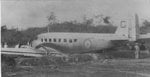
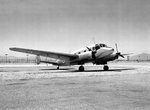
    The Ki-54 was developed in response to an Imperial Japanese Army requirement for a twin-engine advanced trainer, principally for crew training. The prototype first flew in summer 1940 and, on completing trials, entered production in 1941 as Army Type 1 Advanced Trainer Model A (Ki-54a). The Ki-54a was soon followed by the Ki-54b as Army Type 1 Operations Trainer Model B and Ki-54c as Army Type 1 Transport Model C. Named Hickory by the Allies, the Ki-54b and -c enjoyed successful careers until the end of the war. At least 7 Ki-54 were recovered by the French in French Indochina between 1945 and 1947, after the Japanese surrender.
    Attached Thumbnails Attached Thumbnails Captured Aircrafts: France-tachikawa-ki-54.jpg   Captured Aircrafts: France-tachikawa-ki-54-1-.jpg  


+ Reply to Thread
Page 1 of 2 1 2 LastLast

Similar Threads

  1. British Bombers and Transport aircrafts
    By gekho in forum Aircraft Pictures
    Replies: 133
    Last Post: 05-23-2013, 09:17 AM
  2. French light bombers and reconnaissance aircrafts
    By gekho in forum Aircraft Pictures
    Replies: 24
    Last Post: 11-09-2012, 02:56 AM
  3. Italian light bombers and reconnaissance aircrafts
    By gekho in forum Aircraft Pictures
    Replies: 30
    Last Post: 07-03-2012, 06:55 AM
  4. Captured Aircraft
    By gekho in forum Aircraft Pictures
    Replies: 113
    Last Post: 03-02-2012, 11:51 PM
  5. Battle of France dedicated thread
    By delcyros in forum Aviation
    Replies: 44
    Last Post: 10-16-2007, 05:57 PM

Bookmarks

Posting Permissions

  • You may not post new threads
  • You may not post replies
  • You may not post attachments
  • You may not edit your posts

1 2 3 4 5 6 7 8 9 10 11 12 13 14 15 16 17 18 19 20 21 22 23 24 25 26 27 28 29 30 31 32 33 34 35 36 37 38 39 40 41 42 43 44 45 46 47 48 49 50 51 52 53 54 55 56 57 58 59 60 61 62 63 64 65 66 67 68 69 70 71 72 73 74 75 76 77 78 79 80 81 82 83 84 85 86