ADS NOT DISPLAYED TO REGISTERED USERS.
+ Reply to Thread
Page 1 of 4 1 2 3 4 LastLast
Results 1 to 15 of 46

Captured Aircrafts: UK
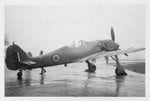
Aircraft Pictures Discuss Captured Aircrafts: UK in the World War II - Aviation forums; No. 1426 (Enemy Aircraft) Flight RAF, nicknamed "the Rafwaffe", was a Royal Air Force flight formed during the Second World ...

  1. #1
    Senior Member gekho's Avatar
    Join Date
    Jan 2010
    Location
    Spain
    Posts
    2,815
    Country
    Spain

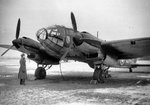
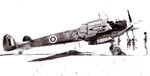
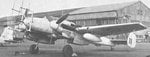
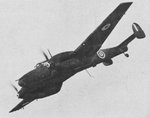
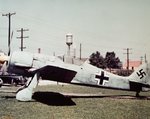
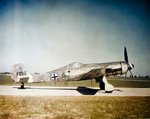
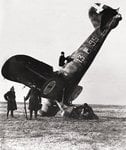
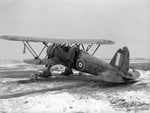
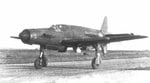
    Captured Aircrafts: UK

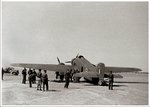
    No. 1426 (Enemy Aircraft) Flight RAF, nicknamed "the Rafwaffe", was a Royal Air Force flight formed during the Second World War to evaluate captured enemy aircraft and demonstrate their characteristics to other Allied units. Several aircraft on charge with the RAE Farnborough section were also used by this unit. The RAE facilities at Farnborough were utilized for the flight testing of German and Italian aircraft during the war. Many crash-landed airframes were brought to Farnborough for examination, testing and cannibalisation of spare parts to keep other airframes in serviceable condition. The main flight testing work was carried out by the Aerodynamics Flight of the Experimental Flying Department and the Wireless & Electrical Flight (W&EF), the latter responsible for evaluation and examination of radar-equipped aircraft later in the war.


    The unit was established in November 1941 at RAF Duxford, made up of a small group of pilots who had previously been maintenance test pilots with No. 41 Group RAF. Initially, it operated a Heinkel He 111 (AW177) that had been in British hands for two years, a Messerschmitt Bf 109 that had been captured during the Battle of France (AE479) and a Junkers Ju 88A-5 (HM509). The Ju 88 was a more recent British acquisition after the pilot landed at night at RAF Chivenor in the belief it was an airfield in France –the crew had made a navigational error after being deceived by a Meacon; decoy, navigational radio beacons set up by the British to mimic German ones. A General Aircraft Monospar was also assigned to the unit for general communication tasks and collecting spare parts. The aircraft in the unit changed throughout the war as further later marques came into the RAF's hands in various ways, including capture by Allied troops, forced or mistaken landings by German pilots, and defections. They were then passed to the Air Fighting Development Unit (RAF Duxford 1940-1943) where they were extensively tested before passing them on to the Flight. Several aircraft were lost to crashes, or damaged and then cannibalized for spare parts. Others were shipped to America for further evaluation. The unit later moved to RAF Collyweston. The flight ceased operations at Collyweston on 17 January 1945. reforming at RAF Tangmere on the same date, with unit codes EA, as the "Enemy Aircraft Flight" of the Central Fighter Establishment, which finally disbanded in December 1945.

    Source: No. 1426 Flight RAF - Wikipedia, the free encyclopedia
    More info: http://www.youtube.com/watch?v=QuwjEflEBDo http://www.youtube.com/watch?v=bLW09CSQB-w
    Last edited by gekho; 03-16-2012 at 10:55 AM.

  2. #2
    Senior Member Wildcat's Avatar
    Join Date
    Apr 2005
    Location
    Queensland
    Posts
    6,175
    Country
    Australia
    Impressive, but ugly.

  3. #3
    Senior Member Wayne Little's Avatar
    Join Date
    Oct 2006
    Location
    Adelaide Sth. Aust.
    Posts
    35,561
    Country
    Australia
    Good description!

  4. #4
    Senior Member gekho's Avatar
    Join Date
    Jan 2010
    Location
    Spain
    Posts
    2,815
    Country
    Spain

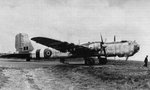
    Heinkel He-177 Greif

    The final end for the He 177 came in late 1944 when high grade fuel wasn't available in the quantity needed to operate a whole Geschwader and the implementation of the Emergency Fighter Program. At this point the He 177 proved to be the most reliable, rugged and technically advanced bomber of the Luftwaffe. This seems to be confirmed by post war tests on the He 177A-5 and the single long-range He 177A-7, which turned out to be impressive for the RAF. The He 177 A-5 (Geschwaderkennung code of F8 + AP from 6./KG 40) was captured in the Toulouse-Blagnac airfield in September 1944. It was repainted with British markings and given the serial TS439. It was tested by the Royal Aircraft Establishment.
    Attached Thumbnails Attached Thumbnails Captured Aircrafts: UK-he-177.jpg   Captured Aircrafts: UK-6293842091_fd6a195321_b.jpg  

    Captured Aircrafts: UK-heinkel-he177-greif-inglaterra-.jpg  
    Last edited by gekho; 03-16-2012 at 11:38 AM.

  5. #5
    Senior Member gekho's Avatar
    Join Date
    Jan 2010
    Location
    Spain
    Posts
    2,815
    Country
    Spain

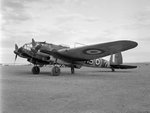
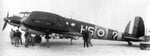
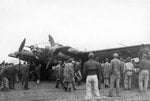
    Heinkel He-111

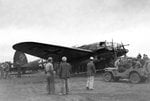
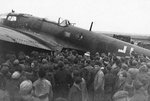
    - Heinkel He-111. This aircraft was abandoned by the Luftwaffe during the retreat after the Battle of El Alamein, on a landing ground in Libya after being "commandeered" by No. 260 Squadron RAF, who painted it with RAF roundels and the unit code letters "HS-?.
    - Heinkel He-111 H-1, Werk Nr.6853, German call-sign 1H+EN. Crashed at RAF Polebrook on 10 November 1943 while carrying a number of 1426 Flight ground crew as passengers. The pilot, F/O Barr, and six others were killed, four were injured.
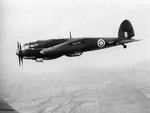
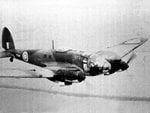
    - Heinkel He-111 H-1 coded IH+EN of II./ Kampfgeschwader 26. This aircraft force-landed on the 9th of February 1940 near Dalkeith in Midlothian, after combat with a Spitfire I of 602 (City of Glasgow) Squadron. It was repaired, given RAF roundels and the serial AW177, and used for testing purposes.
    Attached Thumbnails Attached Thumbnails Captured Aircrafts: UK-361nypma.jpg   Captured Aircrafts: UK-captured_he_111_in_libya_1942.jpg  

    Captured Aircrafts: UK-111.jpg   Captured Aircrafts: UK-heinkel-he-111-aterriza-en-uk.jpg  

    Captured Aircrafts: UK-heinkel-he-111-aterriza-en-uk-1-.jpg   Captured Aircrafts: UK-heinkel-he-111-aterriza-en-uk-2-.jpg  

    Captured Aircrafts: UK-he-111-captured.jpg   Captured Aircrafts: UK-heinkel-he-111-inglaterra-.jpg  

    Captured Aircrafts: UK-heinkel-he-111h1-wnr6853-kg26.2-1h-en-captured-raf-aw177-02.jpg  
    Last edited by gekho; 04-04-2012 at 05:58 AM.

  6. #6
    Senior Member gekho's Avatar
    Join Date
    Jan 2010
    Location
    Spain
    Posts
    2,815
    Country
    Spain

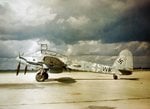
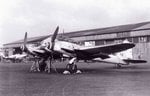
    Messerschmitt Bf-110 Zerstorer

    - Messerschmitt Bf-110 C–4,Werk Nr. 2177, German call-sign 5F-CM. Originally of 4.(F)/14 intercepted by RAF fighters while on a reconnaissance mission on 21 July 1940. Forced down near Goodwood Racecourse, Sussex. Royal Aircraft Establishment repaired this aircraft and after handling trials, was flown to the Air Fighting Development Unit at Duxford in October 1941. In March 1942 AX772 was transferred to No. 1426 Flight until moving to the Enemy Aircraft Flight of the Central Flying School at Tangmere in January 1945. It was stored at No. 47 Maintenance Unit (MU) Sealand in November 1945. Scrapped in 1947.
    - Messerschmitt Bf-110 G-4 night fighter that had been surrendered to the allies in May 1945 at Grove airfield in Denmark, is displayed at RAF Museum London at Hendon in North London, United Kingdom.
    - Messerschmitt Bf-110 E-1, ex 4.ZG76, WNr 4035, captured in the North of Africa by the RAF in 1942-01
    Attached Thumbnails Attached Thumbnails Captured Aircrafts: UK-bf-110.jpg   Captured Aircrafts: UK-messerschmitt-bf-110-inglaterra-001.jpg  

    Captured Aircrafts: UK-messerschmitt-bf-110-inglaterra-002.jpg  
    Last edited by gekho; 03-16-2012 at 11:40 AM.

  7. #7
    Senior Member gekho's Avatar
    Join Date
    Jan 2010
    Location
    Spain
    Posts
    2,815
    Country
    Spain

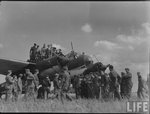
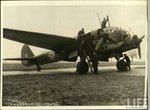
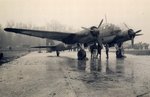
    Junkers Ju-88

    - Junkers Ju-88 R-1, Werk Nr. 360043. This aircraft was flown to Scotland by its defecting crew in May 1943; two of the three crew on board had taken the decision to defect and held the third crewmember at gunpoint during the attempt. The aircraft was detected and intercepted one mile inland, whereupon the Ju 88 lowered its undercarriage, waggled its wings and dropped flares, signaling the crew's intent to surrender. The Spitfires escorted 360043 to RAF Dyce. The capture of this aircraft was of great intelligence value at the time, as it was fitted with the latest UHF-band FuG 202 Liechtenstein BC A.I radar, for which a new form of the Window radar interference method was developed soon afterwards. The Ju 88 was operated by the RAF's No. 1426 (Enemy Aircraft) Flight and evaluated in depth by various British groups, including the Royal Aircraft Establishment and the Fighter Interception Unit. It was used to assist in teaching enemy aircraft recognition skills prior to the D-Day landings, and was last flown in May 1945. The aircraft was restored in 1975 and in August 1978 moved to the RAF Museum.
    - Junkers Ju-88 A-5, RAF serial HM509, of No. 1426.Flight based at Collyweston, Northamptonshire.
    - Junkers Ju-88 R-1 night fighter captured by British forces at Copenhagen-Kastrup airfield, May 1945.
    - Junkers Ju-88 G-6 night fighter equipped with the FuG 240 Berlin cavity magnetron radar.
    Attached Thumbnails Attached Thumbnails Captured Aircrafts: UK-junkers-ju-88-inglaterra-.jpg   Captured Aircrafts: UK-junkers-ju-88-inglaterra-001.jpg  

    Captured Aircrafts: UK-junkers-ju-88-inglaterra-002.jpg   Captured Aircrafts: UK-junkers-ju-88-inglaterra-003.jpg  

    Captured Aircrafts: UK-junkers-ju-88-inglaterra-004.jpg   Captured Aircrafts: UK-junkers-ju-88-inglaterra-005.jpg  

    Captured Aircrafts: UK-junlers-ju-88-inglaterra-006.jpg  

  8. #8
    Benevolens Magister Airframes's Avatar
    Join Date
    Aug 2008
    Posts
    33,214
    Country
    United Kingdom
    Another good selection.

  9. #9
    World Travelling Doctor? Gnomey's Avatar
    Join Date
    Nov 2004
    Location
    Royal Deeside/Swansea, UK
    Posts
    28,830
    Country
    United Kingdom
    Nice stuff!


    "Success is not Final, Failure is not Fatal, it is the Courage to Continue that Counts"
    Sir Winston Churchill

    "To him the People of the World Largely owe the Freedom and Liberties they Enjoy Today"
    Enscription on Hugh Dowding's (AOC Fighter Command 1936-40) statue in London


    My Photo Collections on Flickr

  10. #10
    Senior Member gekho's Avatar
    Join Date
    Jan 2010
    Location
    Spain
    Posts
    2,815
    Country
    Spain

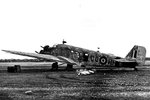
    Junkers Ju-52

    The Ju 52 was obsolete as a bomber by 1939, but because of its durability, simplicity of design, and handling characteristics it continued to serve throughout WW II as a versatile workhorse of the German transport fleet. For a period, Adolph Hitler used a Ju-52 as his private transport. Ju-52s delivered the attacking forces and their supplies during the German invasion of Norway, Denmark, France and the Low Countries in 1940. Almost 500 Ju-52s participated in the historic airborne assault on the island of Crete in May 1941 and Junkers later supplied Rommel's armored forces with them in North Africa. About 70 captured Luftwaffe aircraft were impressed into service, entering service with the RAF in Germany, immediately after the war in Europe. Used for communications and transport duties between 1945 and 1946.
    Attached Thumbnails Attached Thumbnails Captured Aircrafts: UK-6133519533_3f7883907d_b.jpg  
    Last edited by gekho; 03-17-2012 at 06:03 AM.

  11. #11
    Senior Member gekho's Avatar
    Join Date
    Jan 2010
    Location
    Spain
    Posts
    2,815
    Country
    Spain

    Savoia Marchetti SM.79 Sparviero

    They called it that “Damned Hunchback” (due to the distinctive hump) but it was one of the most important Italian produced aircraft of World War Two. The aircraft’s prototype first appeared in 1934 and was constructed around a tubular steel framework with wood and fabric coverings and sported three 750 hp Alfa Romeo 125 RC.34 engines in the Regia Aeronautica's preferred tri-motor formula. The prototype set several records and won many races and was just beginning to show its capabilities. Four ex-Yugoslav SM.79s were impressed into service with the RAF, one with No. 2 PRU and three with No. 117 Squadron. In service from 1941 to 1942.
    Attached Thumbnails Attached Thumbnails Captured Aircrafts: UK-savoia-marchetti-sm.79-sparviero-inglaterra-.jpg  

  12. #12
    Senior Member gekho's Avatar
    Join Date
    Jan 2010
    Location
    Spain
    Posts
    2,815
    Country
    Spain

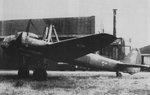
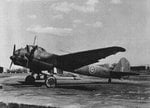
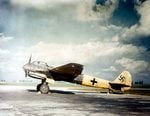
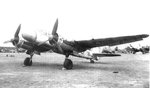
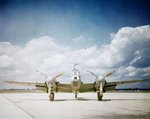
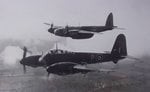
    Messerschmitt Me-410 Hornisse

    The Messerschmitt Me 410 Hornisse ("Hornet") was a German heavy fighter and Schnellbomber used by Luftwaffe during World War II. Though essentially a straightforward modification of the Me 210, it was designated the Me 410 to avoid association with its notoriously flawed predecessor.

    - Me-410 A-1/U2 (W.Nr.420430). This aircraft is part of the collection of the RAF Museum and is publicly displayed at the Royal Air Force Museum Cosford. It was built in late 1943 by Messerschmitt in Augsburg. There is evidence it served with Zerstörergeschwader 26 before being surrendered at Vaerlose, Denmark in May 1945. It was one of six Me 410s that were taken to the UK in 1945 for evaluation, but the only one to be later selected for preservation and to avoid being scrapped.
    - Me-410 A-1, Unit: 601 Sqn, RAF (ex ZG 76), Serial: 2N+HT. This aircraft was captured at Gerbini, Sicily by British. Eventually taken over by the USAAF 12th Bomber Group, it crashed in October 1943 with fatal results.
    - Me-410 B-6. The rear part of the fuselage overpainted probably in RAF Sea Grey Medium.
    Attached Thumbnails Attached Thumbnails Captured Aircrafts: UK-messerschmitt-me-410-hornisse-001.jpg   Captured Aircrafts: UK-messerschmitt-me-410-hornisse-001-1-.jpg  

    Captured Aircrafts: UK-messerschmitt-me-410-hornisse-inglaterra-004.jpg  
    Last edited by gekho; 03-17-2013 at 08:28 AM.

  13. #13
    Senior Member gekho's Avatar
    Join Date
    Jan 2010
    Location
    Spain
    Posts
    2,815
    Country
    Spain

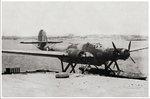
    Cant Z506 Airone

    One of these seplanes was the protagonist of a dramatic history in the Mediterranean's sky. On July 29, 1942 an Italian maritime reconnaissance floatplane Cant-Z-506B Airone of 139th Squadriglia after the rescue of the four crewmen of a RAF's Bristol Beufort shot down on the sea near Corfu, flew to Taranto with the prisoners, one British, one South African and two New Zealander. But during the flight, the prisoners overwhelmed the Italian five crewmen and hijacked the aircraft to Malta where the Italians were declared POW. At Malta the plane was commandeered by RAF, repainted in British colors and markings and registered HK977.

    Ted Strever was a Royal Air force pilot and was based in Malta during the spring of 1942. Ted took off in his Bristol Beaufort bomber on one particular mission in late July to intercept an Italian supply ship. He was shot down at sea after scoring a direct hit on the supply ship, which managed to do enough damage to Ted's plane before sinking. Not long after scrambling into their dingy after the crash Ted and his crew where picked up by an Italian sea plane and made prisoners of war. It did not take them long to learn that they would be taken to Taranto in Italy where they would spend the rest of the war as prisoners. The thought of their approaching doom spurred them into taking action against their captors. With the watchful eyes of the guard on them and limited communication the worlds first skyjack swung into action.

    They started straight for the radio operator, clearly to make sure no contact was made to the base and successfully took him out. They then overpowered an unexpected guard and managed to get his weapon off him. The first part of their attack was successful but the turning point came when the co-pilot pulled a pistol on them. Luck was on their side however as it was one the Italian's own comrades that knocked the weapon from his hands in the frantic struggle to regain control. It was after that bit of fortune in the frenzied chaos that they knew the plane was theirs, and Ted wasted no time in taking over the controls. New problems now became apparent. The first and more immediate issue was that they were fast running low on fuel. After asking the Italian Engineer kindly (at gunpoint) to switch to reserves and by changing their route, flying rather to their base at Malta instead of the African coast, this first problem was quickly taken care of. Next was the problem of flying an Italian plane. Ted's experience was sufficient to fly an Italian plane but to the allies this was an enemy aircraft fast approaching the Malta coast. Soon there were spitfires gunning them down. Normally the sight of spitfires off the wing of his torpedo bomber would have been comforting, however this was clearly not a Bristol Beaufort bomber and with holes being shot in his tail this was definitely not comforting. Ted hurled the first pilot back into his seat and ordered him in hurried sign-language to land in the sea.

    One of the men then whipped off his shirt and took his vest — the only white article he had — and waved it out of the window making it clear that they had come to surrender — albeit to their own side!The first wave of spits managed to do fair damage to the plane but they landed safely and the worlds 1st skyjack was over. Astonished to see four RAF's in the Italian plane a member of the launch team towing them back to St Paul's Bay said "We thought it was old Mussolini coming to give himself up!" Ted Strever received a DFC for his achievement in the war. He died in Haenertsburg, South Africa in 1997 at the age of 77.

    Source: [TMP] "Hijacked!!" Topic
    Attached Thumbnails Attached Thumbnails Captured Aircrafts: UK-cant-z506-airone-inglaterra-.jpg  

  14. #14
    Senior Member Wayne Little's Avatar
    Join Date
    Oct 2006
    Location
    Adelaide Sth. Aust.
    Posts
    35,561
    Country
    Australia
    good stuff as always...

  15. #15
    Senior Member gekho's Avatar
    Join Date
    Jan 2010
    Location
    Spain
    Posts
    2,815
    Country
    Spain

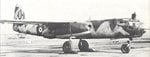
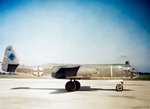
    Arado Ar-234 Blitz

    In the book "Wings of the Luftwaffe", written by the famous English test pilot Eric Brown, the story is told of the ferry-flights of several captured Arado Ar 234 B-2 jet bombers from Sola airfield (Stavanger) in Norway to the United Kingdom. The Arado’s were first flown to Schleswig in Germany and from there flown to Farnborough with a possible stop at Melsbroek in Belgium, if the weather dictated this. As there were not enough qualified Allied pilots available for these flights Captain Brown had recruited a German Hauptmann, who had served as a maintenance test pilot at Sola, to help fly the Ar 234's on these ferry-flights. One of these ferry flights ended not as it was planned.

    In the late afternoon of the 3rd October 1945 two Ar 234’s were ready for the ferry flight in formation from Schleswig to Melsbroek. After the take-off for a one-hour flight both aircraft ran into sea fog over the Zuiderzee (IJsselmeer) in the Netherlands and the two aircraft became separated. Captain Brown searched for the other Ar 234 but was not able to find it and calculated that owing to the fuel-situation returning to Schleswig was impossible. Even after shutting down one engine to improve the range it was doubtful if Schleswig could be reached. Captain Brown decided to cut one engine and try to reach Nordholz airfield near Cuxhaven. This solution brought another problem because flying on one engine reduced the cruise speed so much that dusk would fall before Nordholz could be reached. Nordholz was badly damaged and no landing lights were operational. A British naval unit spotted the lone Ar 234 and lighted two searchlights and pointed them in de direction of Nordholz. At Nordholz the USAAF unit stationed there was informed by the British Naval unit about the situation and used the headlights of some jeeps to lighten the landing strip. After re-lighting the dead engine Captain Brown was able to pull of a textbook landing on a sparsely lighted airfield.

    Source: Huib's Aviation Books and Flying Wings Page
    Attached Thumbnails Attached Thumbnails Captured Aircrafts: UK-arado-ar-234-blitz-inglaterra-001.jpg   Captured Aircrafts: UK-arado-ar-234-blitz-inglaterra-002.jpg  


+ Reply to Thread
Page 1 of 4 1 2 3 4 LastLast

Similar Threads

  1. Captured Aircrafts: EEUU
    By gekho in forum Aircraft Pictures
    Replies: 91
    Last Post: 04-09-2013, 08:25 AM
  2. Captured Aircrafts: Germany
    By gekho in forum Aircraft Pictures
    Replies: 64
    Last Post: 03-17-2013, 11:13 AM
  3. Spanish Civil War: Republican Air Force (FARE)
    By gekho in forum Between the wars 1918-1939
    Replies: 106
    Last Post: 03-16-2013, 08:26 AM
  4. Battle of France dedicated thread
    By delcyros in forum Aviation
    Replies: 44
    Last Post: 10-16-2007, 05:57 PM

Bookmarks

Posting Permissions

  • You may not post new threads
  • You may not post replies
  • You may not post attachments
  • You may not edit your posts

1 2 3 4 5 6 7 8 9 10 11 12 13 14 15 16 17 18 19 20 21 22 23 24 25 26 27 28 29 30 31 32 33 34 35 36 37 38 39 40 41 42 43 44 45 46 47 48 49 50 51 52 53 54 55 56 57 58 59 60 61 62 63 64 65 66 67 68 69 70 71 72 73 74 75 76 77 78 79 80 81 82 83 84 85 86