
Navigation
Install the app
How to install the app on iOS
Follow along with the video below to see how to install our site as a web app on your home screen.
Note: This feature may not be available in some browsers.
More options
You are using an out of date browser. It may not display this or other websites correctly.
You should upgrade or use an alternative browser.
You should upgrade or use an alternative browser.
Kyushu J7W1 Shinden canard prototype
- Thread starter Badsight-
- Start date
Ad: This forum contains affiliate links to products on Amazon and eBay. More information in Terms and rules
More options
Who Replied?


Wildcat
Major
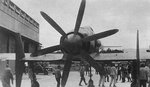
Nice pics! I never realised how big that thing was.

mosquitoman
Master Sergeant
Nice plane, any info on it?
BTW, nice avatar Badsight
BTW, nice avatar Badsight
- Thread starter
- #4
this is all the info i have in my Shinden text file :
Wingspan 11.1 m (36 ft 6 in)
Length 9.7 m (31 ft 8 in)
Height 3.9 m (12 ft 10 in)
Weight Empty, 3,645 kg (7,639 lb
Japan's J7W1 Shinden was the only World War II aircraft of canard configuration that any combatant ordered into production. Canard is a French term. The original meaning is obscure but aircraft designers used it then, as now, to describe an aircraft with the main wing mounted at the rear of the fuselage and a smaller wing at the front. In the United States, the Curtiss-Wright company and the Army Air Corps also experimented with a canard aircraft, the Curtiss XP-55 Ascender (see NASM collection). However, the J7W1 was apparently a more capable design. Though innovative and unusual, neither airplane progressed past the prototype stage.
Captain Masaoki Tsuruno fathered the Shinden. A member of the Technical Staff of the Japanese Navy, he envisioned a radical design to counter new Allied aircraft with superior performance over existing Japanese types. From the beginning, Tsuruno believed a turbojet engine would propel the ultimate Shinden. To prove the fundamental concept, the staff of the First Naval Air Technical Arsenal based at Yokosuka, designed and built three MXY6 canard gliders out of wood. These aircraft began flight trials in the fall of 1943. They featured a moderately swept wing with two vertical tail surfaces mounted on the main wing inboard of the ailerons. The Navy later powered one glider with a small 4-cylinder engine.
After a promising series of tests, it was time to build and test a pre-production prototype. The Navy ordered the Kyushu Hikoki K. K. firm to design a high-performance, canard interceptor despite the company's lack of experience with such unorthodox aircraft. Availability, not expertise, dictated this choice. Firms that were more capable were already operating at full capacity and could not accommodate a brand new aircraft design. The Navy had to reinforce the Kyushu design staff with additional engineers, including Tsuruno, transferred from Kugisho. Work began in June 1944 and the first of two prototypes was finished ten months later.
Kyushu engineers mounted the engine backwards inside the rear half of the fuselage. The radial, air-cooled power plant drove a 6-blade, pusher propeller on the end of an extended drive shaft. With the propeller fitted at the tail, it was necessary to use a tricycle landing gear consisting of one wheel and strut mounted under the nose and two under the wings. Today, this arrangement is common but during World War II, most fighter airplanes were equipped with tail wheels. An auxiliary wheel was attached to the bottom of each vertical fin. All five wheels, including the two auxiliaries, retracted after takeoff. Armament consisted of four 30 mm, Type 5 cannon placed in the nose. The weight of these large cannons helped to balance the weight of the engine and propeller at the back of the fuselage. Each gun could fire 450 rounds per minute. This was a very powerful armament package for the time.
In an unusual move dictated by the urgent needs of the war, the Navy ordered the Shinden into production even before the first flight. They planned to produce 150 of these machines each month at two production plants. Engine cooling problems, delays in the delivery of critical equipment for each airframe, and nationwide chaos felt in every part of the aircraft industry kept the J7W1 grounded until August 3, 1945. This day, Captain Tsuruno made the first flight. He took the Shinden aloft only twice more, on the 6th and the 9th of August. The war ended six days later. Tsuruno must have suspected that the end was near but he remained a cautious and conservative test pilot. In flight, he never raised the landing gear and the Shinden clocked just 45 minutes of total flying time. These short flights revealed several potentially serious problems. The airplane pulled hard right with applications of full engine power at takeoff and the propeller and drive shaft exhibited strong vibrations.
Kyushu also delivered a second prototype but this aircraft never flew. The company was troubleshooting the design and laying out the turbojet-propelled version when the war ended. The NASM aircraft is the first prototype. Naval intelligence specialists dismantled it and shipped the fighter to the U. S. at the end of 1945 for testing and evaluation, along with about 145 other Japanese airplanes. There is no record that anyone ever flew the J7W1 in the U. S. The Navy stored the aircraft and then transferred it to the Smithsonian in 1960.
Wingspan 11.1 m (36 ft 6 in)
Length 9.7 m (31 ft 8 in)
Height 3.9 m (12 ft 10 in)
Weight Empty, 3,645 kg (7,639 lb
Japan's J7W1 Shinden was the only World War II aircraft of canard configuration that any combatant ordered into production. Canard is a French term. The original meaning is obscure but aircraft designers used it then, as now, to describe an aircraft with the main wing mounted at the rear of the fuselage and a smaller wing at the front. In the United States, the Curtiss-Wright company and the Army Air Corps also experimented with a canard aircraft, the Curtiss XP-55 Ascender (see NASM collection). However, the J7W1 was apparently a more capable design. Though innovative and unusual, neither airplane progressed past the prototype stage.
Captain Masaoki Tsuruno fathered the Shinden. A member of the Technical Staff of the Japanese Navy, he envisioned a radical design to counter new Allied aircraft with superior performance over existing Japanese types. From the beginning, Tsuruno believed a turbojet engine would propel the ultimate Shinden. To prove the fundamental concept, the staff of the First Naval Air Technical Arsenal based at Yokosuka, designed and built three MXY6 canard gliders out of wood. These aircraft began flight trials in the fall of 1943. They featured a moderately swept wing with two vertical tail surfaces mounted on the main wing inboard of the ailerons. The Navy later powered one glider with a small 4-cylinder engine.
After a promising series of tests, it was time to build and test a pre-production prototype. The Navy ordered the Kyushu Hikoki K. K. firm to design a high-performance, canard interceptor despite the company's lack of experience with such unorthodox aircraft. Availability, not expertise, dictated this choice. Firms that were more capable were already operating at full capacity and could not accommodate a brand new aircraft design. The Navy had to reinforce the Kyushu design staff with additional engineers, including Tsuruno, transferred from Kugisho. Work began in June 1944 and the first of two prototypes was finished ten months later.
Kyushu engineers mounted the engine backwards inside the rear half of the fuselage. The radial, air-cooled power plant drove a 6-blade, pusher propeller on the end of an extended drive shaft. With the propeller fitted at the tail, it was necessary to use a tricycle landing gear consisting of one wheel and strut mounted under the nose and two under the wings. Today, this arrangement is common but during World War II, most fighter airplanes were equipped with tail wheels. An auxiliary wheel was attached to the bottom of each vertical fin. All five wheels, including the two auxiliaries, retracted after takeoff. Armament consisted of four 30 mm, Type 5 cannon placed in the nose. The weight of these large cannons helped to balance the weight of the engine and propeller at the back of the fuselage. Each gun could fire 450 rounds per minute. This was a very powerful armament package for the time.
In an unusual move dictated by the urgent needs of the war, the Navy ordered the Shinden into production even before the first flight. They planned to produce 150 of these machines each month at two production plants. Engine cooling problems, delays in the delivery of critical equipment for each airframe, and nationwide chaos felt in every part of the aircraft industry kept the J7W1 grounded until August 3, 1945. This day, Captain Tsuruno made the first flight. He took the Shinden aloft only twice more, on the 6th and the 9th of August. The war ended six days later. Tsuruno must have suspected that the end was near but he remained a cautious and conservative test pilot. In flight, he never raised the landing gear and the Shinden clocked just 45 minutes of total flying time. These short flights revealed several potentially serious problems. The airplane pulled hard right with applications of full engine power at takeoff and the propeller and drive shaft exhibited strong vibrations.
Kyushu also delivered a second prototype but this aircraft never flew. The company was troubleshooting the design and laying out the turbojet-propelled version when the war ended. The NASM aircraft is the first prototype. Naval intelligence specialists dismantled it and shipped the fighter to the U. S. at the end of 1945 for testing and evaluation, along with about 145 other Japanese airplanes. There is no record that anyone ever flew the J7W1 in the U. S. The Navy stored the aircraft and then transferred it to the Smithsonian in 1960.
- Thread starter
- #5
the supposed feild notes from the test flights copied from a shinden Internet webpage :
Prototype "SHINDEN" flying record
Mushiroda Aairport Hukuoka-city Hukuoka-pref. JAPAN
<1st test flying> in 3rd Augst 1945
Body conditions
Loading goods : Front opportunity gun (dummy) 2
Weight
Fuel (internal) : 38L
Lubricating oil : 80L
Parachute 1 set
pilot : Yoshitaka Miyaishi (Kyushu Aircraft Co)
-14% ofcenter of gravity position : (It faces an average wing string head.)
main wing Flap : 20°
front wing flap : 26°
Record
Takeoff : Boost +300mmHg
Engine rotation : 2,700 rpm
Exhaust temperature : 650°c
Pipe temperature : 200°c
Oil temperature : 75
Oil pressure : 6
Fuel pressure : 1.6
A raising rudder is taken with takeoff 100 kt in the above conditions, takeoff with speed 105 kt.
Takeoff operation is easy
Rising: Speed 120 kt
Boost +300mmHg
Engine rotation 2,700 rpm
Exhaust temperature 650°c
Pipe temperature 210°c
Oil temperature 87
Oil pressure 6
Fuel pressure 1.7
The right inclination by the propeller torque is very much made high. It can't be modified by the Amendment.
altitude 400m (level flight). .
Speed kt 130 140 130
Boost +300mmHg -100 0 100
Engine rotation rpm 2,400 2,400 2,700
Exhaust temperature c° 700 700 690
Pipe temperature c° 200 220 215
Oil temperature c° 87 87 87
Fuel pressure 1.6 1.7 1.7
Oil pressure 6 6 6
the right inclination by the propeller torque
Landing : gliding speed 130 kt
Landing operation is difficult due to the inclination by the propeller torque
<2nd test flying> in 6th Augst 1945
Body conditions
It is the same as the first flight
Record
Altitude Metre 100 200 300 400 500
Speed kt 120 120 120 135 120
Boost +300mmHg +150 +150 +150 +135 +150
Engine rotation rpm 2,550 2,550 2,550 2,200 2,550
Cowl flap is full open
Exhaust temperature c° 660 660 660
660 660
Pipe temperature c° 215 220 230
220
Oil temperature c° 81 89 93
102 97
Oil pressure 6 5.5 5
4.5-3.9 4.9
Fuel pressure 1.4 1.4 1.4 1.4 1.4
Methanol pressure -3 -3 -3 -3 -3
1.4 1.4 1.4
1.4 1.4
Amendment Full Left Full Left Full Left
Full Left Full Left
Up amendment Full up Full up Full up Full up Full up
The nose falls down though it was amended in the top during the rise.
A body leans to the right though it was amended in full left. The rudder is put, and it is high.
It was full lowered, and it landed with the rudder because the nose was raised suddenly when a rudder was a little raised to the top just before the landing.
Countermeasure
A sleeve is set up in the oil cooler.
<3ed test flying> in 8th Augst 1945
Body conditions
It is the same as the first flight
Record
Take off : 100 kt with the raising rudder
105 kt with front wheel up
110 kt with take off
Boost +300mmHg 2,700 rpm
Rising: Speed 120 kt
Boost +150mmhg
Engine rotation 2,550
Oil pressure 5.5
Fuel pressure 1.3
Exhaust temperature 630c°
Pipe temperature 240c°
Oil temperature 85c°
Inclination 6°
The nose falls down as it becomes low rotation though there is no change in the nose due to the increase and decrease of the engine rotation specially. Altitude 400m
It can fly horizontally if the nose falls down and a rudder is raised if a fulap is full raised during the level flight.
Landing gliding speed 130 kt Inclination 3°
Countermeasure
Bigger sleeve is set up in the oil cooler
Main wing falp 30°
Front wing flap is changed to 3°
EDIT : actual movie footage of these test flights was taken can be found on the internet today
Prototype "SHINDEN" flying record
Mushiroda Aairport Hukuoka-city Hukuoka-pref. JAPAN
<1st test flying> in 3rd Augst 1945
Body conditions
Loading goods : Front opportunity gun (dummy) 2
Weight
Fuel (internal) : 38L
Lubricating oil : 80L
Parachute 1 set
pilot : Yoshitaka Miyaishi (Kyushu Aircraft Co)
-14% ofcenter of gravity position : (It faces an average wing string head.)
main wing Flap : 20°
front wing flap : 26°
Record
Takeoff : Boost +300mmHg
Engine rotation : 2,700 rpm
Exhaust temperature : 650°c
Pipe temperature : 200°c
Oil temperature : 75
Oil pressure : 6
Fuel pressure : 1.6
A raising rudder is taken with takeoff 100 kt in the above conditions, takeoff with speed 105 kt.
Takeoff operation is easy
Rising: Speed 120 kt
Boost +300mmHg
Engine rotation 2,700 rpm
Exhaust temperature 650°c
Pipe temperature 210°c
Oil temperature 87
Oil pressure 6
Fuel pressure 1.7
The right inclination by the propeller torque is very much made high. It can't be modified by the Amendment.
altitude 400m (level flight). .
Speed kt 130 140 130
Boost +300mmHg -100 0 100
Engine rotation rpm 2,400 2,400 2,700
Exhaust temperature c° 700 700 690
Pipe temperature c° 200 220 215
Oil temperature c° 87 87 87
Fuel pressure 1.6 1.7 1.7
Oil pressure 6 6 6
the right inclination by the propeller torque
Landing : gliding speed 130 kt
Landing operation is difficult due to the inclination by the propeller torque
<2nd test flying> in 6th Augst 1945
Body conditions
It is the same as the first flight
Record
Altitude Metre 100 200 300 400 500
Speed kt 120 120 120 135 120
Boost +300mmHg +150 +150 +150 +135 +150
Engine rotation rpm 2,550 2,550 2,550 2,200 2,550
Cowl flap is full open
Exhaust temperature c° 660 660 660
660 660
Pipe temperature c° 215 220 230
220
Oil temperature c° 81 89 93
102 97
Oil pressure 6 5.5 5
4.5-3.9 4.9
Fuel pressure 1.4 1.4 1.4 1.4 1.4
Methanol pressure -3 -3 -3 -3 -3
1.4 1.4 1.4
1.4 1.4
Amendment Full Left Full Left Full Left
Full Left Full Left
Up amendment Full up Full up Full up Full up Full up
The nose falls down though it was amended in the top during the rise.
A body leans to the right though it was amended in full left. The rudder is put, and it is high.
It was full lowered, and it landed with the rudder because the nose was raised suddenly when a rudder was a little raised to the top just before the landing.
Countermeasure
A sleeve is set up in the oil cooler.
<3ed test flying> in 8th Augst 1945
Body conditions
It is the same as the first flight
Record
Take off : 100 kt with the raising rudder
105 kt with front wheel up
110 kt with take off
Boost +300mmHg 2,700 rpm
Rising: Speed 120 kt
Boost +150mmhg
Engine rotation 2,550
Oil pressure 5.5
Fuel pressure 1.3
Exhaust temperature 630c°
Pipe temperature 240c°
Oil temperature 85c°
Inclination 6°
The nose falls down as it becomes low rotation though there is no change in the nose due to the increase and decrease of the engine rotation specially. Altitude 400m
It can fly horizontally if the nose falls down and a rudder is raised if a fulap is full raised during the level flight.
Landing gliding speed 130 kt Inclination 3°
Countermeasure
Bigger sleeve is set up in the oil cooler
Main wing falp 30°
Front wing flap is changed to 3°
EDIT : actual movie footage of these test flights was taken can be found on the internet today
- Thread starter
- #6
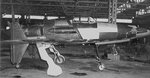
here is the Shinden today - stored at the smithsonium , it is on the backlog for restoration

there was talk of the project actually starting later this year , but i havent heard of anything definate
they recently completed the only Curtiss XP-55 Ascender to static restoration it looks great
there was talk of the project actually starting later this year , but i havent heard of anything definate
they recently completed the only Curtiss XP-55 Ascender to static restoration it looks great
mosquitoman
Master Sergeant
Wow, thanks

Parmigiano
Senior Airman
" Canard is a French term. The original meaning is obscure..."
canard means 'duck' in French, probably used because this type of configuration reminds a duck flying with the long neck forward and main mass and wings rearward
canard means 'duck' in French, probably used because this type of configuration reminds a duck flying with the long neck forward and main mass and wings rearward

Wildcat said:Nice pics! I never realised how big that thing was.
The actual airframe is very similar in size to the spitfire, but the tall undercarriage, needed for prop clearance, makes it look much bigger.
There were plans to fit a jet engine. Imagine how futuristic that would look in 1945
pics from:
Kyushu J7W "Shinden" - the most advanced and radical Japanese interceptor design.
Specification Table for the Kyushu J7W and the Curtiss XP-55
Kyushu J7W - Wikipedia, the free encyclopedia
Attachments

evangilder
"Shooter"
Interesting aircraft. Kind of reminds me of the Curtiss XP-55 Ascender.

Erich_Hartmann
Recruit
- 2
- May 28, 2006
Hi all,
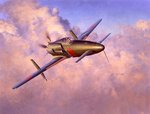
Matt, the painting is from Koike Shigeo, a world famous japanese aircrafts illustrator, he's an awesome artist, you can find lots of his works on Hasegawa aircraft kits boxes
Bye
Vince
Matt, the painting is from Koike Shigeo, a world famous japanese aircrafts illustrator, he's an awesome artist, you can find lots of his works on Hasegawa aircraft kits boxes
Bye
Vince
- Thread starter
- #14
yes - except the ***-ender was a dog with a poor CoG that was more of a danger to its own pilot than Bandits wereevangilder said:Interesting aircraft. Kind of reminds me of the Curtiss XP-55 Ascender.
wasnt totally to blame - it was loaded with a 400 Hp less Allison than it was supposed to recieve the extra power-loading may have helped mask its bad handeling somewhat
here she is restored ready for roll-out , almost exact to its test flight days


the only reported fault the Shinden gave from its 3 test flights was strong torque on take-off
Parmigiano
Senior Airman
Aggie08 said:I read somewhere that the Japanese did the canard much better than anyone else. I don't think that there were any specific advantages to this design, other than being a '44-'45 fighter which were all getting faster and deadlier.
I don't know technically why, but apparently the idea in 44-45 was that a pusher propeller was the best 'ultimate' design for prop fighters.
Many German designs had this configuration, but in Germany they decided to stop the development of 'Otto' fighters to concentrate on the more promising jets
Defintely a canard configuration has 3 big design advantages: greater visibility, easy taxi and take off (because of the tricycle gear) and weaponry concentrated in the nose without sync gear.
Would be interesting if some of the 'technical' guys in the forum could give some information about the aerodynamical/handling/efficiency (presumed) superiority of the canard configuration.
I can only say that one of the planes I loved most and wish I could had built is the 'Vary-Eze' by Burt Rutan!
twentynine
Airman
- 13
- Jun 19, 2006
Parmigiano said:Would be interesting if some of the 'technical' guys in the forum could give some information about the aerodynamical/handling/efficiency (presumed) superiority of the canard configuration.
On the handling I agree...the center o gravity (cg) is long before the nutral point of the wing...so the plane is more responsive to the controls like having the CG moved a little back on normal configuration.
In Rc-sailplanes we move back the CG just a little before the plane is unstable to have faster turning and good acro..
On the side of efficiency I don't agree so much.
Most of the airfoils fly "better" with the cg on 25/30% of the mean aerodynamic chord ...for autostable foils we are around 12/17%.
In a canard configuration the Cg is really near the leading edge of the wing...so rotating moment would be very high and the stab would need a very big longitudinal anhedral to compensate...
Also I seem to remember to have read they cannot have flaps

johnbr
2nd Lieutenant
I would love to had seen it with a pair of bmw 003d.

Matt308
Glock Perfection
Looks to me like it has "Engine Overheat" written all over it.

F4F Wildcat
Airman
I Love the Shinden! I don't care how many problems it had. It's just the design I love. I play a video game where you can buy a shinden to fly. It's for the NDS it's called Freedom Wings. Everyone says it stinks, but I like it just the same. Thanks for posting that painting, Aggie 08. I'm keeping that one. It's the picture in my desktop now.

Users who are viewing this thread
Total: 1 (members: 0, guests: 1)


