
Navigation
Install the app
How to install the app on iOS
Follow along with the video below to see how to install our site as a web app on your home screen.
Note: This feature may not be available in some browsers.
More options
You are using an out of date browser. It may not display this or other websites correctly.
You should upgrade or use an alternative browser.
You should upgrade or use an alternative browser.
B-29 Question
- Thread starter chris1966
- Start date
Ad: This forum contains affiliate links to products on Amazon and eBay. More information in Terms and rules
More options
Who Replied?
syscom3
Pacific Historian
The B29 wasnt going to add much to the war effort against Germany. The B17's and -24's were doing just fine.
However, in the PTO, the vast distances needed to be flown from existing allied bases to Japan required the B29. The JCS had agreed that noone was going to get the bomber but the 20thAF. In addition, B29 production was slow to ramp up for quite some time, and all available planes were to go to training bases or to the Pacific.
However, in the PTO, the vast distances needed to be flown from existing allied bases to Japan required the B29. The JCS had agreed that noone was going to get the bomber but the 20thAF. In addition, B29 production was slow to ramp up for quite some time, and all available planes were to go to training bases or to the Pacific.


SM79Sparviero
Airman
Does anyone have, by chance, tail gunner kills over Japan? I know that -29 tailgunners were the topmost scorers in the Korean War...
I have some data about the most violent air battle of the whole war .In April 12 1951 48 B29 escorted by 36 F84 and 18 F86 bombed Antung bridge, on Yalu.They were faced by a regiment of Mig-15.3 B29 were shot down , seven severely damaged.
4 Migs were shot down by the F-86s , and not less than 9 by B29 gunners.F84s gave bad results.

P38 Pilot
Tech Sergeant
Yeah, the -29 wasnt really needed. Japan was still raging war and flying at high altitude with winds moving faster than those over the Himilyas trying to carpet bomb a Large Japenese city was difficult.
Then the -29 came in and it got easier.
Then the -29 came in and it got easier.

evangilder
"Shooter"
The B-29 didn't change the strategy from high altitude to low altitude. That was done by Curt LeMay. B-29s initially did do the high altitude runs, before much was known about the jet stream and how it effected the bombing trajectories. The main benefits of the B-29 for the final victory over Japan was the range and large bomb load.

FLYBOYJ
"THE GREAT GAZOO"
SM79Sparviero said:Does anyone have, by chance, tail gunner kills over Japan? I know that -29 tailgunners were the topmost scorers in the Korean War...
I have some data about the most violent air battle of the whole war .In April 12 1951 48 B29 escorted by 36 F84 and 18 F86 bombed Antung bridge, on Yalu.They were faced by a regiment of Mig-15.3 B29 were shot down , seven severely damaged.
4 Migs were shot down by the F-86s , and not less than 9 by B29 gunners.F84s gave bad results.
The B-29 fire control system had trouble tracking targets moving in excess of 480 mph (if I remember right). Inside a targeting ring a red light would illuminate when the target was radar tracked and a firing solution calculated. When the sight turned red, it was time to fire - almost a sure kill! When the B-29 encountered the MiG-15, this would only occur for a Milli second because of the MiGs speed. The Tail gunner on the B-29 was at the best advantage as his gun was not radar controlled and he had the advantage of forward momentum when firing his weapon when defending from the rear.
The air battle on April 12, 1951 might of been the one my Uncle Bill participated in. His aircraft crashed (I'm not sure in Korea or upon returning to his base in Japan). During that mission he left his radio operator's position to go into the top fire control station. His aircraft was heavily hit and he got knocked to the floor with shrapnel wounds. A piece of shrapnel lodged in a bible that my grandmother had given him; he had it placed in his flight suit chest pocket!
When his plane crashed he cut his arm on the radio operator's table and his face hit the radio itself, knocking out his front teeth.....
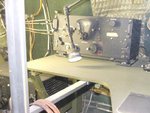
Ironically when i was in Jr. High School I had a teacher who was a B-29 radio operator. He too was in a B-29 crash and suffered the same wounds as my uncle. When I was at Wright-Patt a few weeks ago there was a B-29 fuselage on display. Attached is a photo of the radio operator's station, the forward fire control station is located across the cabin, more in the middle of the fuselage....
The B-29 shown "Command Decision" was a 5 MiG-Kill Korean War vet. Too bad the whole aircraft wasn't saved!
Remembering my Uncle tell this story and seeing this display gave me chills!
Attachments

syscom3
Pacific Historian
Didnt the B29 in WW2 use optical tracking gunsights that connected to the fire control computer?
FLYBOYJ
"THE GREAT GAZOO"
syscom3 said:Didnt the B29 in WW2 use optical tracking gunsights that connected to the fire control computer?
Yes and a radar input illuminated the targeting "pipper" giving indication when the gunner fired. The tail gunner also had radar warning which gave him indication when an aircraft was approaching, but he manually manipulated his guns
syscom3
Pacific Historian
If they had a radar tracker, where was it placed? I dont remember seeing radar blisters on the upper fuselauge. Remember, im talking about the WW2 model, not post war models.
FLYBOYJ
"THE GREAT GAZOO"
syscom3 said:If they had a radar tracker, where was it placed? I dont remember seeing radar blisters on the upper fuselauge. Remember, im talking about the WW2 model, not post war models.
Don't know - and remember, my Uncle flew the B-29 in Korea. I remember vividly him talking about this red light that was "radar activated."

syscom3
Pacific Historian
Thats interesting. I need to check up on that. maybe the radar was added on post war models.
Just curious..... was it a B29 in Korea or the B50 models?
Just curious..... was it a B29 in Korea or the B50 models?
FLYBOYJ
"THE GREAT GAZOO"
Found this little blurb on the -29.....
Boeing 345 Model (B-29 Superfortress)
Category: Bombers
Type: Ten-seat long-range strategic bomber/reconnaissance aircraft
AKA: B-29; Superfortress
Wing Span: 43.05m (141ft 3in)
Length: 30.18m (99ft)
Height: 9.02m (29ft 7in)
Powerplant: 4 Wright 2,200hp turbo-charged radial piston engines
Maximum Speed: 576km/h (358 mph)
Range: 5230km (3,250miles)
Ceiling: 9710m (31,850ft)
Armament: Two 12.7mm (0.5in) machine-guns in each of four remote-controlled power-operated turrets, and three 12.7mm (0.5in) guns, or two 12.7mm (0.5in) guns and one 20mm cannon, in the tail turret. Up to 9072kg (20,000lb) of bombs.
The B-29 was the most technologically advanced bomber to see service during the Second World War, featuring pressurized environments for the flight crew as well as remote-controlled turret guns targeted by radar and synchronized by an early computer.
http://www.exn.ca/flightpath/plane.asp?ID=27
Boeing 345 Model (B-29 Superfortress)
Category: Bombers
Type: Ten-seat long-range strategic bomber/reconnaissance aircraft
AKA: B-29; Superfortress
Wing Span: 43.05m (141ft 3in)
Length: 30.18m (99ft)
Height: 9.02m (29ft 7in)
Powerplant: 4 Wright 2,200hp turbo-charged radial piston engines
Maximum Speed: 576km/h (358 mph)
Range: 5230km (3,250miles)
Ceiling: 9710m (31,850ft)
Armament: Two 12.7mm (0.5in) machine-guns in each of four remote-controlled power-operated turrets, and three 12.7mm (0.5in) guns, or two 12.7mm (0.5in) guns and one 20mm cannon, in the tail turret. Up to 9072kg (20,000lb) of bombs.
The B-29 was the most technologically advanced bomber to see service during the Second World War, featuring pressurized environments for the flight crew as well as remote-controlled turret guns targeted by radar and synchronized by an early computer.
http://www.exn.ca/flightpath/plane.asp?ID=27
FLYBOYJ
"THE GREAT GAZOO"
syscom3 said:Thats interesting. I need to check up on that. maybe the radar was added on post war models.
Just curious..... was it a B29 in Korea or the B50 models?
I'm looking it up too....
Now I know offically B-50s were not used in Korea, but my Uncle told me he's seen them there, possibly flying "Spook" missions. The mission he was shot down I do remember him saying he was in a B-29

DaveB.inVa
Airman 1st Class
- 225
- Dec 20, 2004
As far as I know there weren't any radar tracking devices at all available for the blister gunners. The pipper illumination was controlled by a rheostat on the sight pedistal and also included an internal ring and bead as backup should the pipper fail.
On the side facing the gunner there was a switch that was selected according to the wingspan of the aircraft to be fire upon. This was just to set different calibrations of the sight so you wouldnt be firing on a twin engined fighter and the system think it was firing at a Zero up close.
On the right hand side of the sight there was a range knob. When on the pipper placed a reflection on a sighting glass seen when looking through the sight. As the fighter approached or whatever it did the gunner would keep the fighter in the pipper. As the aircraft got closer the picture in the sight would obviously get larger. The range knob was cranked to keep the pipper frame around the aircraft. The pipper frame reflection looked like a dot of light surrounded by a ring of other dots of light. When the range knob was cranked the ring would grow larger and more light dots would appear to fill in the gaps because of the growing circumference.
This all had to be done as smooth as possible to allow everything to work as good as possible.
The gunnery system was also interconnected so that more than one gunner could control a turret, but was not able to have one gunner control every turret. Gunners were also assigned a primary turret that could be handed over to another gunner if the primary wasn't firing.
The CFC gunner (top bubble) had primary control of the aft top turret and secondary control of the front top turret.
The bombardier had primary control of both the front top and front bottom turrets.
The side blister gunners had primary control of the aft lower turret and both had secondary control of the lower nose turret. The blister gunners also had secondary control of the tail turret.
The tail gunner only had control of his turret.
The tail gun was basically the same as the other gunners in that it used the same computing sight as the blister gunners. On B-29B models however there was a radar directed sight. It just directed the gunner... it didnt automatically track or fire on the target. The tail gunner followed what the radar said and did what was needed. The B's were only used by the 315 BW on Guam and can be recognized by their having no other turrets, the AN/ANQ-7 Eagle radar wing between the bomb bays, and the AN/APQ-15 tail warning radar ball hanging below the twin .50's of the tail gun.
On the side facing the gunner there was a switch that was selected according to the wingspan of the aircraft to be fire upon. This was just to set different calibrations of the sight so you wouldnt be firing on a twin engined fighter and the system think it was firing at a Zero up close.
On the right hand side of the sight there was a range knob. When on the pipper placed a reflection on a sighting glass seen when looking through the sight. As the fighter approached or whatever it did the gunner would keep the fighter in the pipper. As the aircraft got closer the picture in the sight would obviously get larger. The range knob was cranked to keep the pipper frame around the aircraft. The pipper frame reflection looked like a dot of light surrounded by a ring of other dots of light. When the range knob was cranked the ring would grow larger and more light dots would appear to fill in the gaps because of the growing circumference.
This all had to be done as smooth as possible to allow everything to work as good as possible.
The gunnery system was also interconnected so that more than one gunner could control a turret, but was not able to have one gunner control every turret. Gunners were also assigned a primary turret that could be handed over to another gunner if the primary wasn't firing.
The CFC gunner (top bubble) had primary control of the aft top turret and secondary control of the front top turret.
The bombardier had primary control of both the front top and front bottom turrets.
The side blister gunners had primary control of the aft lower turret and both had secondary control of the lower nose turret. The blister gunners also had secondary control of the tail turret.
The tail gunner only had control of his turret.
The tail gun was basically the same as the other gunners in that it used the same computing sight as the blister gunners. On B-29B models however there was a radar directed sight. It just directed the gunner... it didnt automatically track or fire on the target. The tail gunner followed what the radar said and did what was needed. The B's were only used by the 315 BW on Guam and can be recognized by their having no other turrets, the AN/ANQ-7 Eagle radar wing between the bomb bays, and the AN/APQ-15 tail warning radar ball hanging below the twin .50's of the tail gun.
FLYBOYJ
"THE GREAT GAZOO"
Thanks Dave! I wonder where Uncle Bill came up with this "Radar Sight?" Maybe it was used in the B-50?
syscom3
Pacific Historian
The gunners had to have nerves of steel to be able to calmly operate that range knob, while the incoming fighters were lining up and firing at them.
I wonder if they brought along a change of underwear.
I wonder if they brought along a change of underwear.
FLYBOYJ
"THE GREAT GAZOO"
syscom3 said:The gunners had to have nerves of steel to be able to calmly operate that range knob, while the incoming fighters were lining up and firing at them.
I wonder if they brought along a change of underwear.
Especially against the MiG-15!
I'm still researching this turret radar thing. I remember reading it on other occasions....
DaveB.inVa
Airman 1st Class
- 225
- Dec 20, 2004
Ive seen a lot of websites quote that they were radar controlled but I've never saw anything to back it up. The B-50 was pretty much the same as the B-29 in the gunnery department, except the B-50 had that fancy streamlined top turret. Actually from Block-40 up B-29A's came with the streamlined turret as well. (The B-29A is also a cause of a lot of debate because a lot of sources state the A had a wingspan 1 foot greater than the other models. Thats another falsehood.)
Theres a guy on the B-29 Yahoo group named Frank Farrell who was a Korean War blister gunner. He has stated many times that they weren't to fire on the MiG's. Also when the MiG's came around most bombing was shifted to nighttime work. He said most times then that the Radar operator would track the incoming aircraft and they could watch for them, but most times at night you didn't know where they really were until you saw the fire from the jet as it went past the B-29. Farrell has a great book that I can recommend called "NO SWEAT". Its surely a good story about a Korean War blister gunner. FBJ seeing that your uncle was just that I'd say you would really enjoy it!!
Theres a guy on the B-29 Yahoo group named Frank Farrell who was a Korean War blister gunner. He has stated many times that they weren't to fire on the MiG's. Also when the MiG's came around most bombing was shifted to nighttime work. He said most times then that the Radar operator would track the incoming aircraft and they could watch for them, but most times at night you didn't know where they really were until you saw the fire from the jet as it went past the B-29. Farrell has a great book that I can recommend called "NO SWEAT". Its surely a good story about a Korean War blister gunner. FBJ seeing that your uncle was just that I'd say you would really enjoy it!!
FLYBOYJ
"THE GREAT GAZOO"
DaveB.inVa said:Ive seen a lot of websites quote that they were radar controlled but I've never saw anything to back it up. The B-50 was pretty much the same as the B-29 in the gunnery department, except the B-50 had that fancy streamlined top turret. Actually from Block-40 up B-29A's came with the streamlined turret as well. (The B-29A is also a cause of a lot of debate because a lot of sources state the A had a wingspan 1 foot greater than the other models. Thats another falsehood.)
Theres a guy on the B-29 Yahoo group named Frank Farrell who was a Korean War blister gunner. He has stated many times that they weren't to fire on the MiG's. Also when the MiG's came around most bombing was shifted to nighttime work. He said most times then that the Radar operator would track the incoming aircraft and they could watch for them, but most times at night you didn't know where they really were until you saw the fire from the jet as it went past the B-29. Farrell has a great book that I can recommend called "NO SWEAT". Its surely a good story about a Korean War blister gunner. FBJ seeing that your uncle was just that I'd say you would really enjoy it!!
Great stuff Dave, I've got to get that book! Maybe the error about the B-29 turrests being radar control lies with the installation of the AN/APG-15As radar installed in the tail. As mentioned earlier I know when he was shot down, it was in the daytime, so it might of been during the April 51' raids. He did speak of some tail gunners in his squadron downing MiGs and he also spoke about knowing an F-82 pilot who shot down a YAK-9. It seems he was there early in the war...
I know my Uncle was a Radio Operator, perhaps he could of been talking about operating the radar with regards to sighting or tracking MiGs?
He did mention he did "go into" the forward gun position a lot as it was right next to his radio operator's station, he said he did that because they didn't have a full crew for some missions....
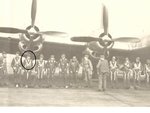
I don't know if you saw the thread I started about him, here's a photo of him getting reday to fly a ferret mission in a B-50 after the Korean War.
Attachments
Users who are viewing this thread
Total: 1 (members: 0, guests: 1)

