
Navigation
Install the app
How to install the app on iOS
Follow along with the video below to see how to install our site as a web app on your home screen.
Note: This feature may not be available in some browsers.
More options
You are using an out of date browser. It may not display this or other websites correctly.
You should upgrade or use an alternative browser.
You should upgrade or use an alternative browser.
Corsair vs. BF 109G,K or FW 190's (2 Viewers)
- Thread starter 16KJV11
- Start date
Ad: This forum contains affiliate links to products on Amazon and eBay. More information in Terms and rules
More options
Who Replied?

Looking forward to you adding the Bf-109 Spitfire
I will work on adding the Bf-109. I hope the charts are useful in helping people to gain insight into the nature of aircraft turn performance.
All the best,
Crumpp

drgondog
Major
Bill, Sorry for my misleading post about P51D deployment. I should have looked further. I am glad to see that Dav has what I consider as a thorough and comprehensive reference on US WW2 fighters, "America's One Hundred Thousand" and it states the June 1944 date as to when P51Ds began to reach the 8th AF in quantity.
Ted Damick gave me March 17, 1944 as the date 44-13254 P-51D-5 (#1) rolled off the California line. It was delivered to Eglin. 44-13257 P-51D-5 (#4) was delivered to Langley.
P-51D-5 44-13258 through 13278 were flown to 15th AF a couple to 9th, 13279 went to ETO (then 355th along with 44-13305) along with most of the 44-13300 through 500 starting May 6. The Air Service Depots started delivery to 8th AF Groups around June 4-6 (no firm date yet) and the first two recorded P-5D-5 accidents were from 363rd (9th AF) and 4th FG on June 7, 1944..
The first recorded LOST IN COMBAT P-51D was June 18 in 44-13307 VF-J Lt Lane (flak)

lesofprimus
Brigadier General
Bill, unreal ifo ur pumpin out to the masses brother...
Cheers!!!
As for the graphs, Im havin trouble actually understanding what they are interpeting for me....
Cheers!!!
As for the graphs, Im havin trouble actually understanding what they are interpeting for me....
As for the graphs, Im havin trouble actually understanding what they are interpeting for me....
The maximum load factor or number of "G's" an aircraft is capable of sustaining in a turn. It is termed "Nz" for normal accelerations on the z axis.
Load Factor in a Level Turn
All the best,
Crumpp


drgondog
Major
I will work on adding the Bf-109. I hope the charts are useful in helping people to gain insight into the nature of aircraft turn performance.
All the best,
Crumpp
Crumpp - I forgot to ask whether you have have curves presented several power available/altitude profiles of say the Fw 190A8 vs the P-51D? At first observation it seems like these are normalized to Sea Level??
Crumpp - I forgot to ask whether you have have curves presented several power available/altitude profiles of say the Fw 190A8 vs the P-51D? At first observation it seems like these are normalized to Sea Level??
Hi Bill,
Both aircraft have curves for different configurations. The P51D is calculated for the TO weight 9611lb clean configuration overloaded fighter without the rear fuselage tank installed. The FW-190A8 is for a TO weight of 4272Kg termed "Fluggewicht A" on the ladeplane or clean configuration overloaded fighter. There is also one chart of the FW-190A8 in "Fluggewicht B" with ETC501 rack and the 115 liter Zusatzkraftstoffbehälter im rumpf.
Both aircraft are also depicted at combat weight as the USAAF defined it, 60% internal fuel, full ammunition, and consumables.
The speeds are listed in Knots Equivalent Airspeed. Altitude will change the velocity specific performance occurs but not the conclusion or shape of the curve. It is standard to use KEAS in these kind of estimates. All you have to do to convert to TAS is multiply the KEAS by SMOE found on the Atmospheric Table. This corrects for density at altitude.
KEAS is Indicated airspeed with the aircrafts Instrument Position Error Correction and a correction for the compressibility of air.
As you know, there is not nor was there ever a universal or standard method for application of compressibility. By converting the airspeed from IAS, we eliminate this as a factor in our performance estimate. Even today engineering firms set their own standards for the point we move from treating air as an incompressible liquid to a compressible gas. So once the Position Error Correction is accounted for I applied a universal standard for compressibility error onset at 200KTS. This way the playing field is leveled and we are not inducing error due to different firms standards for compressibility.
All the best,
Crumpp
Of course it! How silly of me, I knew that.
LOL!
drgondog
Major
Hi Bill,
Both aircraft have curves for different configurations.
Agreed and understood... but it did occur to me that in real life a hard turning manuever with a full fuel tank would be very dangerous in the 51B/C/D
The speeds are listed in Knots Equivalent Airspeed. Altitude will change the velocity specific performance occurs but not the conclusion or shape of the curve. It is standard to use KEAS in these kind of estimates. All you have to do to convert to TAS is multiply the KEAS by SMOE found on the Atmospheric Table. This corrects for density at altitude.
KEAS is Indicated airspeed with the aircrafts Instrument Position Error Correction and a correction for the compressibility of air.
Also agreed and makes sense to develop comparative load factor curves - up to a point. What made me ponder the 'universal' factor is the nagging (for me) question of Power Available in your model.
The thrust of my earlier question is the Power Available for both aircraft is not only not linear (of course) but not the same curve for both fighters at point where for example Low Blower is operating and High blower kicks in - both would likely operate at an advantage/disadvantage from each other in the Power Available/Power required would they not?
So my question "SL under assumption of say Max TO Power available to each Fighter" would be a one curve (each) plot, but is it as you move up each power curve as Function of altitude and use the altitude equivalent max power available in your load factor equations wouldn't you get some interesting results?
Did you go to the trouble of plotting Power Available for the 1650-7, for example and take it up through say 35K? and same for Fw 190A8?
As you know, there is not nor was there ever a universal or standard method for application of compressibility. By converting the airspeed from IAS, we eliminate this as a factor in our performance estimate.
Perfect for modelling or analytical comparisons
Even today engineering firms set their own standards for the point we move from treating air as an incompressible liquid to a compressible gas. So once the Position Error Correction is accounted for I applied a universal standard for compressibility error onset at 200KTS. This way the playing field is leveled and we are not inducing error due to different firms standards for compressibility.
Thanks for taking the time - I've been out of flight mechanics for too long.

FLYBOYJ
"THE GREAT GAZOO"
Great info Crumpp!
Thanks for taking the time - I've been out of flight mechanics for too long.
The analysis works up to 1st gear FTH. It does not include second gear effects although given a good engine chart it would be entirely possible to do an analysis.
Although we use power available, the prediction actually uses thrust production as a function of Thrust Horsepower and velocity with an assumed propeller efficiency of 85%.
I used 85% as it is considered the norm for propeller aircraft predictions. I do have good thrust horsepower data on the Focke Wulf series. It shows an Np depending on the advanced ratio from the low 60's to the mid 90's. I do have some data on the P51's propeller as well. It shows a similar trend in Np.
So assuming an Np of .85 is not going to change the conclusions of the prediction. There is no specific performance conclusions that can be made from any of these predictions. In the realm of significant digits though, the prediction is accurate for determining trends in performance.
Specific performance is far beyond the scope of one man who has to feed a family. It would take an engineering team with mounds of data and computer time to do that.
We can accurately say that the P51 series and the FW190 series are close enough that pilot skill makes all the difference and that aircraft configuration is a major contributing factor.
Two clean aircraft in similar loading configuration at or below FTH gives the FW190A8/D9 series a slight advantage at low to mid velocity. At high velocity the P51 series holds a slight advantage. Roll rate would be more important between these two aircraft as the aircraft which establishes the turn first will widen its advantage. Here again, at low velocity the FW190 wins out and the P51 series wins out at high velocity with the mid range leaving the two aircraft equal.
If the configurations were dissimilar, then the clean fighter would hold the advantage.
We cannot make a blanket statement that either aircraft design is superior to the other in horizontal maneuvering.
Offhand, At 35K the V-1650-3 equipped P51 series would hold a wider advantage but the V-1650-7 equipped P51 series would be very close.
I could run an analysis for you but will have to add it to my list of "things to do" after the Bf-109/Spitfire analysis..
You can also see by examining such aircraft as the Zeke 52 and P47D-22 some interesting trends. Although the Zeke 52 can easily outturn the P47 as it can reach a high Nzmax at some very low velocities, the P47 is the superior fighter. If the P47D-22 stays in its best turn velocity range, the Zeke 52 cannot touch it. It simply does not have the power available at velocity. The P47D-22 for example can sustain 2.75G's at 250KEAS while the Zeke 52 can only fly wings level at 250KEAS.
It is easy to see why the IJNAF did not retain air superiority in the Pacific.
All the best,
Crumpp
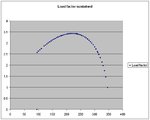
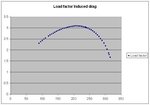
According to your chart the Dora-9 holds a clear advantage over the P-51D at all speeds, which is entirely correct according to most sources.
Certainly if we are flying a Dora-9 using C3 fuel and MW50. The more common B4 with the Oldenburg system was a much closer match.
I caution you not to read into these charts. They are not predicting specfic performance. For example all we can conclude is that at 300KEAS the FW-190D9 clean configuration overload fighter variant with C3 and MW50 had a turn advantage over the P51D clean configuration overloaded fighter. We cannot say that it was could pull .74g's more than the P51. All we can say is in the realm of significant digits, the FW190D9 C3 was advantaged but not by a large margin.
Consider too just how many pilots could take advantage of this level of superiority.
All the best,
Crumpp

Sgt. Pappy
Airman 1st Class
- 197
- Jun 7, 2006
Coming from a video game-based community, I can't really say much that is of true value, but from what I've learned from the Aces High II flight models, the F4U is quite superior to the Mustang in all but speed and zoom/sustained climb. Compared to the 190-A5 for example, it dives better, zooms better, and turns tighter. The 109K-4 is likely to eat the F4U-1 series (that is the F4U-1, -1A, etc) alive but the contemporary of the K-4 is the F4U-4 which is more or less on par with the Kurfurst, IMO. It has been said that the Kurfurst is better in everything but roll but the deployment of the highly efficient flaps of the F4U in addition to the lower wingloading allows it to get the Corsair just as maneuverable as the wing-slatted 109.
The slotted flaps of the Corsair offer it far greater maneuverability than both the P-51 and the 190 due to a much higher Clmax and its higher power loading affords it better acceleration. I don't consider range to be a very important factor in fighters; after all, fuel load never helped bombers dogfight so why would it help fighters?
Anyhoo, here's a good link that might be interesting: The Math Behind Turning
The slotted flaps of the Corsair offer it far greater maneuverability than both the P-51 and the 190 due to a much higher Clmax and its higher power loading affords it better acceleration. I don't consider range to be a very important factor in fighters; after all, fuel load never helped bombers dogfight so why would it help fighters?
Anyhoo, here's a good link that might be interesting: The Math Behind Turning
Certainly if we are flying a Dora-9 using C3 fuel and MW50. The more common B4 with the Oldenburg system was a much closer match.
I caution you not to read into these charts. They are not predicting specfic performance. For example all we can conclude is that at 300KEAS the FW-190D9 clean configuration overload fighter variant with C3 and MW50 had a turn advantage over the P51D clean configuration overloaded fighter. We cannot say that it was could pull .74g's more than the P51. All we can say is in the realm of significant digits, the FW190D9 C3 was advantaged but not by a large margin.
Consider too just how many pilots could take advantage of this level of superiority.
All the best,
Crumpp
Copy that Crumpp.
However considering the lift-loading of the FW-190 was lower as-well we can safely assume that the FW-190 can pull more G's. The light stick forces of the Fw-190 series, esp. in elevator control, also made sure it was far more maneuverable at high speed.
According to NACA the 23000 series airfoils from 15 - 9% thickness ratio had an average free flow CLmax of around 1.60. This is much higher than the laminar flow airfoil on the P-51.
However considering the lift-loading of the FW-190 was lower
I don't think this is correct, Soren. The Dora has higher wingloading at TO weight than the P51D series.
The Dora has more power available though as it has lower drag than the Anton variants while increasing thrust production.
You are correct on the higher Clmax. Clmax required of the P51D series is 1.50 and the Clmax required of the Dora-9 is 1.58 if these aircraft are to reach the stall speeds provided by the manufacturer.
here's a good link that might be interesting:
That is pretty much the same methodology I used.
All the best,
Crumpp
Don't know the stall speeds of each a/c, however I do know that the Dora-9's landing speed was 167 km/h and that the P-51's landing speed is 170 km/h.
The Dora-9 also has a much shorter take-off run, both to point of take-off and to clear a 20m high object, which it actually does on a shorter distance than it takes the P-51D to clear a 15m high object.
The Dora-9 also has a much shorter take-off run, both to point of take-off and to clear a 20m high object, which it actually does on a shorter distance than it takes the P-51D to clear a 15m high object.
drgondog
Major
The analysis works up to 1st gear FTH. It does not include second gear effects although given a good engine chart it would be entirely possible to do an analysis.
I felt this to be true - which is why I asked the question earlier.. what was running through my mind was a.) Hp/Thrust as function of altitude - each fighter with a different profile , .b) prop efficiency at recommended versus max rpm, c.) relative energy losses beteen the two ships in high G level turn at different altitudes - not only as function of induced drag but the overall airframe wing/body combination - your profile does an excellent job of consolidating relative merits w/o going throug a full blown performance analysis
Although we use power available, the prediction actually uses thrust production as a function of Thrust Horsepower and velocity with an assumed propeller efficiency of 85%.
Specific performance is far beyond the scope of one man who has to feed a family. It would take an engineering team with mounds of data and computer time to do that.
and of course the inevitable flight tests with pilot skill and knowledge of the airplane as another set of variables
We can accurately say that the P51 series and the FW190 series are close enough that pilot skill makes all the difference and that aircraft configuration is a major contributing factor.
That's basically what the 8th AF directives said about the two in air to air combat - particularly at or below medium altitudes, low to medium speed.
Two clean aircraft in similar loading configuration at or below FTH gives the FW190A8/D9 series a slight advantage at low to mid velocity. At high velocity the P51 series holds a slight advantage. Roll rate would be more important between these two aircraft as the aircraft which establishes the turn first will widen its advantage. Here again, at low velocity the FW190 wins out and the P51 series wins out at high velocity with the mid range leaving the two aircraft equal.
If the configurations were dissimilar, then the clean fighter would hold the advantage.
We cannot make a blanket statement that either aircraft design is superior to the other in horizontal maneuvering.
Offhand, At 35K the V-1650-3 equipped P51 series would hold a wider advantage but the V-1650-7 equipped P51 series would be very close.
I could run an analysis for you but will have to add it to my list of "things to do" after the Bf-109/Spitfire analysis..
Thanks, Crump - you've given me what I need - except to pose one question about 109G-6 versus 51D in context of a.) relative disadvantage of high control forces of 109 at high speed versus better flight control at or near stall for experienced 109 pilot with slats working? Would your methodolgy attempt to analyze such inputs? .
Crumpp
Thanks again Crumpp
Users who are viewing this thread
Total: 3 (members: 0, guests: 3)


