Aircraft of World War II - Warbird Forums

Fokker D.XXI in Dutch service

Aviation Discuss Fokker D.XXI in Dutch service in the World War II - Aviation forums; This thread is meant to cover the story of the D.XXI, while focussed on the service in The Netherlands. (...


Go Back   Aircraft of World War II - Warbird Forums > World War II - Aviation > Aviation

Reply
 
LinkBack Thread Tools Search this Thread Display Modes
Old 09-22-2008, 03:53 PM   #1
Senior Member
 
Marcel's Avatar
 
Join Date: Sep 2006
Location: Dordrecht
Posts: 2,589
Country:
Fokker D.XXI in Dutch service

This thread is meant to cover the story of the D.XXI, while focussed on the service in The Netherlands. (I will probably bore the hell out of you I'm mainly using Dutch sources as they are usually not accessible for non-dutch speaking people, like most of you. Sources are (amongst others): "Illusies en incidenten, Dutch Profile: Fokker D.XXI, , Stories of various Dutch pilots, Luchtoorlog Mei 1940, and many others.
If there is any bias (after all I'm Dutch) or inaccuracies, you're of course free to chime in. Info from other users (Denmark and Finland) is welcome if it adds to this story. As I will by quite busy in the coming months, it can sometimes take a while for me to pick up the thread again.
__________________

"I'm no hero. Soldiers on the ground, they are heroes. In an aircraft you can always evade the bullets."
-Jan Linzel, Dutch fighter pilot

Last edited by Marcel : 09-22-2008 at 04:16 PM.
Marcel is offline  
Digg this Post!Add Post to del.icio.usBookmark Post in TechnoratiFurl this Post!Spurl this Post!Reddit! Wong this Post!
Reply With Quote
Old 09-22-2008, 03:54 PM   #2
Senior Member
 
Marcel's Avatar
 
Join Date: Sep 2006
Location: Dordrecht
Posts: 2,589
Country:
Development

In May 1934, the KNIL (Royal Dutch East Indies Army) issued a specification for a new fighter in order to replace the Curtiss Hawk bi-plane, in use since 1930. The fighter had to operate under primitive conditions and thus had to be rugged and simple, with a fixed landing gear (many say the D.XXI had a fixed gear for financial reasons, but this is incorrect). The requested armament was remarkable, a fixed 12.7 mm MG and 2 adjustable 7.9mm MG’s (10° upwards and to the side). A small bomb load was also requested.

Fokker reacted with 2 designs, the D.XIX (an improved D.XVII) and desigin 112, a low wing monoplane powered by a RR Kestral engine. The latter was renamed the D.XXI and was favored above the D.XIX. In April 1935, Fokker was asked to redesign for the 645 hp Bristol Mercury VI engine. The adjustable MG’s proved to be troublesome and expensive, so they were dropped in favor of fixed MG’s in the wings.

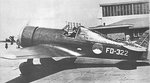
The prototype with East-Indies registration FD-322 was finished in February 1936. The KNIL tested the a/c extensively. On May the 1st, during a spin test, the prototype fell into a nasty spin, from which it didn’t seem to recover. The pilot decided to bail out, but got control again while trying to jump. He landed and shouted to the spectators to use a match and burn it. The KNIL decided not to use the a/c. A german test pilot then completed the test and showed that the D.XXI could perform spins without trouble but the KNIL had changed strategy. It planned one a strong bomber force and the Fokker fighter wasn’t needed anymore.

The only D.XXI to reach the Dutch East Indies was the prototype FD-322. What happened to the a/c is unclear. Some sources claim it was scrapped in 1941, while others claim it was destroyed by a Japanese bomb in 1942.
Attached Images
File Type: jpg fr-001.jpg (22.3 KB, 110 views)
__________________

"I'm no hero. Soldiers on the ground, they are heroes. In an aircraft you can always evade the bullets."
-Jan Linzel, Dutch fighter pilot
Marcel is offline  
Digg this Post!Add Post to del.icio.usBookmark Post in TechnoratiFurl this Post!Spurl this Post!Reddit! Wong this Post!
Reply With Quote
Old 09-22-2008, 03:55 PM   #3
Senior Member
 
Marcel's Avatar
 
Join Date: Sep 2006
Location: Dordrecht
Posts: 2,589
Country:
Acceptance by the Dutch LVA

After the KNIL declined the fighter, the dutch minister of colonies Colijn offered the D.XXI to the minister of defence Colijn (Colijn held both posts at the same time )
The Dutch LVA (Luchtvaart Afdeling, Aviation Departement) was in terrible shape. The best fighter at the time was the Fokker D.XVII biplane, the LVA had 9 of them. After testing the D.XXI, the LVA accepted it, as it was a leap forward. Some requests by the Finnish air force would also be implemented in the Dutch version, the smoother skin, the engine (Mercury VII instead of VI), the instrument panel and the air reservoir for the MG’s. The chair would be taken from the Danish version. Armament would consist of 4 FN 7.9 mm MG’s, in each wing 2 of them. Each MG would have 300 rounds. The LVA ordered 36 of the type.

The LVA knew very well that their new fighter was inherently obsolete and the speed would not be sufficient to catch a modern bomber in level flight. The intention was to use the D.XXI with the tactical 2nd regiment, linked to the field army. Another type should take the role as a fast interceptor, for this role were considered a.o. the Hurricane, He112 and the Spitfire. In the end, the Curtiss CW21B Interceptor and the Koolhoven FK-58 were ordered. In the mean time, the D.XXI would fulfil the role of interceptor. As the delivery of the other two were not in time, the D.XXI was still the main interceptor on may 10th, 1944.
__________________

"I'm no hero. Soldiers on the ground, they are heroes. In an aircraft you can always evade the bullets."
-Jan Linzel, Dutch fighter pilot
Marcel is offline  
Digg this Post!Add Post to del.icio.usBookmark Post in TechnoratiFurl this Post!Spurl this Post!Reddit! Wong this Post!
Reply With Quote
Old 09-22-2008, 04:07 PM   #4
Senior Member
 
Marcel's Avatar
 
Join Date: Sep 2006
Location: Dordrecht
Posts: 2,589
Country:
Smile The adjustment of the pilot seat

A nice story about the pilot's seat:
Nowadays, a lot of calculations would be used to calculate the best way of adjusting the seat. The '30ies were different times. The LVA simply sent their shortest and longest fighter pilot to Fokker, being lt. Boogaard and lt. Doppenberg. When sitting exactly in the line of sight for the gunsight, lt. Boogaard (shortest) found out that he hit the canopy and the seat was not even at it's highest position. Lt. Doppenberg already hit the canpoy in the lowest setting and was even too high for looking trough the gunsight. The rapport dryly comments that the seat adjustment obviously had to be altered.
__________________

"I'm no hero. Soldiers on the ground, they are heroes. In an aircraft you can always evade the bullets."
-Jan Linzel, Dutch fighter pilot

Last edited by Marcel : 09-23-2008 at 02:54 PM.
Marcel is offline  
Digg this Post!Add Post to del.icio.usBookmark Post in TechnoratiFurl this Post!Spurl this Post!Reddit! Wong this Post!
Reply With Quote
Old 09-23-2008, 02:54 PM   #5
Senior Member
 
Marcel's Avatar
 
Join Date: Sep 2006
Location: Dordrecht
Posts: 2,589
Country:
Myth busted

Many claim that the D.XXI could not be fitted with an in-line engine as the airframe was not designed for it. As we already saw, this is wrong as the a/c was initially designed for the RR Kestrel engine, which is an in-line. Further more, Fokker made a design with a DB601 engine, designated D.XXIV. Unfortunately it didn't get any further than designing stage.


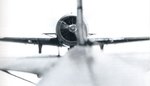
Many sources claim that the D.XXI carried 2 MG's in the nose and 2 in the wing. This is wrong. Please look at the picture below. You can clearly see 2 MG's protruding from the leading edge of each wings. In fact all MG's were installed in the wings, with a convergence at 200 meter. The MG's were Belgian FN M.38 7.9 mm with 300 rounds each.
Attached Images
File Type: jpg DXXI-0001.jpg (18.8 KB, 103 views)
__________________

"I'm no hero. Soldiers on the ground, they are heroes. In an aircraft you can always evade the bullets."
-Jan Linzel, Dutch fighter pilot

Last edited by Marcel : 09-24-2008 at 01:51 PM. Reason: Fokker DXIV should be D.XXIV
Marcel is offline  
Digg this Post!Add Post to del.icio.usBookmark Post in TechnoratiFurl this Post!Spurl this Post!Reddit! Wong this Post!
Reply With Quote
Old 09-23-2008, 03:39 PM   #6
Senior Member
 
Marcel's Avatar
 
Join Date: Sep 2006
Location: Dordrecht
Posts: 2,589
Country:
Production and deliveries

After the order was placed on December 29th 1937, Fokker started to build the first production a/c. This plane, the 212 was ready on May 26th 1938. The performance showed to be satisfactory. On July 22th, 1938, the a/c was pre-tested. It was standard procedure to redo the tests by 2 LVA (now called ML) pilots.
The delivery dates of the a/c were:
212, 07/22/1938
213, 08/12/1938
214, 08/12/1938
215, 08/26/1938
216: 08/26/1938
217: 09/9/1938
218: 09/9/1938
219: 09/16/1938
220: 09/28/1938
221: 09/30/1938
222: 10/03/1938
223: 10/12/1938
224: 10/12/1938
225: 10/11/1938
226: 10/11/1938
227: 11/23/1938
228: 11/12/1938
229: 11/12/1938
230: 01/12/1939
231: 01/17/1939
232: 01/12/1939
233: 01/26/1939
234: 01/17/1939
235: 02/18/1939
236: 02/18/1939
237: 02/18/1939
238: 02/18/1939
239: 03/14/1939
240: 03/14/1939
241: 03/14/1939
242: 03/23/1939
243: 03/23/1939
244: 04/05/1939
245: 04/05/1939
246: 04/11/1939
247: 03/01/1939
__________________

"I'm no hero. Soldiers on the ground, they are heroes. In an aircraft you can always evade the bullets."
-Jan Linzel, Dutch fighter pilot
Marcel is offline  
Digg this Post!Add Post to del.icio.usBookmark Post in TechnoratiFurl this Post!Spurl this Post!Reddit! Wong this Post!
Reply With Quote
Old 09-23-2008, 03:50 PM   #7
Senior Member
 
Marcel's Avatar
 
Join Date: Sep 2006
Location: Dordrecht
Posts: 2,589
Country:
Technical problems

On August 26 Fokker announced that cracks occurred in the bottom of the fuel tanks. These tanks had to be strengthened. This modification was introduced as a standard in later deliveries
Wheels of the landing gear were rotating during flight because of which, the landinggear strongly vibrated. Fokker tried to solve this by putting rubber pieces in the wheel-cover. A solution was found by making it a standard procedure to put the break on during flight

Pneumatic loading (Dewandre mechanism) of the the MG’s failed during flight. After installing 2 extra valves, the problem was solved in November 1938.

Antenna’s were faulty. 226 was the first to be delivered with a new copper antenna.

The attachment of the wheels to the legs were prone to corrosion. They had to be replaced often.

The MG covers were often lost by D.XXI. It was solved by: 1. strengthen the closing-mechanism 2. Holes in the cover 3. two extra bold in the attachment of the covers

Fuel tanks still cracked in 1939, so all D.XXI’s were grounded. All fuel tanks had to be replaced by aluminium tanks, which was ready on July 4th 1939.
__________________

"I'm no hero. Soldiers on the ground, they are heroes. In an aircraft you can always evade the bullets."
-Jan Linzel, Dutch fighter pilot

Last edited by Marcel : 09-26-2008 at 12:34 AM.
Marcel is offline  
Digg this Post!Add Post to del.icio.usBookmark Post in TechnoratiFurl this Post!Spurl this Post!Reddit! Wong this Post!
Reply With Quote
Old 09-23-2008, 04:00 PM   #8
Senior Member
 
Marcel's Avatar
 
Join Date: Sep 2006
Location: Dordrecht
Posts: 2,589
Country:
Some pics:

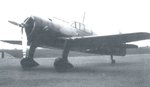
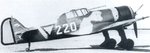
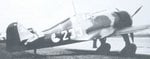
1. D.XXI from 1st JaVA, see the white mice logo
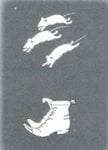
2. Logo from 1st JaVA, white mice and "shoes with pointy tips"
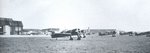
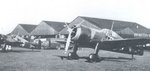
3. D.XXI's on Ypenburg (The Hague), note the Fokker G.I in the back
4. D.XXI with 1st camouflage pattern (212-229)
5. D.XXI with 2nd camouflage pattern (230-247)
Attached Images
File Type: jpg DXXI-0003.jpg (39.6 KB, 131 views)
File Type: jpg DXXI-0002.jpg (10.0 KB, 123 views)
File Type: jpg DXXI-0009.jpg (27.2 KB, 97 views)
File Type: jpg DXXI-0012.jpg (32.5 KB, 97 views)
File Type: jpg DXXI-0013.jpg (28.1 KB, 98 views)
__________________

"I'm no hero. Soldiers on the ground, they are heroes. In an aircraft you can always evade the bullets."
-Jan Linzel, Dutch fighter pilot
Marcel is offline  
Digg this Post!Add Post to del.icio.usBookmark Post in TechnoratiFurl this Post!Spurl this Post!Reddit! Wong this Post!
Reply With Quote
Old 09-25-2008, 03:57 PM   #9
Senior Member
 
Marcel's Avatar
 
Join Date: Sep 2006
Location: Dordrecht
Posts: 2,589
Country:
Organisation during mobilisation

1e luchtvaart regiment

1-II-1 LvR (1e JaVA)
At first, the LVA didn't have any operational units. There was only 1 fighter squadron, called JaVA (Jacht Vliegtuig Afdeling= Fighter department), based on Schiphol airport. This group was renamed 1-II-1 Lvr (1st JaVA) after the reorganisation in 1939. It was the first unit to be equiped with the D.XXI and flew with a mixture of D.XXI, D.XVII and D.XVI until April 1939, after which it flew exclusively with D.XXI's. The strength varied from 6 to 9 D.XXI's, 7 being operational in May 1940.
This unit was most active during the mobilisation (9/1/1939 - 5/10/1940). It operated from several airbases across the country during that time. The time spend at Groningen Airport Eelde is most noteworthy as the unit had contact with invading German a/c several times.
09/13/1939: Capture of Do18 M2+LK (2./106) at the island of Ameland.
10/17/1939: Being shot at by German Flak while flying over Dutch waters, not far from Emden
11/19/1939: Interception of intruding He111 H-2 7A+CH (1./121) over Schiermonnikoog. One D.XXI damaged. The damaged He111 had to land on Borkum, with one injured crewmember.
12/06/1939: Interception intruding Do17.
05/04/1939: Interception and damaging an unknown Ju88.
Was retreated to De Kooij airfield as the airfields in the east were to vulnerable to German attacks.

2-II-1 LvR (2e JaVA)
Created in 1939, first equipped with D.XVI and D.XVII's, later only with D.XXI. Strength varied from 8 to 11 D.XXI's. Had many interception missions, but never exchanged fire.

3-II-1 LvR (3e JaVA)
Created in 1939. First equipped with 6 D.XXI's. In September 1939 re-equipped with G.1's. D.XXI's were divided among other JaVA's. While flying G.1's, this unit was responsible for shooting down RAF Whitley N-1357 (no77 Squadron) on 03/28/1940.

Jachtgroep Veldleger
1-V-2 LvR
Created November 1939. The "Jachtgroep Veldleger" was a tactical group, for supporting the field army. Apart from this, the group was also involved in interceptions, mainly Allied ones as the group was based on Ypenburg near the Hague.

Several single D.XXI's have over time been assigned to different units like training units. For instance 4-II-1 LvR, equiped with G.1 had 1 D.XXI on strength, possibly as an example for mock-up planes.
__________________

"I'm no hero. Soldiers on the ground, they are heroes. In an aircraft you can always evade the bullets."
-Jan Linzel, Dutch fighter pilot

Last edited by Marcel : 09-26-2008 at 07:53 AM.
Marcel is offline  
Digg this Post!Add Post to del.icio.usBookmark Post in TechnoratiFurl this Post!Spurl this Post!Reddit! Wong this Post!
Reply With Quote
Old 09-25-2008, 04:11 PM   #10
Senior Member
 
Join Date: Jan 2007
Location: Helsinki
Posts: 597
Country:
Marcel
Thanks alot. Very interesting. Even if I have a basic knowledge of development of D.XXI, I wonder why , and its use by Dutch AF in 39-40 those messages on deliveries and technical problems were very interesting and the info was new to me.

Juha
Juha is offline  
Digg this Post!Add Post to del.icio.usBookmark Post in TechnoratiFurl this Post!Spurl this Post!Reddit! Wong this Post!
Reply With Quote
Old 09-25-2008, 04:17 PM   #11
Senior Member
 
Marcel's Avatar
 
Join Date: Sep 2006
Location: Dordrecht
Posts: 2,589
Country:
Pics

1 1e JaVA on De Kooij
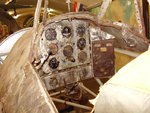
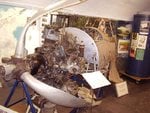
2 and 3. The next best thing, wreckage of D.XXI no 229 flown by sgt De Roos. This is a legendary fighter because of it's story (http://www.ww2aircraft.net/forum/sto...ill-11738.html (Remarkable kill))
I made these photo's last week when I visited the Crash '39-'40 foudation. It's the only remains of the Dutch D.XXI's. It was found in 1994. The museum excavates a lot of crash sites and has stuff on display. Maybe I'll make a new thread about this visit when I've collected all the photo's.
Attached Images
File Type: jpg DXXI-0004.jpg (36.1 KB, 82 views)
File Type: jpg Crash1.JPG (148.4 KB, 81 views)
File Type: jpg Crash2.JPG (153.9 KB, 82 views)
__________________

"I'm no hero. Soldiers on the ground, they are heroes. In an aircraft you can always evade the bullets."
-Jan Linzel, Dutch fighter pilot
Marcel is offline  
Digg this Post!Add Post to del.icio.usBookmark Post in TechnoratiFurl this Post!Spurl this Post!Reddit! Wong this Post!
Reply With Quote
Old 09-25-2008, 04:30 PM   #12
Senior Member
 
Marcel's Avatar
 
Join Date: Sep 2006
Location: Dordrecht
Posts: 2,589
Country:
Quote:
Originally Posted by Juha View Post
Marcel
Thanks alot. Very interesting. Even if I have a basic knowledge of development of D.XXI, I wonder why , and its use by Dutch AF in 39-40 those messages on deliveries and technical problems were very interesting and the info was new to me.

Juha
Thanks Juha. I'm actually putting it together for my own overview. There are many small sources of info and I'm trying to put them together in one picture.
Oh and I found the climb speed as we discussed in another thread. The only number I could find was measured during acceptance trials, being 6m 12 s to 5000 metres. Quite good but not exceptional as you said.
__________________

"I'm no hero. Soldiers on the ground, they are heroes. In an aircraft you can always evade the bullets."
-Jan Linzel, Dutch fighter pilot
Marcel is offline  
Digg this Post!Add Post to del.icio.usBookmark Post in TechnoratiFurl this Post!Spurl this Post!Reddit! Wong this Post!
Reply With Quote
Old 09-26-2008, 10:08 AM   #13
Senior Member
 
Marcel's Avatar
 
Join Date: Sep 2006
Location: Dordrecht
Posts: 2,589
Country:
Construction of the plane

The construction of the D.XXI was typical of all Fokker planes at the time. Fokker had made name and fame with monoplane airliners in the ‘20’ies. They were build of steel tubes and fabric with wooden wings. Allmost all pre-war Fokkers were of that construction. The D.XXI was no different. The rear fuselage was build of steel tubes, with a fabric cover. The wings were made of wood and the front part of the fuselage with the engine-mounting was made of metal, mainly aluminum. The moving parts like the ailerons and ruders were fabric covered as well. The whole construction was not entirely unlike the British Hurricane.
Although the whole construction seems to be obsolete compared to the contemporary monocoque build Bf109 and Spitfire, this way of constructing an airplane had it’s advantage. It was relatively easy to repair, which proved to be important while fighting the overpowering numbers of the German airforce. Almost each sortie resulted in heavy damage to the planes, but quite often they were operational again after a short time.

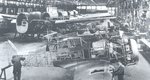
See below the construction of the D.XXI and T.V’s in the Fokker Factory
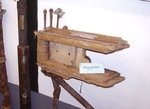
Seccond, wing spar of a Fokker T.V as I photographed it at the Crash museum.
Attached Images
File Type: jpg fokker-0001.jpg (122.6 KB, 74 views)
File Type: jpg Wingspar.JPG (89.1 KB, 73 views)
__________________

"I'm no hero. Soldiers on the ground, they are heroes. In an aircraft you can always evade the bullets."
-Jan Linzel, Dutch fighter pilot
Marcel is offline  
Digg this Post!Add Post to del.icio.usBookmark Post in TechnoratiFurl this Post!Spurl this Post!Reddit! Wong this Post!
Reply With Quote
Old 09-26-2008, 04:21 PM   #14
Senior Member
 
Marcel's Avatar
 
Join Date: Sep 2006
Location: Dordrecht
Posts: 2,589
Country:
Moving pictures

One moving picture of 1e JaVA Fokker D.XXI's taking off from De Kooij. Don't mind the text in the movie. The take off was probably before May 1940.
Attached Files
File Type: avi onze fokkers d-21.avi (797.4 KB, 7 views)
__________________

"I'm no hero. Soldiers on the ground, they are heroes. In an aircraft you can always evade the bullets."
-Jan Linzel, Dutch fighter pilot

Last edited by Marcel : 09-26-2008 at 04:27 PM.
Marcel is offline  
Digg this Post!Add Post to del.icio.usBookmark Post in TechnoratiFurl this Post!Spurl this Post!Reddit! Wong this Post!
Reply With Quote
Old 09-26-2008, 05:42 PM   #15
Senior Member
 
Join Date: Apr 2005
Location: London
Posts: 2,853
As has been mentioned the inability of the DXXI to be fitted with an in line engine is of course wrong.
At the May 1936 Internationella Luftfartsutstallningen held in Stockholm the Fokker Sales team offered the DXXI with either fixed or retractable undercarridge, and with the 1,100HP Hispano Suiza 14Ha radial, 830HP Mercury or the 925HP Hispano Suiza liquid cooled engine.

One question I have is the Dutch had at least one fitted with 2 x 20mm Madsen guns and 2 x LMG. What I don't know is what impact that had on its performance, does anyone have the information?

Re the layout of the 4 x LMG these were in the wings but originally the Finish AF specified that there aircraft, should be fitted with 2 in the wings and 2 in the fuselage. They were not built that way but it might be the cause of the confusion.
Glider is offline  
Digg this Post!Add Post to del.icio.usBookmark Post in TechnoratiFurl this Post!Spurl this Post!Reddit! Wong this Post!
Reply With Quote
Reply


Thread Tools Search this Thread
Search this Thread:

Advanced Search
Display Modes

Posting Rules
You may not post new threads
You may not post replies
You may not post attachments
You may not edit your posts

vB code is On
Smilies are On
[IMG] code is On
HTML code is Off
Trackbacks are On
Pingbacks are On
Refbacks are On


All times are GMT -5. The time now is 05:46 AM.


Powered by vBulletin
Copyright ©2000 - 2008, Jelsoft Enterprises Ltd.
SEO by vBSEO 3.1.0
   

AVIATION TOP 100 - www.avitop.com Avitop.com