![]() |
| |||||||
| Aviation Discussion on the aircraft of WWII. |
![]() |
| | LinkBack | Thread Tools | Display Modes |
| | #1 |
| Junior Member Join Date: Jan 2007 Location: Athens
Posts: 23
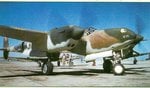
| P-38 Lightning Mk I Although this is related to a modelling project, I would like to ask whether any one of you out there could contribute with more in depth information about this aircraft (other than what is available on the internet) I am very much interested in building a model of the Mk I - AF 106 that was alegedly sent to Boscome Down for flight trials. Anything related to this story would be very much help. Thank you all very much in advance Here you can see the model after it has been converted to represent the British variant. |
| | |
| | #2 |
| Senior Member Join Date: Sep 2005 Location: Missouri
Posts: 379
| It was a "castrated" lightning; no turbochargers and the props were not counter-rotating like the USAAF Lightnings. I have a couple of books on the Lightning; if there is something specific I could look it up. Warren Bodie has a good book on the Lightning if you are interested. |
| | |
| | #3 |
| Junior Member Join Date: Jan 2007 Location: Athens
Posts: 23
| Thank for your reply, Which is this book you are referring to? Have gathered quite a few myself but not much is mentioned about the RAF Lightnings. In fact some say that only one was sent to the UK while others say that 3 made it. (AF 104 to 106). I was hoping to get a discussion going and gather some opinions on issues like this. |
| | |
| | #4 |
| Siggy Master ![]() Join Date: Jun 2005 Location: Poland
Posts: 13,972
| Hi, it seems to be true that only three early P-38s were tested at Boscome Down.In a Polish publication called TBU no.127 I've found info that the first Lightning was delivered to Great Britain in December 1941 and was signed as AE 979.Pics of this aircraft you can also find in "In Detail & Scale Vol.57 - P-38 Lightning Part 1" book which you have for sure.This fighter was tested by RAF with two other planes that were signed as AF-105 and AF-106.All aircraft were compared to other machines during training fights against both the RAF fighters and captured Bf109E and Bf-110C. BTW Mpapadakis your project is very interesting,P-38 without turbochargers in different camo pattern, man it will be really something cool.Besides the kind of Lightings is "a guest" on all competitions.Congrats for your idea mate..
__________________ ![]() Last edited by Wurger; 03-20-2008 at 04:47 PM. |
| | |
| | #5 |
| Junior Member Join Date: Jan 2007 Location: Athens
Posts: 23
| Thank you for your reply, The following extract can be easily found on the Internet "The first three Lightnings arrived in the UK by sea transport in March 1942. [AF105] was sent to Cunliffe-Owen at Southampton for examination and experiments. [AF106] was sent to Boscombe Down for flight evaluation. [AF107] went to the Royal Aircraft Establishment at Farnborough for experiments and evaluation." In another source (Osprey - Production to frontline No.3, Michael O 'Leary), I quote: "So rapid was the condemnation of the Model 322 that only one example (RAF Serial AF 106) was ever shipped to Britain, where it was tested again with negative results." AF 106 appears in a couple of photographs flying over what appears to be the British countryside as well as one parked (photo credit: Imperial War museum). - Therefore in my mind AF 106 was definitely sent to England. Also AF 106 was not armed. A photo of 106 can be found in this site: Warbird Photo Album - Lockheed Lightning Mk.1 With regards to AE 979 though I remember reading somewhere (..I can't find it now) that 979, although it was intended to go to the UK it was replaced at the last minute by either 105 or 107. In the most well known colour air to air photo it appears over an American (California) landscape (I also found another colour photo in Aeroplane Monthly - Oct 2004 - parked next to a Lockheed Hudson in Burbank CA) ..Is there any evidence that it was indeed sent to England? See:Warbird Photo Album - Lockheed Lightning Mk.1 caption "Shown here is one of the three British Lightning Mk.1s (AE979) under evaluation in Britain." It is also mentioned in "Aeroplane" that British pilots were sent to the US for trials. Does anyone know more about this? CONFUSING huh? Hope I am not asking too many impossible questions. In any case thank you all very much for your interest. By the way you can call me Michael if you want Last edited by mpapadakis; 03-21-2008 at 12:43 PM. |
| | |
| | #6 |
| Senior Member Join Date: May 2007
Posts: 2,081
| |
| | |
| | #7 |
| Senior Member Join Date: Aug 2007 Location: San Jose, CA
Posts: 2,412
| So speed was restricted to 300 mph, I'd read that could only manage 300 mph top speed, but I guess that's a little low. I didn't know the compressability problems were a major factor in rejecting the Lightning either... (that explains why thy never ordered a "real" Lightning -Mk.II-) |
| | |
| | #8 |
| Junior Member Join Date: Jan 2007 Location: Athens
Posts: 23
| Very interesting reply Graeme, thank you! I also found the "gas patches" very interesting, they were attached to early war aircraft and would change colour if the plane flew over "gased" areas. I guess it had something to do with WW I experience. Had a chat about this with a friend who is an expert in aviation history, still we couldn't decide what colour they were. Does anyone know more about this? Being on the issue of colours, does anyone have any suggestion for the camouflage scheme and the primer colours (if any) for the wheel bays? Have gathered some data on this but I guess someone out there may know a bit more.. What I found very interesting is that in a colour photo of AE 978 parked next to a Lockheed Hudson, it has the exact same colours.Any thoughts?? Thank you |
| | |
| | #9 | |
| Siggy Master ![]() Join Date: Jun 2005 Location: Poland
Posts: 13,972
| Quote:
It's very nice to me to call you Michael. my best to you
__________________ ![]() Last edited by Wurger; 03-22-2008 at 09:42 AM. | |
| | |
| | #10 |
| Junior Member Join Date: Jan 2007 Location: Athens
Posts: 23
| Hello Wojtek, thank you for your help, looking forward to your reply. Do you also make scale models? And some info on the model... It is the Academy P-38F in 1/48 which has been converted with a rather unknown set by a company called Heritage Aviation. It was a resin set, very(!) difficult to fit and needed lots of putty and sanding. I also had to cover the gap where the turbos and the machine guns used to be. Other than that it is a rather straightforward construction. I am really looking forward to painting this model though... Might as well get a thread going in the modelling section once it becomes more "attractive" |
| | |
| | #11 |
| Senior Member Join Date: Aug 2007 Location: San Jose, CA
Posts: 2,412
| I'd think that the cammo would be similar to that of the RAF Tomahawks arriving around the same time. |
| | |
| | #12 | |
| IP/Mech THE GREAT GAZOO ![]() Join Date: Apr 2005 Location: Colorado, USA
Posts: 16,051
| Quote:
I would guess that that ever the colors were for the RAF Hudson, the Lightning I would of been painted the same, including wheel wells.
__________________ "IF ITS RED OR DUSTY, DON'T TOUCH IT" | |
| | |
| | #13 |
| Senior Member Join Date: May 2007
Posts: 2,081
| |
| | |
| | #14 |
| Senior Member Join Date: Jun 2007
Posts: 227
| At the beginning of the Second World War, both Britain and France found themselves with a shortage of modern combat aircraft and although competent designs were in service, (and also in the design stage), there was a decided shortage of combat-ready machines. Both countries therefore looked to the aircraft industry in the USA to provide modern designs with which to fill the gap. A joint British-French Purchasing Commission was set up in Washington to examine various possibilities and a number of aircraft, both in current production and in prototype form, were examined. Amongst these was the XP-38. Although there were no prototypes flying when the Commission was set up, the French placed an order early in 1940 for 667 aircraft, which were given the classification Lockheed model 322-F. Shortly before the fall of France in June 1940, the British took over the French order and the aircraft were reclassified as model 322-Bs. Although the order was to have been for all the aircraft to be Lightning Mk Is, this was reduced so that only 143 were to be of this Mark, the remainder were to be designated Mk II and have later series engines, counter rotating propellers and turbochargers. There is considerable controversy as to why the original order did not have turbochargers, including a materials shortage and possible US Government reluctance to allow export of a new technology, but it seems that the French simply ordered the aircraft without these features purely on the grounds of ease of maintenance and expedience. For whatever reason, the lack of these features in the early aircraft gave rise to a very marked reduction in performance, especially above 15,000 feet, and led to the machines acquiring the sobriquet 'Castrated Lightnings' by Lockheed employees. The serials AE978 to AF220 were allocated to Mk. I production, and subsequent aircraft were to have been from the block AF221 to AF744. In the event, only two machines, AF105 and AF106, (plus possibly a third), were shipped to the UK, being assembled and test flown at Boscombe Down, The results were so disappointing that the remainder of the order was cancelled, Production was already well under way, so the USAAF took over the balance of the Lightning Mk I airframes. Twenty-two of these were unmodified, and used for trials and training, whilst the balance were modified with the fitting of Allison F series engines and counter rotating propellers, although they did not have turbocharging. These were used for training within the continental United States and looked outwardly similar to the P-38F, whilst retaining the Carburettor intakes on the top of the nacelles, and of course no turbochargers, The USAAF aircraft retained their British paint schemes and were designated P-322-1I. (These aircraft should not be confused with the British order for Mk II machines. In the event only one of these was built, the rest being changed whilst still on the production line to P-38F and G models and delivered directly to the USAAF.) These aircraft were painted in the then current RAF Temperate Land Scheme of Dark Earth and Dark Green upper surfaces with Sky undersides. However the shades differed slightly from those found in the UK as they were applied using paint made by US paint manufacturer DuPont. According to Dana Bell' Dark Earth 71-009 (FS 30279) Dark Green 71-013 (FS 34092) Sky 71-021 (FS 34424) You can use Humbrol 118 Matt US Tan for the Dark Earth; Humbrol 149 Matt for the Dark Green; and Humbrol 23 Matt Duck Egg Blue for the Sky Blue shade of Sky used by DuPont .. Xtracolor have X101 Earth FS10118 and X112 Olive Drab which are supposed to be the DUuPont versions of Dark Earth and Dark Green. Contemporary photographs seem to indicate that the British machines carried only a minimum of stencilling - unlike their later natural metal brethren. The propeller blades had data plates near their roots, but there appears to be no sign of filler caps being marked, or the prominent 'No Step' markings found later on the canopy framing. I cannot see any gas patches, nor would I expect to in 1942. I have not seen any on any models or profiles either. They are found early in the war on aircraft, vehicles, and buildings (inside and outside). They were a yellow colour and square or diamond shaped on aircraft (depending upon the orientation) and usually painted on the upper surface of the port wing. Sometimes the top of the fuselage. e.g., Tiger Moths. At that tine there was a lot of concern that the Germans would use gas. Everyone had to carry a gasmask. Later in the war a different type of gas patch can be seen, mostly on 1 Group Lancasters. These were circular and a different colour. I have not been able to discover their purpose. The best suggestion is that 1 Group had been trained for carrying out gas attacks and the patches were to warn ground crew that the aircraft was contaminated. The Heritage conversion is for the Hasegawa P-38/G/H kit. P-322, AF116 still in RAF camouflage but operated a by a USAAF training unit in the USA. |
| | |
| | #15 |
| Junior Member Join Date: Jan 2007 Location: Athens
Posts: 23
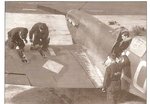
| Thanks a million Antoni!!! indeed I was very impressed by your reply, very helpful!!! Just a couple of comments... With regards to the Heritage aviation set, I chose the Academy P-38F because I thought its overall appearance was closer to the MkI. The kit's radiator intakes looked more similar to the early style of MkI as opposed to the Hasegawa kit. In any case I think it worked out fine... As for the "diamonds" please have a closer look at the b&w photo of AF 106 on the booms behind the serial no. I guess it is a bit far fetched for an aircraft under evaluation to carry gas patches but what are these diamond shaped markings?? Thanks Graeme for the profile.. Any little helps... |
| | |
![]() |
| Thread Tools | |
| Display Modes | |
| |