lesofprimus
Brigadier General
I found this Diary just by luck.... Pretty interesting info.....
Royal Air Force Bomber Command 60th Anniversary
--------------------------------------------------------------------------------
Campaign Diary
January 1945
1/2 January 1945
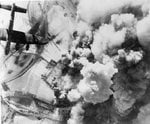
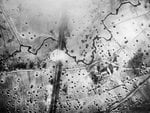
152 Lancasters and 5 Mosquitos of No 5 Group carried out an accurate attack on the Gravenhorst section of the Mittelland Canal. Half a mile of banks were pitted with bomb craters and some parts were breached. No aircraft lost.
146 aircraft of No 3 Group successfully attacked the railway yards at Vohwinkel. 1 Lancaster lost.
105 Halifaxes of No 4 Group and 18 Lancasters and 16 Mosquitos of No 8 Group attempted to bomb a benzol plant at Dortmund but the attack was scattered and the plant was not hit. No aircraft lost.
28 Mosquitos to Hanau and 27 to Hannover (both 'spoof' raids), 42 RCM sorties, 59 Mosquito patrols. No aircraft lost. The No 100 Group Mosquitos claimed 6 German night fighters destroyed.
Total effort for the night: 598 sorties, 1 aircraft (0.2 per cent) lost; 5 aircraft crashed in England.
2 January 1945
2 Hudsons flew on Resistance operations without loss.
2/3 January 1945
Nuremberg: 514 Lancasters and 7 Mosquitos of Nos 1, 3, 6 and 8 Groups. 4 Lancasters were lost and 2 crashed in France. Nuremberg, scene of so many disappointments for Bomber Command, finally succumbed to this attack. The Pathfinders produced good ground-marking in conditions of clear visibility and with the help of a rising full moon. The centre of the city, particularly the eastern half, was destroyed. The castle, the Rathaus, almost all the churches and about 2,000 preserved medieval houses went up in flames. The area of destruction also extended into the more modern north-eastern and southern city areas.The industrial area in the south, containing the important MAN and Siemens factories, and the railway areas were also severely damaged. 415 separate industrial buildings were destroyed. It was a near-perfect example of area bombing.
Ludwigshafen: 389 aircraft - 351 Halifaxes, 22 Lancasters, 16 Mosquitos - of Nos 4, 6 and 8 Groups. 1 Halifax which crashed in France was the only loss. The aiming point for this raid was the area of the two IG Farben chemical factories. The bombing was accurate, with severe damage to the main IG Farben factory and to the same firm's factory at nearby Oppau. Estimated totals of 500 high-explosive bombs and 10,000 incendiaries fell inside the limits of the 2 factories, causing much damage. 10 large, 30 medium and 200 small fires were recorded at the main factory. Production failure at both plants was complete because of 'loss of power'. 13 other industrial firms and several railway installations were also hit; the train of a railway repair unit was destroyed.
53 Mosquitos to Berlin, 9 to Castrop-Rauxel and 7 to Hanau, 49 RCM sorties, 41 Mosquito patrols. 2 Mosquitos were lost, 1 each from the Berlin and Castrop-Rauxel raids.
Total effort for the night: 1,069 sorties, 9 aircraft (0.8 per cent) lost.
Striking the Nazi 'heart'
--------------------------------------------------------------------------------
3 January 1945
99 Lancasters of No 3 Group made G-H attacks through cloud on the Benzol plants at Dortmund and Castrop-Rauxel. Bombing appeared to be accurate at both targets. 1 Lancaster lost from the Dortmund raid.
3/4 January 1945
3 Oboe Mosquitos each to the railway yards at Ludwigshafen and Neuss. No aircraft lost.
4 January 1945
1 Hudson flew on a Resistance operation.
4/5 January 1945
Royan: 347 Lancasters and 7 Mosquitos of Nos 1, 5 and 8 Groups. 4 Lancasters were lost and 2 more collided behind Allied lines in France and crashed.
This was a tragic raid with a strange - and disputed - background. Royan was a town situated at the mouth of the River Gironde in which a stubborn German garrison was still holding out, preventing the Allies from using the port of Bordeaux. The task of besieging the town had been given to 12,000 men of the French Resistance commanded by Free French officers appointed by General de Gaulle. The commander of the German garrison recognized the Resistance units as regular forces and the normal rules of warfare were observed. The French, lacking artillery, made little progress with their siege. The German commander gave the inhabitants of the town the opportunity to leave but many preferred to stay in order to look after their homes. It is believed that there were 2,000 civilians at the time of the raid.
On 10 December 1944, a meeting took place at the town of Cognac between French officers and an American officer from one of the tactical air force units in France. After a meal, at which much alcohol is supposed to have been consumed, the American officer suggested that the German garrison at Royan should be 'softened up' by bombing. He was assured by the French that the only civilians remaining in the town were collaborators - which was not correct. The suggestion that the town be bombed was passed to SHAEF (Supreme Headquarters Allied Expeditionary Force), which decided that the task should be given to Bomber Command: 'To destroy town strongly defended by enemy and occupied by German troops only.' It is said that SHAEF ordered a last-minute cancellation because of doubts about the presence of French civilians but the order, if issued, was not received by Bomber Command in time.
The attack was carried out by 2 waves of bombers, in good visibility conditions, in the early hours of 5 January. 1,576 tons of high-explosive bombs - including 285 'blockbuster' (4,OOOlb bombs) - were dropped. Local reports show that between 85 and 90 per cent of the small town was destroyed. The number of French civilians killed is given as '500 to 700' and as '800' by different sources. Many of the casualties were suffered in the second part of the raid, which took place an hour after the first and caught many people out in the open trying to rescue the victims of the first wave of the bombing trapped in their houses. The number of Germans killed is given as 35 to 50. A local truce was arranged and, for the next 10 days, there was no fighting while the search for survivors in wrecked houses continued.
There were many recriminations. Bomber Command was immediately exonerated. The American air-force officer who passed on the original suggestion to SHAEFwas removed from his command. The bitterest disputes took place among the Free French officers and accusations and counter-accusations continued for many years after the war. A French general committed suicide. De Gaulle, in his Memoires, blamed the Americans: 'American bombers, on their own initiative, came during the night and dropped a mass of bombs.' The German garrison did not surrender until 18 April.
66 Mosquitos to Berlin and 7 to Neuss, 2 Halifax RCM sorties. No aircraft lost.
Some of the Light Night Striking Force (No 8 Group) Mosquitos which attacked Berlin on this night flew 2 sorties each. These Mosquitos took off in the early evening, bombed Berlin returned and changed crews, and then flew to Berlin again. This method of augmenting the Mosquito campaign against Berlin was used several times during the long nights of midwinter.
5 January 1945
160 Lancasters of No 3 Group attacked the railway-yards at Ludwigshafen. 2 Lancasters lost.
1 Hudson flew a Resistance operation.
5/6 January 1945
Hannover: 664 aircraft - 340 Halifaxes, 310 Lancasters, 14 Mosquitos - of Nos 1, 4, 6 and 8 Groups. 23 Halifaxes and 8 Lancasters lost, 4.7 per cent of the force. This was the first large raid on Hannover since October 1943.
131 Lancasters and 9 Mosquitos of No 5 Group attacked Houffalize, a bottleneck in the German supply system in the Ardennes. The target was bombed with great accuracy. 2 Lancasters lost.
69 Mosquitos to Berlin, 8 to Neuss and 6 to Castrop-Rauxel, 58 RCM sorties, 55 Mosquito patrols. 4 Mosquitos lost, 2 from the Berlin raid and 2 from No 100 Group.
Total effort for the night: 1,000 sorties, 37 aircraft (3.7 per cent) lost.
6 January 1945
1 Hudson flew a Resistance operation.
6/7 January 1945
Hanau: 482 aircraft - 314 Halifaxes, 154 Lancasters, 14 Mosquitos - of Nos 1, 4, 6 and 8 Groups. 4 Halifaxes and 2 Lancasters lost. The attack was aimed at that part of Hanau in which an important junction in the German railway system was situated. The local report says that many bombs did fall in this area but also states that a large proportion of the bombing was scattered in the south - into the centre of Hanau - and to the north - into an area of countryside and villages.
Neuss: 147 Lancasters of Nos 1 and No 3 Groups. 1 Lancaster crashed in Belgium. As in Hanau, some of the bombing fell into the railway area but most was scattered over surrounding districts. 1,749 houses, 19 industrial premises and 20 public buildings were destroyed or seriously damaged.
20 Mosquitos to Kassel (a 'spoof' raid) and 6 to Castrop-Rauxel, 52 RCM sorties, 32 Mosquito patrols, 49 Lancasters minelaying off Baltic ports. 2 RCM Halifaxes and 2 Lancaster minelayers lost.
Total effort for the night: 788 sorties, 11 aircraft (1.4 per cent) lost.
Hanau
--------------------------------------------------------------------------------
7/8 January 1945
645 Lancasters and 9 Mosquitos of Nos 1, 3, 5, 6 and 8 Groups to Munich. 11 Lancasters lost and 4 more crashed in France. Bomber Command claimed a successful area raid, with the central and some industrial areas being severely damaged. This was the last major raid on Munich.
54 Mosquitos to Hannover, 18 to Nuremberg and 12 to Hanau, 39 RCM sorties, 45 Mosquito patrols. 2 Mosquitos lost - 1 from the Hannover raid and a No 100 Group aircraft.
The last Bomber Command Wellington operation was flown on this night by Flying Officer BH Stevens and his crew of No 192 Squadron. The Wellington was on an RCM flight over the North Sea 'to investigate enemy beam signals connected with the launching of flying bombs and believed to emanate from marker buoys'. Bad weather over the North Sea caused the flight to be curtailed but the Wellington landed safely, the last of more than 47,000 sorties carried out by this type of aircraft in Bomber Command.
Total effort for the night: 822 sorties, 17 aircraft (2.1 per cent) lost.
10/11 January 1945
50 Mosquitos to Hannover and 3 each to Cologne, Koblenz, Mannheim and Wiesbaden. No aircraft lost.
11 January 1945
152 Lancasters of No 3 Group carried out a G-H raid on the railway yard in the Uerdingen suburb of Krefeld. No aircraft lost.
1 Stirling flew on a Resistance operation.
12 January 1945
32 Lancasters and 1 Mosquito of Nos 9 and 617 Squadrons attacked U-boat pens and shipping in Bergen harbour. 3 Lancasters of No 617 Squadron and 1 from No 9 Squadron were lost; the Germans told the local people that 11 bombers had been shot down. A local report says that 3 Tallboys penetrated the 3½-metre-thick roof of the pens and caused severe damage to workshops, offices and stores inside.
2 Mosquito fighters of No 100 Group flew long-range escort for an air-sea rescue operation and 2 Stirlings flew RCM sorties, all without loss.
12/13 January 1945
11 Mosquitos to Bochum and 9 to Recklinghausen, both forces to bomb synthetic-benzol plants, and 32 Halifaxes minelaying off Flensburg and Kiel. 4 Halifaxes lost.
13 January 1945
158 Lancasters of No 3 Group attacked the railway yards at Saarbrücken. The bombing appeared to be accurate, though with some overshooting. 1 Lancaster crashed in France.
1 Hudson flew on a Resistance operation.
13/14 January 1945
Saarbrücken: 274 aircraft - 242 Halifaxes, 20 Lancasters, 12 Mosquitos - of Nos 4, 6 and 8 Groups. 1 Halifax crashed in France. Bomber Command assessed this raid, on the railway yards, as being extremely accurate and effective.
Politz: 218 Lancasters and 7 Mosquitos of No 5 Group attacked this oil plant, near Stettin. 2 Lancasters lost. This raid had been planned as a blind-bombing attack but, because the weather conditions were better than forecast, low-level marking was carried out and very accurate bombing followed. Bomber Command, on the basis of photographic reconnaissance, states that the oil plant was 'reduced to a shambles'.
19 RCM sorties, 22 Mosquito patrols, 10 Lancasters minelaying off Swinemünde. 1 Mosquito of l00 Group lost.
Total effort for the night: 550 sorties, 4 aircraft (O.7 per cent) lost.
14 January 1945
134 Lancasters of No 3 Group attacked the railway yards at Saarbrücken in clear visibility and without loss.
14/15 January 1945
573 Lancasters and 14 Mosquitos of Nos 1, 5. 6 and 8 Groups carried out two attacks, 3 hours apart, on the synthetic oil plant at Leuna. The attacks caused severe damage throughout the plant. Albert Speer, in his post-war interrogations, stated that this was one of a group of most damaging raids on the synthetic-oil industry carried out during this period. 10 Lancasters lost.
151 aircraft - 136 Halifaxes, 12 Mosquitos, 3 Lancasters - of Nos 6 and 8 Groups attacked the railway yards at Grevenbroich. The raid was successful and no aircraft were lost.
115 aircraft - 100 Halifaxes, 12 Mosquitos, 3 Lancasters - of Nos 4 and 8 Groups attempted to bomb a Luftwaffe fuel-storage depot at Dülmen, near Münster, but most of the bombing fell in open country south and south-east of the target. Only slight damage was caused to the fuel dump. 1 Halifax lost.
Support and 126 training aircraft on a diversionary sweep over the North Sea, 83 Mosquitos to Berlin and 9 to Mannheim, 58 RCM sorties, 54 Mosquito patrols, 21 Halifaxes and 10 Lancasters minelaying off Oslo and in the Kattegat. 1 Lancaster from the diversionary sweep and 1 Mosquito of No 100 Group were lost; 3 Mosquitos from the Berlin raid crashed in Belgium and 1 RCM Liberator crashed in Holland. A further 7 aircraft from the sweep and 5 Mosquitos from the Berlin raid crashed in England because of bad weather.
Total effort for the night: 1,214 sorties, 17 aircraft (1.4 per cent) lost and 14 aircraft crashed in England.
Oil plant at Leuna
--------------------------------------------------------------------------------
15 January 1945
82 Lancasters of No 3 Group attacked a benzol plant at Recklinghausen. The bombing appeared to be excellent. No aircraft lost.
63 Lancasters of No 3 Group carried out a G-H raid through thick cloud on the Robert Muser benzol plant at Bochum. No results known. No aircraft lost.
1 Hudson on a Resistance operation.
16/17 January 1945
371 aircraft - 320 Halifaxes, 44 Lancasters, 7 Mosquitos - of Nos 4, 6 and 8 Groups dispatched to Magdeburg. 17 Halifaxes lost, 4.6 per cent of the total force, 5.3 per cent of the Halifax force. This was an area raid. Bomber Command claimed that it was successful, with 44 per cent of the built-up area being destroyed. No local report is available.
Zeitz: 328 Lancasters of Nos 1, 6 and 8 Groups. 10 Lancasters lost, 3.0 per cent of the force. The target was the Braunkohle-Benzin synthetic-oil plant near Leipzig. Much damage was caused to the northern half of the plant.
231 Lancasters and 6 Mosquitos of Nos 1 and No 5 Groups attacked a synthetic-oil plant at Brüx in Western Czechoslovakia. The raid was a complete success. Speer also mentioned this raid as causing a particularly severe setback to oil production. 1 Lancaster lost.
138 Lancasters of No 3 Group attacked the benzol plant at Wanne-Eickel. No results known. 1 Lancaster lost.
17 Mosquitos to Mannheim and 9 to Hamburg, 55 RCM sortie Mosquito patrols, 23 Halifaxes and 8 Lancasters minelaying off Oslo and in the Kattegat. 1 Mosquito of No 100 Group lost.
Total effort for the night: 1,238 sorties, 30 aircraft (2.4 per cent) lost.
17 January 1945
1 Hudson on a Resistance operation.
17/18 January 1945
72 Mosquitos to Magdeburg, 8 to Ruthen oil-storage depot and 3 each to Cologne, Frankfurt, Koblenz and Mannheim, 33 RCM sorties, 13 Mosquito patrols. No aircraft lost.
18/19 January 1945
56 Mosquitos to Sterkrade oil refinery, 12 each, on H2S trials, to Düsseldorf, Kassel and Koblenz and 7 to Ruthen oil depot. 1 Mosquito from the Sterkrade raid crashed in Belgium.
21/22 January 1945
76 Mosquitos to Kassel and 4 to Mainz, 23 RCM sorties, 9 Mosquito patrols, 2 Hudsons on Resistance operations. 1 Mosquito lost from the Kassel raid.
22 January 1945
1 Halifax flew an RCM sortie.
22/23 January 1945
Duisburg: 286 Lancasters and 16 Mosquitos of Nos 1, 3 and 8 Groups. 2 Lancasters lost. This raid was intended for the benzol plant in the Bruckhausen district of Duisburg. This target was identified visually by moonlight and much damage was inflicted on it. Further bombing also hit the nearby Thyssen steelworks, either by misidentification or by a simple spread of the bombing. Duisburg's local report assumed that the steelworks were the primary target and stated that 500 high explosive bombs fell on the Thyssen premises.
Gelsenkirchen: 152 aircraft - 107 Halifaxes, 29 Lancasters, 16 Mosquitos - of Nos 4, 5 and 8 Groups. No aircraft lost. This was a small area-bombing raid. The Bomber Command report states that 'moderate' damage was caused to residential and industrial areas.
48 Mosquitos to Hannover and 6 to Dortmund, 50 RCM sorties, 40 Mosquito patrols. No aircraft lost.
Total effort for the night: 598 sorties, 2 aircraft (0.3 per cent) lost.
26/27 January 1945
8 Mosquitos bombed the Castrop-Rauxel synthetic-oil refinery without loss.
27 January 1945
1 Lightning of No 100 Group flew on a signals-investigations patrol.
27/28 January 1945
12 Mosquitos to Berlin: 8 bombed this target and 3 bombed alternative targets. No aircraft lost.
28 January 1945
153 Lancasters of No 3 Group attacked the railway yards at Cologne/Gremberg in conditions of good visibility. Some of the bombing fell on the target but some overshot. 3 Lancasters were lost and 1 crashed in France.
28/29 January 1945
602 aircraft - 316 Halifaxes, 258 Lancasters, 28 Mosquitos - of Nos 1, 4, 6 and 8 Groups dispatched to 2 targets in the Stuttgart area. 11 aircraft - 6 Lancasters, 4 Halifaxes, 1 Mosquito - lost. This raid was split into 2 parts, with a 3-hour interval. The first force - 226 aircraft - was directed against the important railway yards at Kornwestheim, a town to the north of Stuttgart, and the second was against the north-western Stuttgart suburb of Zuffenhausen, where the target is believed to have been the Hirth aero-engine factory. The target area was mostly cloud-covered for both raids and the bombing, on skymarkers, was scattered. Bombs fell in many parts of Stuttgart's northern and western suburbs. The important Bosch works, in the suburb of Feuerbach, was hit. A large number of bombs fell outside Stuttgart, particularly in the east around a decoy fire site which was also firing dummy target-indicator rockets into the air. The village of Weilimdorf, situated not far away, complained bitterly about its damage and casualties! This was the last large RAF raid on Stuttgart. Stuttgart's experience was not as severe as other German cities. Its location, spread out in a series of deep valleys, had consistently frustrated the Pathfinders and the shelters dug into the sides of the surrounding hills had saved many lives.
67 Mosquitos to Berlin and 8 to Mainz (a 'spoof' raid for the Stuttgart attacks), 51 RCM sorties, 36 Mosquito patrols, 6 Lancasters of No 1 Group minelaying in the Kattegat. 1 Mosquito of No 100 Group crashed in France.
Total effort for the night: 770 sorties, 12 aircraft (1.6 per cent) lost.
29 January 1945
148 Lancasters of No 3 Group attacked the Uerdingen railway yards at Krefeld without loss. Bombing was claimed to be accurate but a short Krefeld report states that bombs fell over a wide area.
29/30 January 1945
59 Mosquitos; 50 aircraft reached and bombed Berlin without loss.
31 January/1 February 1945
8 Mosquitos to the Hansa benzol plant at Dortmund and 6 Mosquitos to Duisburg. 1 aircraft from the Dortmund raid crashed in Holland.
The weather started to improve at the beginning of February and Bomber Command commenced an almost unbroken period of operations of the most intense and concentrated nature which would continue until a halt was called to the strategic-bombing offensive in April. The first round of raids, however, was not very effective because of poor weather at the targets.
Royal Air Force Bomber Command 60th Anniversary
--------------------------------------------------------------------------------
Campaign Diary
February 1945
1 February 1945
160 Lancasters of No 3 Group attacked the general town area of Mönchengladbach through 8-10/10ths cloud, using G-H. The results of the raid are not known. 1 Lancaster crashed in France.
1 Halifax flew an RCM sortie.
1/2 February 1945
Ludwigshafen: 382 Lancasters and 14 Mosquitos of Nos 1, 6 and 8 Groups. 6 Lancasters lost. Most of the force aimed their loads at skymarkers and the local report shows that bombs fell in many parts of Ludwigshafen, with much property damage of a mixed nature. The 900 houses destroyed or seriously damaged were the main item in the report but it also states that the railway yards were seriously damaged and one of the Rhine road bridges was hit by 2 bombs and temporarily closed to traffic.
Mainz: 340 aircraft - 293 Halifaxes, 40 Lancasters, 8 Mosquitos - of Nos 4, 6 and 8 Groups. No aircraft lost. A few early crews were able to bomb target indicators seen through a gap in the clouds, but the gap soon closed and most of the raid was on skymarkers. The local report states that a few buildings were destroyed, including the Christuskirche, which burnt out, and the town hospital was damaged, but most of the bombing fell outside Mainz.
Siegen: 271 Lancasters and 11 Mosquitos of No 5 Group. 3 Lancasters and 1 Mosquito lost. This raid also experienced difficult marking and bombing conditions. Some damage was caused to the railway station but the local report says that the markers were either carried away from Siegen by a strong wind or that dummy markers and a decoy fire site attracted much of the bombing. Most of the raid fell in country areas outside Siegen.
122 Mosquitos to Berlin, 8 to Bruckhausen benzol plant, 6 to Hannover, 4 to Nuremberg and 4 dropping dummy target indicators at both Mannheim and Stuttgart, 64 RCM sorties, 47 Mosquito patrols. No aircraft lost.
Total effort for the night: 1,273 sorties, 10 aircraft (0.8 per cent) lost.
2 February 1945
2 Mosquito Ranger patrols over Northern Germany without loss.
2/3 February 1945
495 Lancasters and 12 Mosquitos of Nos 1, 3, 6 and 8 Groups to Wiesbaden. 3 Lancasters crashed in France. This was Bomber Command's one and only large raid on Wiesbaden. There was complete cloud cover but most of the bombing hit the town. 5 important war industries along the banks of the Rhine were untouched but the railway station was damaged.
Wanne-Eickel: 323 aircraft - 277 Halifaxes, 27 Lancasters, 19 Mosquitos - of Nos 4, 6 and 8 Groups. 4 Halifaxes lost. This target was also cloud-covered and the attack, intended for the oil refinery, was not accurate. Local people assumed that the target was a local coal mine - Shamrock 3/4; most of the bombing fell in the open ground around the mine.
Karlsruhe: 250 Lancasters and 11 Mosquitos of No 5 Group. 14 Lancasters lost. No 189 Squadron, from Fulbeck, lost 4 of its 19 aircraft on the raid. Cloud cover over the target caused this raid to be a complete failure. Karlsruhe reports no casualties and only a few bombs. The report mentions 'dive bombers', presumably the Mosquito marker aircraft trying to establish their position. This was a lucky escape for Karlsruhe in its last major RAF raid of the war.
43 Mosquitos to Magdeburg and 20 to Mannheim, 54 RCM sorties, 44 Mosquito patrols. No aircraft lost.
Total effort for the night: 1,252 sorties, 21 aircraft (1.7 per cent) lost.
3 February 1945
36 Lancasters of No 5 Group attacked U-boat pens at Ijmuiden (No 9 Squadron) and Poortershaven (No 617 Squadron) with Tallboy bombs. It was believed that these pens, in that part of Holland still occupied by the Germans, were sheltering midget submarines. The weather was clear and hits were claimed at both targets without loss.
1 Halifax flew an RCM sortie.
3/4 February 1945
192 Lancasters and 18 Mosquitos of Nos 1 and 8 Groups attacked the Prosper benzol plant at Bottrop successfully. 8 Lancasters lost.
149 Lancasters of No 3 Group attacked the Hansa benzol plant at Dortmund but the bombing fell north and north-west of the target. 4 Lancasters lost.
42 Mosquitos to Wiesbaden and 20 to Osnabrück, 42 RCM sorties, 28 Mosquito patrols, 19 Halifaxes of No 4 Group minelaying off German ports. No aircraft lost.
Total effort for the night: 510 sorties, 12 aircraft (2.4 per cent) lost.
4/5 February 1945
238 aircraft - 202 Halifaxes, 20 Lancasters, 16 Mosquitos - of Nos 4, 6 and 8 Groups to Bonn. 3 Lancasters lost. This was a poor attack, with most of the bombing falling to the south of the target or over the Rhine in the Beuel area.
123 aircraft - 100 Halifaxes, 12 Mosquitos, 11 Lancasters - of 6 and 8 Groups attacked a benzol plant at Osterfeld but caused no fresh damage. No aircraft lost.
120 aircraft - 96 Halifaxes, 12 Lancasters, 12 Mosquitos - of 4 and 8 Groups attacked the Nordstern synthetic-oil plant, Gelsenkirchen. Some minor damage was caused but most of the bombs fell south of the target. No aircraft lost.
50 Mosquitos to Hannover, 12 to Dortmund, 4 to Magdeburg and 3 to Würzburg, 59 RCM sorties, 42 Mosquito patrols, 15 Lancasters and 12 Halifaxes minelaying off Heligoland and in the River Elbe. 2 Mosquitos lost, 1 each from the Hannover and Würzburg raids.
Total effort for the night: 678 sorties, 5 aircraft (0.7 per cent) lost.
5 February 1945
1 Halifax flew an RCM sortie.
5/6 February 1945
63 Mosquitos to Berlin, 7 to Magdeburg and 6 to Würzburg, 1 RCM sortie. 1 Mosquito lost from the Berlin raid.
6 February 1945
35 aircraft of No 5 Group (Nos 9 and 617 Squadrons) to attack viaducts at Bielefeld and Altenbeken were recalled because of bad weather.
7 February 1945
100 Lancasters of No 3 Group to attack the oil plant at Wanne-Eickel. Only 75 aircraft were able to bomb in wintry conditions which scattered the force. The results of the raid are not known. 1 Lancaster lost.
7/8 February 1945
Goch: 464 aircraft - 292 Halifaxes, 156 Lancasters, 16 Mosquitos - of Nos 4, 6 and 8 Groups. 2 Halifaxes lost. This raid was preparing the way for the attack of the British XXX Corps across the German frontier near the Reichswald. The Germans had included the towns of Goch and Kleve in their strong defences here. The Master Bomber ordered the Main Force to come below the cloud, the estimated base of which was only 5,000ft, and the attack opened very accurately. The raid was stopped after 155 aircraft had bombed, because smoke was causing control of the raid to become impossible. Considerable damage was caused in Goch but most of the inhabitants had probably left the town.
Kleve: 295 Lancasters and 10 Mosquitos of Nos 1 and 8 Groups. 1 Lancaster lost. 285 aircraft bombed at Kleve, which was battered even more than Goch. After the war, Kleve claimed to be the most completely destroyed town in Germany of its size. The British attack, led by the 15th (Scottish) Division, made a successful start a few hours later but quickly ground to a halt because of a thaw, which caused flooding on the few roads available for the advance, and also because of the ruins which blocked the way through Kleve. Lieutenant-General BG Horrocks, the Corps Commander in charge of the attack, later claimed that he had requested that Kleve should only be subjected to an incendiary raid but Bomber Command dropped 1,384 tons of high explosive on the town and no incendiaries.
177 Lancasters and 11 Mosquitos of No 5 Group attacked the Dortmund-Ems Canal section near Ladbergen with delayed-action bombs. Later photographs showed that the banks had not been damaged; the bombs had fallen into nearby fields. 3 Lancasters were lost.
38 Mosquitos to Magdeburg, 16 to Mainz and 41 in small numbers to 5 other targets, 63 RCM sorties, 45 Mosquito patrols, 30 Lancasters and 15 Halifaxes minelaying in Kiel Bay. 4 Mosquitos lost - 3 from No 100 Group and 1 from the raid on Mainz.
Total effort for the night: 1,205 sorties, 10 aircraft (0.8 per cent) lost.
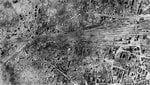
Destruction in Kleve
--------------------------------------------------------------------------------
8 February 1945
15 Lancasters of No 617 Squadron dropped Tallboys on the U-boat pens at Ijmuiden without loss.
1 RCM sortie was flown.
8/9 February 1945
Politz: 475 Lancasters and 7 Mosquitos of Nos 1, 5 and 8 Groups. 12 Lancasters lost, l of them coming down in Sweden. The attack took place in 2 waves, the first being marked and carried out entirely by the No 5 Group method and the second being marked by the Pathfinders of No 8 Group. The weather conditions were clear and the bombing of both waves was extremely accurate. Severe damage was caused to this important synthetic-oil plant. It produced no further oil during the war. Speer mentioned this raid, in his post-war interrogations, as being another big setback to Germany's war effort.
Wanne-Eickel: 228 aircraft - 200 Halifaxes, 20 Mosquitos, 8 Lancasters - of Nos 4, 6 and 8 Groups. 2 Halifaxes crashed in France. This raid was not a success. The local report says that the bombing was scattered, with only light damage to the oil refinery.
Krefeld: 151 Lancasters of No 3 Group attacked the Hohenbudberg railway yards but photographic reconnaissance was unable to detect any new damage. 2 Lancasters lost.
47 Mosquitos to Berlin, 9 to Neubrandenburg (a 'spoof' for the Politz raid) and 4 to Nuremberg, 47 RCM sorties, 42 Mosquito patrols, 10 Lancasters of No 5 Group minelaying off Swinemünde. 1 RCM Halifax lost.
Total effort for the night: 1,020 sorties, 17 aircraft (1.7 per cent) lost.
9 February 1945
1 Halifax flew an RCM sortie.
9/10 February 1945
7 Stirlings of No 3 Group flew on Resistance operations but none were able to carry out their tasks (the reasons were not recorded) and 1 Stirling was lost. 1 Mosquito flew an RCM sortie.
10 February 1945
1 Halifax flew an RCM sortie.
10/11 February 1945
82 Mosquitos to Hannover and 11 to Essen, 24 RCM sorties, 22 Mosquito patrols. No aircraft lost.
12/13 February 1945
72 Mosquitos to Stuttgart, 11 to Misburg, 4 to Würzburg and 3 each 'on H2S trials' to Cologne, Frankfurt, Koblenz and Wiesbaden, 1 Mosquito on an RCM sortie. No aircraft lost.
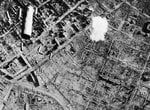
Cologne, 24 February 1945
--------------------------------------------------------------------------------
13/14 February 1945
Operation Thunderclap
The Air Ministry had, for several months, been considering a series of particularly heavy area raids on German cities with a view to causing such confusion and consternation that the hard-stretched German war machine and civil administration would break down and the war would end. The general name given to this plan was Operation Thunderclap, but it had been decided not to implement it until the military situation in Germany was critical. That moment appeared to be at hand. Russian forces had made a rapid advance across Poland in the second half of January and crossed the eastern frontier of Germany. The Germans were thus fighting hard inside their own territory on two fronts, with the situation in the East being particularly critical. It was considered that Berlin, Dresden, Leipzig and Chemnitz - all just behind the German lines on the Eastern Front now - would be suitable targets. They were all vital communications and supply centres for the Eastern Front and were already packed with German refugees and wounded from the areas recently captured by the Russians. As well as the morale aspect of the attacks, there was the intention of preventing the Germans from moving reinforcements from the West to face the successful Russian advance. The Air Ministry issued a directive to Bomber Command , at the end of January. The Official History. describes how Winston Churchill took a direct hand in the final planning of Operation Thunderclap - although Churchill tried to distance himself from the Dresden raid afterwards. On 4 February, at the Yalta Conference, the Russians asked for attacks of this kind to take place, but their involvement in the process only came after the plans had been issued. So, Bomber Command was specifically requested by the Air Ministry, with Churchill's encouragement to carry out heavy raids on Dresden, Chemnitz and Leipzig. The Americans were also asked to help and agreed to do so. The campaign should have begun with an American raid on Dresden on 13 February but bad weather over Europe prevented any American operations. It thus fell to Bomber Command to carry out the first raid.
Dresden: 796 Lancasters and 9 Mosquitos were dispatched in two separate raids and dropped 1,478 tons of high explosive and 1,182 tons of incendiary bombs. The first attack was carried out entirely by No 5 Group, using their own low-level marking methods. A band of cloud still remained in the area and this raid, in which 244 Lancasters dropped more than 800 tons of bombs, was only moderately successful. The second raid, 3 hours later, was an all-Lancaster attack by aircraft of Nos 1, 3, 6 and 8 Groups, with No 8 Group providing standard Pathfinder marking. The weather was now clear and 529 Lancasters dropped more than 1,800 tons of bombs with great accuracy. Much has been written about the fearful effects of this raid. Suffice it to say here that a firestorm, similar to the one experienced in Hamburg in July 1943, was created and large areas of the city were burnt out. No one has ever been able to discover how many people died but it is accepted that the number was greater than the 40,000 who died in the Hamburg firestorm and the Dresden figure may have exceeded 50,000.Bomber Command casualties were 6 Lancasters lost, with 2 more crashed in France and 1 in England.
311 American B-17s dropped 771 tons of bombs on Dresden the next day, with the railway yards as their aiming point. Part of the American Mustang-fighter escort was ordered to strafe traffic on the roads around Dresden to increase the chaos. The Americans bombed Dresden again on the 15th and on 2 March but it is generally accepted that it was the RAF night raid which caused the most serious damage.
Böhlen: 368 aircraft - 326 Halifaxes, 34 Lancasters, 8 Mosquitos - of Nos 4, 6 and 8 Groups attempted to attack the Braunkohle-Benzin synthetic-oil plant at Bohlen, near Leipzig. Bad weather - 10/10ths cloud to 15,000ft with icing - was encountered and the marking and bombing were scattered. No post-raid photographic reconnaissance was carried out. 1 Halifax was lost.
71 Mosquitos to Magdeburg, 16 to Bonn, 8 each to Misburg and Nuremberg and 6 to Dortmund, 65 RCM sorties, 59 Mosquito patrols. No aircraft lost.
Total effort for the night: 1,406 sorties, 9 aircraft (0.6 per cent) lost.
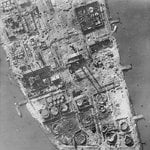
Magdeburg/Rothensee oil plant
--------------------------------------------------------------------------------
14 February 1945
36 Lancasters and 1 photographic Mosquito of Nos 9 and 617 Squadrons dispatched to attack Bielefeld and Altenbeken viaducts abandoned the raids because of cloud. 1 Lancaster of No 9 Squadron lost.
14/15 February 1945
Operation Thunderclap
Chemnitz: 499 Lancasters and 218 Halifaxes of Nos 1, 3,4,6 and 8 Groups to continue Operation Thunderclap. 8 Lancasters and 5 Halifaxes lost. This raid took place in two phases, 3 hours apart. A very elaborate diversion plan succeeded in keeping bomber casualties down but Chemnitz - now called Karl-Marx-Stadt - was also spared from the worst effects of its first major RAF raid. Both parts of the bomber force found the target area covered by cloud and only skymarking could be employed. Post-raid reconnaissance showed that many parts of the city were hit but that most of the bombing was in open country.
224 Lancasters and 8 Mosquitos of No 5 Group attacked the oil refinery in Rositz near Leipzig. 4 Lancasters were lost. Damage was caused to the southern part of the oil plant.
Diversionary and 95 aircraft of No 3 Group and of Heavy Conversion Units on a sweep into the Heligoland Bight, 46 Mosquitos to Berlin, 19 to Mainz, 14 to Dessau, 12 to Duisburg, 11 to Nuremberg and 8 to Frankfurt, 21 RCM sorties, 87 Mosquito patrols, 30 Lancasters and 24 Halifaxes minelaying in the Kadet Channel. 5 Halifaxes and 1 Lancaster lost from the minelaying force.
Total effort for the night: 1,316 sorties, 23 aircraft (1.7 per cent) lost.
15 February 1945
1 Halifax flew an RCM sortie.
15/16 February 1945
37 Lancasters and 18 Halifaxes minelaying in Oslo Fjord and the Kattegat, 2 RCM sorties, 6 Mosquito patrols. 1 Mosquito fighter crashed in France.
16 February 1945
100 Lancasters of No 3 Group and 1 Mosquito of No 8 Group attacked the town of Wesel on the Rhine, near the fighting area. No aircraft lost. The raid took place in clear conditions and 'the town and the railway were seen to be smothered in bomb bursts'.
17 February 1945
Wesel: 298 aircraft - 247 Halifaxes, 27 Lancasters, 24 Mosquitos - of Nos 4, 6 and 8 Groups. The target area was covered in cloud and the Master Bomber ordered the raid to be stopped after only 8 Halifaxes had bombed. No aircraft were lost but 3 Halifaxes crashed in England.
17/18 February 1945
6 Oboe Mosquitos attacked the Deschimag shipyard in Bremen but no results were seen because of ground fog. No aircraft lost.
18 February 1945
160 Lancasters of No 3 Group returned to Wesel to carry out a G-H attack through cloud. No Lancasters lost.
18/19 February 1945
32 Mosquitos to Mannheim, 6 each to Berlin and Bremen and 3 on 'siren tours' of various towns in Central Germany, 34 RCM sorties, 18 Mosquito patrols, 21 Lancasters and 4 Halifaxes minelaying in the German Bight. 2 Lancasters were lost from the minelaying force.
19 February 1945
Wesel: 168 Lancasters of No 3 Group carried out a good attack with the best concentration of bombs being in the railway area. 1 Lancaster lost.
1 Halifax flew an RCM sortie.
19/20 February 1945
254 Lancasters and 6 Mosquitos of No 5 Group dispatched to Böhlen. 1 Mosquito lost. This raid was not successful, probably because the aircraft of the Master Bomber, Wing Commander EA Benjamin, was shot down by flak over the target. Post-raid reconnaissance showed that damage to the target was 'superficial'; there was no evidence to show where the main bombing fell.
82 Mosquitos to Erfurt and 24 in small numbers to 6 other targets, 9 RCM sorties, 29 Mosquito patrols. No aircraft lost.
20 February 1945
1 Halifax flew an RCM sortie.
20/21 February 1945
514 Lancasters and 14 Mosquitos of Nos 1, 3, 6 and 8 Groups attacked Dortmund in Bomber Command's last large-scale raid on this target. 14 Lancasters lost. The intention of this raid was to destroy the southern half of Dortmund and Bomber Command claimed that this was achieved.
173 aircraft - 156 Halifaxes, 11 Mosquitos, 6 Lancasters - of Nos 4 and 8 Groups attacked the Rhenania Ossag refinery in the Reisholz district of Düsseldorf. The raid was accurate and it was later established that all oil production was halted. 4 Halifaxes and 1 Lancaster lost.
128 aircraft - 112 Halifaxes, 10 Mosquitos, 6 Lancasters - of 6 and 8 Groups attacked the Rhenania Ossag refinery at Monheim with similar results to the Reisholz raid. 2 Halifaxes lost.
154 Lancasters and 11 Mosquitos of No 5 Group were ordered to attack the Mittelland Canal near Gravenhorst but the raid was ordered to be abandoned by the Master Bomber because the area was covered by cloud. No aircraft lost.
Diversionary and 91 aircraft from Heavy Conversion Units in a sweep over the North Sea, 66 Mosquitos to Berlin and 16 to Mannheim, 65 RCM sorties, 45 Mosquito patrols, 6 aircraft on Resistance operations. 1 aircraft of No 100 Group (type not recorded) lost.
Total effort for the night: 1,283 sorties, 22 aircraft (1.7 per cent) lost.
21 February 1945
1 Halifax flew an RCM sortie.
21/22 February 1945
362 Lancasters and 11 Mosquitos of Nos 1, 6 and 8 Groups dispatched to Duisburg. 7 Lancasters were lost and 3 crashed behind Allied lines in Europe. This was a successful area-bombing raid and much damage was caused. No other details are available. This was the last major Bomber Command raid on Duisburg.
Worms: 349 aircraft - 288 Halifaxes, 36 Lancasters, 25 Mosquitos. 10 Halifaxes and 1 Lancaster lost. This was the first and only large Bomber Command raid on Worms. The raid was an area attack in which 1,116 tons of bombs were accurately dropped. A post-war survey estimated that 39 per cent of the town's built-up area was destroyed.
165 Lancasters and 12 Mosquitos of No 5 Group again attempted to breach the Mittelland Canal near Gravenhorst. Visibility was clear and the attack was successful. Bomber Command claimed that the canal was rendered '100 per cent unserviceable'. 9 Lancasters were lost and 4 crashed in France and Holland, 7.9 per cent of the Lancaster force. One of the Lancasters which crashed in Holland was piloted by Group Captain AC Evans-Evans, DFC, the station commander at Coningsby, flying a No 83 Squadron aircraft. The Lancaster was shot down by a German fighter and crashed near Eindhoven. One of the gunners was the only survivor.
77 Mosquitos to Berlin and 5 to Bremen, 66 RCM sorties, 35 Mosquito patrols, 28 aircraft on Resistance operations. No aircraft lost.
Total effort for the night: 1,110 sorties, 34 aircraft (3.1 per cent) lost.
22 February 1945
167 Lancasters of No 3 Group in forces of 85 and 82 aircraft to oil refineries at Gelsenkirchen and Osterfeld. A Film Unit Lancaster of No 463 Squadron, No 5 Group, accompanied the Gelsenkirchen force. Both targets were accurately bombed in clear weather conditions. 1 Lancaster lost from the Gelsenkirchen raid.
22/23 February 1945
73 Mosquitos to Berlin, 6 to Bremen, 4 to Erfurt and 3 on 'siren tours' of various German towns, 35 Lancasters to railway viaducts at Altenbeken and Bielefeld, 48 RCM sorties, 23 Mosquito patrols, 19 aircraft on Resistance operations. 1 Mosquito from the Erfurt raid crashed in Belgium.
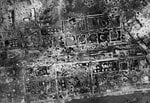
Bielefeld viaduct
--------------------------------------------------------------------------------
23 February 1945
342 aircraft - 297 Halifaxes, 27 Lancasters, 18 Mosquitos - of Nos 4, 6 and 8 Groups to Essen. 1 Halifax crashed in Holland. The target area was cloud-covered and all of the bombs were dropped on skymarkers. The marking must have been extremely accurate; a German report states that 300 high-explosive and 11,000 incendiary bombs fell on the Krupps works.
133 Lancasters of No 3 Group carried out a G-H attack on the Alma Pluto benzol plant at Gelsenkirchen but no results were seen. No aircraft lost.
1 Lightning flew an RCM sortie.
23/24 February 1945
367 Lancasters and 13 Mosquitos of Nos 1, 6 and 8 Groups and a Film Unit Lancaster carried out the first, and only, area-bombing raid of the war on Pforzheim. 10 Lancasters were lost and 2 more crashed in France. The marking and bombing, from only 8,000 ft, were particularly accurate and damage of a most severe nature was inflicted on Pforzheim. 1,825 tons of bombs were it dropped in 22 minutes. The post-war British Bombing Survey Unit estimated that 83 per cent of the town's built-up area was destroyed, probably the greatest proportion in one raid during the war.
Bomber Command's last Victoria Cross of the war was won on this night. The Master Bomber was Captain Edwin Swales, DFC, a South African serving with No 582 Squadron. His Lancaster was twice attacked over the target by a German fighter. Captain Swales could not hear the evasion directions given by his gunners because he was broadcasting his own instructions to the Main Force. 2 engines and the rear turret of the Lancaster were put out of action. Captain Swales continued to control the bombing until the end of the raid and must take some credit for the accuracy of the attack. He set out on the return flight but encountered turbulent cloud and ordered his crew to bale out. This they all did successfully but Captain Swales had no opportunity to leave the aircraft and was killed when it crashed. He is buried at the Leopold War Cemetery at Limburg in Belgium.
73 Lancasters and 10 Mosquitos carried out an accurate attack on a possible U-boat base at Horten on the Oslo Fjord. 1 Lancaster was lost.
70 Mosquitos to Berlin, 6 to Worms and 4 each to Darmstadt, Essen and Frankfurt, 54 RCM sorties, 25 Mosquito patrols, 22 Lancasters minelaying in Norwegian waters, 13 aircraft on Resistance operations. 4 aircraft lost - 2 RCM Halifaxes, 1 Resistance operation Stirling and 1 Mosquito from the Berlin raid.
Total effort for the night: 666 sorties, 17 aircraft (2.6 per cent) lost.
24 February 1945
Kamen: 340 aircraft - 290 Halifaxes, 26 Lancasters, 24 Mosquitos - of Nos 4, 6 and 8 Groups. 1 Halifax lost. The target was a synthetic-oil plant which was actually in Bergkamen, just north of Kamen. The target area was covered by cloud and the raid was based on Oboe and H2S markers.
166 Lancasters and 4 Mosquitos of No 5 Group were ordered to abandon a raid on the Dortmund-Ems Canal without bombing because of cloud which covered the target area. All aircraft landed safely.
24/25 February 1945
74 training aircraft on a diversionary sweep over Northern France to draw German fighters into the air, 63 Mosquitos to Berlin, 18 to Neuss and 3 on 'siren tours' of Dessau, Erfurt and Halle, 37 RCM sorties, 23 Mosquito patrols, 35 Lancasters minelaying in the Kattegat and off Norwegian ports. 5 RCM aircraft - 4 Halifaxes and 1 Fortress - lost; these aircraft were operating in association with the diversionary sweep of training aircraft and were probably victims of German fighters drawn up by that sweep. The 4 lost Halifaxes were all from No 462 (Australian) Squadron, based at Foulsham; they had been sent ahead of the diversionary force to drop Window, bombs and incendiaries in a 'spoof' raid on the Ruhr.
25 February 1945
153 Lancasters of No 3 Group carried out a G-H attack on the synthetic-oil refinery at Kamen. 1 Lancaster lost.
25/26 February 1945
63 Mosquitos to Erfurt, 10 each to Berlin and Mainz and 6 to Bremen, 8 RCM sorties, 23 Mosquito patrols, 10 Halifaxes of No 6 Group minelaying in Oslo Fjord, 20 aircraft on Resistance operations. 1 Halifax minelayer lost.
26 February 1945
149 Lancasters of No 3 Group carried out a G-H attack on the Hoesch benzol-oil plant at Dortmund through cloud. No results were seen but the bombing appeared to be concentrated. No aircraft lost.
26/27 February 1945
38 Mosquitos each to Berlin and Nuremberg, 3 Mosquitos on 'siren tours' of Northern Germany, 1 RCM sortie, 6 Mosquito patrols, 18 aircraft on Resistance operations. 1 Stirling lost on a Resistance flight.
27 February 1945
458 aircraft - 311 Halifaxes, 131 Lancasters, 16 Mosquitos - of Nos 4, 6 and 8 Groups to Mainz. 1 Halifax and 1 Mosquito lost. The target area Mainz was covered by cloud and the bombing was aimed at skymarkers dropped on Oboe. No results were seen by the bomber crews but the bombing caused severe destruction in the central and eastern districts of Mainz; this was the city's worst raid of the war. 1,545 tons of bombs were dropped. 5,670 buildings were destroyed, including most of the historic buildings in the Altstadt, but the industrial district was also badly hit. This was the last heavy raid on Mainz.
149 Lancasters of No 3 Group carried out a G-H attack through thick cloud on the Alma Pluto benzol plant, Gelsenkirchen but no results were seen. 1 Lancaster lost.
27/28 February 1945
82 training aircraft on a sweep over the North Sea to draw up German fighters, 96 Mosquitos to Berlin and 6 to Bremen, 62 RCM sorties, 32 Mosquito patrols. No aircraft lost.
28 February 1945
156 Lancasters of No 3 Group in a G-H raid on the Nordstern synthetic-oil plant at Gelsenkirchen. No aircraft lost.
28 February/1 March 1945
98 training aircraft on a sweep over the North Sea, 74 Mosquitos to Berlin, 8 to Nuremberg and 4 to Munich, 44 RCM sorties, 31 Mosquito patrols, 5 Mosquitos of No 5 Group minelaying in the Kiel Canal, 20 aircraft on Resistance operations. 1 Mosquito lost from the Berlin raid.
Royal Air Force Bomber Command 60th Anniversary
--------------------------------------------------------------------------------
Campaign Diary
January 1945
1/2 January 1945
152 Lancasters and 5 Mosquitos of No 5 Group carried out an accurate attack on the Gravenhorst section of the Mittelland Canal. Half a mile of banks were pitted with bomb craters and some parts were breached. No aircraft lost.
146 aircraft of No 3 Group successfully attacked the railway yards at Vohwinkel. 1 Lancaster lost.
105 Halifaxes of No 4 Group and 18 Lancasters and 16 Mosquitos of No 8 Group attempted to bomb a benzol plant at Dortmund but the attack was scattered and the plant was not hit. No aircraft lost.
28 Mosquitos to Hanau and 27 to Hannover (both 'spoof' raids), 42 RCM sorties, 59 Mosquito patrols. No aircraft lost. The No 100 Group Mosquitos claimed 6 German night fighters destroyed.
Total effort for the night: 598 sorties, 1 aircraft (0.2 per cent) lost; 5 aircraft crashed in England.
2 January 1945
2 Hudsons flew on Resistance operations without loss.
2/3 January 1945
Nuremberg: 514 Lancasters and 7 Mosquitos of Nos 1, 3, 6 and 8 Groups. 4 Lancasters were lost and 2 crashed in France. Nuremberg, scene of so many disappointments for Bomber Command, finally succumbed to this attack. The Pathfinders produced good ground-marking in conditions of clear visibility and with the help of a rising full moon. The centre of the city, particularly the eastern half, was destroyed. The castle, the Rathaus, almost all the churches and about 2,000 preserved medieval houses went up in flames. The area of destruction also extended into the more modern north-eastern and southern city areas.The industrial area in the south, containing the important MAN and Siemens factories, and the railway areas were also severely damaged. 415 separate industrial buildings were destroyed. It was a near-perfect example of area bombing.
Ludwigshafen: 389 aircraft - 351 Halifaxes, 22 Lancasters, 16 Mosquitos - of Nos 4, 6 and 8 Groups. 1 Halifax which crashed in France was the only loss. The aiming point for this raid was the area of the two IG Farben chemical factories. The bombing was accurate, with severe damage to the main IG Farben factory and to the same firm's factory at nearby Oppau. Estimated totals of 500 high-explosive bombs and 10,000 incendiaries fell inside the limits of the 2 factories, causing much damage. 10 large, 30 medium and 200 small fires were recorded at the main factory. Production failure at both plants was complete because of 'loss of power'. 13 other industrial firms and several railway installations were also hit; the train of a railway repair unit was destroyed.
53 Mosquitos to Berlin, 9 to Castrop-Rauxel and 7 to Hanau, 49 RCM sorties, 41 Mosquito patrols. 2 Mosquitos were lost, 1 each from the Berlin and Castrop-Rauxel raids.
Total effort for the night: 1,069 sorties, 9 aircraft (0.8 per cent) lost.
Striking the Nazi 'heart'
--------------------------------------------------------------------------------
3 January 1945
99 Lancasters of No 3 Group made G-H attacks through cloud on the Benzol plants at Dortmund and Castrop-Rauxel. Bombing appeared to be accurate at both targets. 1 Lancaster lost from the Dortmund raid.
3/4 January 1945
3 Oboe Mosquitos each to the railway yards at Ludwigshafen and Neuss. No aircraft lost.
4 January 1945
1 Hudson flew on a Resistance operation.
4/5 January 1945
Royan: 347 Lancasters and 7 Mosquitos of Nos 1, 5 and 8 Groups. 4 Lancasters were lost and 2 more collided behind Allied lines in France and crashed.
This was a tragic raid with a strange - and disputed - background. Royan was a town situated at the mouth of the River Gironde in which a stubborn German garrison was still holding out, preventing the Allies from using the port of Bordeaux. The task of besieging the town had been given to 12,000 men of the French Resistance commanded by Free French officers appointed by General de Gaulle. The commander of the German garrison recognized the Resistance units as regular forces and the normal rules of warfare were observed. The French, lacking artillery, made little progress with their siege. The German commander gave the inhabitants of the town the opportunity to leave but many preferred to stay in order to look after their homes. It is believed that there were 2,000 civilians at the time of the raid.
On 10 December 1944, a meeting took place at the town of Cognac between French officers and an American officer from one of the tactical air force units in France. After a meal, at which much alcohol is supposed to have been consumed, the American officer suggested that the German garrison at Royan should be 'softened up' by bombing. He was assured by the French that the only civilians remaining in the town were collaborators - which was not correct. The suggestion that the town be bombed was passed to SHAEF (Supreme Headquarters Allied Expeditionary Force), which decided that the task should be given to Bomber Command: 'To destroy town strongly defended by enemy and occupied by German troops only.' It is said that SHAEF ordered a last-minute cancellation because of doubts about the presence of French civilians but the order, if issued, was not received by Bomber Command in time.
The attack was carried out by 2 waves of bombers, in good visibility conditions, in the early hours of 5 January. 1,576 tons of high-explosive bombs - including 285 'blockbuster' (4,OOOlb bombs) - were dropped. Local reports show that between 85 and 90 per cent of the small town was destroyed. The number of French civilians killed is given as '500 to 700' and as '800' by different sources. Many of the casualties were suffered in the second part of the raid, which took place an hour after the first and caught many people out in the open trying to rescue the victims of the first wave of the bombing trapped in their houses. The number of Germans killed is given as 35 to 50. A local truce was arranged and, for the next 10 days, there was no fighting while the search for survivors in wrecked houses continued.
There were many recriminations. Bomber Command was immediately exonerated. The American air-force officer who passed on the original suggestion to SHAEFwas removed from his command. The bitterest disputes took place among the Free French officers and accusations and counter-accusations continued for many years after the war. A French general committed suicide. De Gaulle, in his Memoires, blamed the Americans: 'American bombers, on their own initiative, came during the night and dropped a mass of bombs.' The German garrison did not surrender until 18 April.
66 Mosquitos to Berlin and 7 to Neuss, 2 Halifax RCM sorties. No aircraft lost.
Some of the Light Night Striking Force (No 8 Group) Mosquitos which attacked Berlin on this night flew 2 sorties each. These Mosquitos took off in the early evening, bombed Berlin returned and changed crews, and then flew to Berlin again. This method of augmenting the Mosquito campaign against Berlin was used several times during the long nights of midwinter.
5 January 1945
160 Lancasters of No 3 Group attacked the railway-yards at Ludwigshafen. 2 Lancasters lost.
1 Hudson flew a Resistance operation.
5/6 January 1945
Hannover: 664 aircraft - 340 Halifaxes, 310 Lancasters, 14 Mosquitos - of Nos 1, 4, 6 and 8 Groups. 23 Halifaxes and 8 Lancasters lost, 4.7 per cent of the force. This was the first large raid on Hannover since October 1943.
131 Lancasters and 9 Mosquitos of No 5 Group attacked Houffalize, a bottleneck in the German supply system in the Ardennes. The target was bombed with great accuracy. 2 Lancasters lost.
69 Mosquitos to Berlin, 8 to Neuss and 6 to Castrop-Rauxel, 58 RCM sorties, 55 Mosquito patrols. 4 Mosquitos lost, 2 from the Berlin raid and 2 from No 100 Group.
Total effort for the night: 1,000 sorties, 37 aircraft (3.7 per cent) lost.
6 January 1945
1 Hudson flew a Resistance operation.
6/7 January 1945
Hanau: 482 aircraft - 314 Halifaxes, 154 Lancasters, 14 Mosquitos - of Nos 1, 4, 6 and 8 Groups. 4 Halifaxes and 2 Lancasters lost. The attack was aimed at that part of Hanau in which an important junction in the German railway system was situated. The local report says that many bombs did fall in this area but also states that a large proportion of the bombing was scattered in the south - into the centre of Hanau - and to the north - into an area of countryside and villages.
Neuss: 147 Lancasters of Nos 1 and No 3 Groups. 1 Lancaster crashed in Belgium. As in Hanau, some of the bombing fell into the railway area but most was scattered over surrounding districts. 1,749 houses, 19 industrial premises and 20 public buildings were destroyed or seriously damaged.
20 Mosquitos to Kassel (a 'spoof' raid) and 6 to Castrop-Rauxel, 52 RCM sorties, 32 Mosquito patrols, 49 Lancasters minelaying off Baltic ports. 2 RCM Halifaxes and 2 Lancaster minelayers lost.
Total effort for the night: 788 sorties, 11 aircraft (1.4 per cent) lost.
Hanau
--------------------------------------------------------------------------------
7/8 January 1945
645 Lancasters and 9 Mosquitos of Nos 1, 3, 5, 6 and 8 Groups to Munich. 11 Lancasters lost and 4 more crashed in France. Bomber Command claimed a successful area raid, with the central and some industrial areas being severely damaged. This was the last major raid on Munich.
54 Mosquitos to Hannover, 18 to Nuremberg and 12 to Hanau, 39 RCM sorties, 45 Mosquito patrols. 2 Mosquitos lost - 1 from the Hannover raid and a No 100 Group aircraft.
The last Bomber Command Wellington operation was flown on this night by Flying Officer BH Stevens and his crew of No 192 Squadron. The Wellington was on an RCM flight over the North Sea 'to investigate enemy beam signals connected with the launching of flying bombs and believed to emanate from marker buoys'. Bad weather over the North Sea caused the flight to be curtailed but the Wellington landed safely, the last of more than 47,000 sorties carried out by this type of aircraft in Bomber Command.
Total effort for the night: 822 sorties, 17 aircraft (2.1 per cent) lost.
10/11 January 1945
50 Mosquitos to Hannover and 3 each to Cologne, Koblenz, Mannheim and Wiesbaden. No aircraft lost.
11 January 1945
152 Lancasters of No 3 Group carried out a G-H raid on the railway yard in the Uerdingen suburb of Krefeld. No aircraft lost.
1 Stirling flew on a Resistance operation.
12 January 1945
32 Lancasters and 1 Mosquito of Nos 9 and 617 Squadrons attacked U-boat pens and shipping in Bergen harbour. 3 Lancasters of No 617 Squadron and 1 from No 9 Squadron were lost; the Germans told the local people that 11 bombers had been shot down. A local report says that 3 Tallboys penetrated the 3½-metre-thick roof of the pens and caused severe damage to workshops, offices and stores inside.
2 Mosquito fighters of No 100 Group flew long-range escort for an air-sea rescue operation and 2 Stirlings flew RCM sorties, all without loss.
12/13 January 1945
11 Mosquitos to Bochum and 9 to Recklinghausen, both forces to bomb synthetic-benzol plants, and 32 Halifaxes minelaying off Flensburg and Kiel. 4 Halifaxes lost.
13 January 1945
158 Lancasters of No 3 Group attacked the railway yards at Saarbrücken. The bombing appeared to be accurate, though with some overshooting. 1 Lancaster crashed in France.
1 Hudson flew on a Resistance operation.
13/14 January 1945
Saarbrücken: 274 aircraft - 242 Halifaxes, 20 Lancasters, 12 Mosquitos - of Nos 4, 6 and 8 Groups. 1 Halifax crashed in France. Bomber Command assessed this raid, on the railway yards, as being extremely accurate and effective.
Politz: 218 Lancasters and 7 Mosquitos of No 5 Group attacked this oil plant, near Stettin. 2 Lancasters lost. This raid had been planned as a blind-bombing attack but, because the weather conditions were better than forecast, low-level marking was carried out and very accurate bombing followed. Bomber Command, on the basis of photographic reconnaissance, states that the oil plant was 'reduced to a shambles'.
19 RCM sorties, 22 Mosquito patrols, 10 Lancasters minelaying off Swinemünde. 1 Mosquito of l00 Group lost.
Total effort for the night: 550 sorties, 4 aircraft (O.7 per cent) lost.
14 January 1945
134 Lancasters of No 3 Group attacked the railway yards at Saarbrücken in clear visibility and without loss.
14/15 January 1945
573 Lancasters and 14 Mosquitos of Nos 1, 5. 6 and 8 Groups carried out two attacks, 3 hours apart, on the synthetic oil plant at Leuna. The attacks caused severe damage throughout the plant. Albert Speer, in his post-war interrogations, stated that this was one of a group of most damaging raids on the synthetic-oil industry carried out during this period. 10 Lancasters lost.
151 aircraft - 136 Halifaxes, 12 Mosquitos, 3 Lancasters - of Nos 6 and 8 Groups attacked the railway yards at Grevenbroich. The raid was successful and no aircraft were lost.
115 aircraft - 100 Halifaxes, 12 Mosquitos, 3 Lancasters - of Nos 4 and 8 Groups attempted to bomb a Luftwaffe fuel-storage depot at Dülmen, near Münster, but most of the bombing fell in open country south and south-east of the target. Only slight damage was caused to the fuel dump. 1 Halifax lost.
Support and 126 training aircraft on a diversionary sweep over the North Sea, 83 Mosquitos to Berlin and 9 to Mannheim, 58 RCM sorties, 54 Mosquito patrols, 21 Halifaxes and 10 Lancasters minelaying off Oslo and in the Kattegat. 1 Lancaster from the diversionary sweep and 1 Mosquito of No 100 Group were lost; 3 Mosquitos from the Berlin raid crashed in Belgium and 1 RCM Liberator crashed in Holland. A further 7 aircraft from the sweep and 5 Mosquitos from the Berlin raid crashed in England because of bad weather.
Total effort for the night: 1,214 sorties, 17 aircraft (1.4 per cent) lost and 14 aircraft crashed in England.
Oil plant at Leuna
--------------------------------------------------------------------------------
15 January 1945
82 Lancasters of No 3 Group attacked a benzol plant at Recklinghausen. The bombing appeared to be excellent. No aircraft lost.
63 Lancasters of No 3 Group carried out a G-H raid through thick cloud on the Robert Muser benzol plant at Bochum. No results known. No aircraft lost.
1 Hudson on a Resistance operation.
16/17 January 1945
371 aircraft - 320 Halifaxes, 44 Lancasters, 7 Mosquitos - of Nos 4, 6 and 8 Groups dispatched to Magdeburg. 17 Halifaxes lost, 4.6 per cent of the total force, 5.3 per cent of the Halifax force. This was an area raid. Bomber Command claimed that it was successful, with 44 per cent of the built-up area being destroyed. No local report is available.
Zeitz: 328 Lancasters of Nos 1, 6 and 8 Groups. 10 Lancasters lost, 3.0 per cent of the force. The target was the Braunkohle-Benzin synthetic-oil plant near Leipzig. Much damage was caused to the northern half of the plant.
231 Lancasters and 6 Mosquitos of Nos 1 and No 5 Groups attacked a synthetic-oil plant at Brüx in Western Czechoslovakia. The raid was a complete success. Speer also mentioned this raid as causing a particularly severe setback to oil production. 1 Lancaster lost.
138 Lancasters of No 3 Group attacked the benzol plant at Wanne-Eickel. No results known. 1 Lancaster lost.
17 Mosquitos to Mannheim and 9 to Hamburg, 55 RCM sortie Mosquito patrols, 23 Halifaxes and 8 Lancasters minelaying off Oslo and in the Kattegat. 1 Mosquito of No 100 Group lost.
Total effort for the night: 1,238 sorties, 30 aircraft (2.4 per cent) lost.
17 January 1945
1 Hudson on a Resistance operation.
17/18 January 1945
72 Mosquitos to Magdeburg, 8 to Ruthen oil-storage depot and 3 each to Cologne, Frankfurt, Koblenz and Mannheim, 33 RCM sorties, 13 Mosquito patrols. No aircraft lost.
18/19 January 1945
56 Mosquitos to Sterkrade oil refinery, 12 each, on H2S trials, to Düsseldorf, Kassel and Koblenz and 7 to Ruthen oil depot. 1 Mosquito from the Sterkrade raid crashed in Belgium.
21/22 January 1945
76 Mosquitos to Kassel and 4 to Mainz, 23 RCM sorties, 9 Mosquito patrols, 2 Hudsons on Resistance operations. 1 Mosquito lost from the Kassel raid.
22 January 1945
1 Halifax flew an RCM sortie.
22/23 January 1945
Duisburg: 286 Lancasters and 16 Mosquitos of Nos 1, 3 and 8 Groups. 2 Lancasters lost. This raid was intended for the benzol plant in the Bruckhausen district of Duisburg. This target was identified visually by moonlight and much damage was inflicted on it. Further bombing also hit the nearby Thyssen steelworks, either by misidentification or by a simple spread of the bombing. Duisburg's local report assumed that the steelworks were the primary target and stated that 500 high explosive bombs fell on the Thyssen premises.
Gelsenkirchen: 152 aircraft - 107 Halifaxes, 29 Lancasters, 16 Mosquitos - of Nos 4, 5 and 8 Groups. No aircraft lost. This was a small area-bombing raid. The Bomber Command report states that 'moderate' damage was caused to residential and industrial areas.
48 Mosquitos to Hannover and 6 to Dortmund, 50 RCM sorties, 40 Mosquito patrols. No aircraft lost.
Total effort for the night: 598 sorties, 2 aircraft (0.3 per cent) lost.
26/27 January 1945
8 Mosquitos bombed the Castrop-Rauxel synthetic-oil refinery without loss.
27 January 1945
1 Lightning of No 100 Group flew on a signals-investigations patrol.
27/28 January 1945
12 Mosquitos to Berlin: 8 bombed this target and 3 bombed alternative targets. No aircraft lost.
28 January 1945
153 Lancasters of No 3 Group attacked the railway yards at Cologne/Gremberg in conditions of good visibility. Some of the bombing fell on the target but some overshot. 3 Lancasters were lost and 1 crashed in France.
28/29 January 1945
602 aircraft - 316 Halifaxes, 258 Lancasters, 28 Mosquitos - of Nos 1, 4, 6 and 8 Groups dispatched to 2 targets in the Stuttgart area. 11 aircraft - 6 Lancasters, 4 Halifaxes, 1 Mosquito - lost. This raid was split into 2 parts, with a 3-hour interval. The first force - 226 aircraft - was directed against the important railway yards at Kornwestheim, a town to the north of Stuttgart, and the second was against the north-western Stuttgart suburb of Zuffenhausen, where the target is believed to have been the Hirth aero-engine factory. The target area was mostly cloud-covered for both raids and the bombing, on skymarkers, was scattered. Bombs fell in many parts of Stuttgart's northern and western suburbs. The important Bosch works, in the suburb of Feuerbach, was hit. A large number of bombs fell outside Stuttgart, particularly in the east around a decoy fire site which was also firing dummy target-indicator rockets into the air. The village of Weilimdorf, situated not far away, complained bitterly about its damage and casualties! This was the last large RAF raid on Stuttgart. Stuttgart's experience was not as severe as other German cities. Its location, spread out in a series of deep valleys, had consistently frustrated the Pathfinders and the shelters dug into the sides of the surrounding hills had saved many lives.
67 Mosquitos to Berlin and 8 to Mainz (a 'spoof' raid for the Stuttgart attacks), 51 RCM sorties, 36 Mosquito patrols, 6 Lancasters of No 1 Group minelaying in the Kattegat. 1 Mosquito of No 100 Group crashed in France.
Total effort for the night: 770 sorties, 12 aircraft (1.6 per cent) lost.
29 January 1945
148 Lancasters of No 3 Group attacked the Uerdingen railway yards at Krefeld without loss. Bombing was claimed to be accurate but a short Krefeld report states that bombs fell over a wide area.
29/30 January 1945
59 Mosquitos; 50 aircraft reached and bombed Berlin without loss.
31 January/1 February 1945
8 Mosquitos to the Hansa benzol plant at Dortmund and 6 Mosquitos to Duisburg. 1 aircraft from the Dortmund raid crashed in Holland.
The weather started to improve at the beginning of February and Bomber Command commenced an almost unbroken period of operations of the most intense and concentrated nature which would continue until a halt was called to the strategic-bombing offensive in April. The first round of raids, however, was not very effective because of poor weather at the targets.
Royal Air Force Bomber Command 60th Anniversary
--------------------------------------------------------------------------------
Campaign Diary
February 1945
1 February 1945
160 Lancasters of No 3 Group attacked the general town area of Mönchengladbach through 8-10/10ths cloud, using G-H. The results of the raid are not known. 1 Lancaster crashed in France.
1 Halifax flew an RCM sortie.
1/2 February 1945
Ludwigshafen: 382 Lancasters and 14 Mosquitos of Nos 1, 6 and 8 Groups. 6 Lancasters lost. Most of the force aimed their loads at skymarkers and the local report shows that bombs fell in many parts of Ludwigshafen, with much property damage of a mixed nature. The 900 houses destroyed or seriously damaged were the main item in the report but it also states that the railway yards were seriously damaged and one of the Rhine road bridges was hit by 2 bombs and temporarily closed to traffic.
Mainz: 340 aircraft - 293 Halifaxes, 40 Lancasters, 8 Mosquitos - of Nos 4, 6 and 8 Groups. No aircraft lost. A few early crews were able to bomb target indicators seen through a gap in the clouds, but the gap soon closed and most of the raid was on skymarkers. The local report states that a few buildings were destroyed, including the Christuskirche, which burnt out, and the town hospital was damaged, but most of the bombing fell outside Mainz.
Siegen: 271 Lancasters and 11 Mosquitos of No 5 Group. 3 Lancasters and 1 Mosquito lost. This raid also experienced difficult marking and bombing conditions. Some damage was caused to the railway station but the local report says that the markers were either carried away from Siegen by a strong wind or that dummy markers and a decoy fire site attracted much of the bombing. Most of the raid fell in country areas outside Siegen.
122 Mosquitos to Berlin, 8 to Bruckhausen benzol plant, 6 to Hannover, 4 to Nuremberg and 4 dropping dummy target indicators at both Mannheim and Stuttgart, 64 RCM sorties, 47 Mosquito patrols. No aircraft lost.
Total effort for the night: 1,273 sorties, 10 aircraft (0.8 per cent) lost.
2 February 1945
2 Mosquito Ranger patrols over Northern Germany without loss.
2/3 February 1945
495 Lancasters and 12 Mosquitos of Nos 1, 3, 6 and 8 Groups to Wiesbaden. 3 Lancasters crashed in France. This was Bomber Command's one and only large raid on Wiesbaden. There was complete cloud cover but most of the bombing hit the town. 5 important war industries along the banks of the Rhine were untouched but the railway station was damaged.
Wanne-Eickel: 323 aircraft - 277 Halifaxes, 27 Lancasters, 19 Mosquitos - of Nos 4, 6 and 8 Groups. 4 Halifaxes lost. This target was also cloud-covered and the attack, intended for the oil refinery, was not accurate. Local people assumed that the target was a local coal mine - Shamrock 3/4; most of the bombing fell in the open ground around the mine.
Karlsruhe: 250 Lancasters and 11 Mosquitos of No 5 Group. 14 Lancasters lost. No 189 Squadron, from Fulbeck, lost 4 of its 19 aircraft on the raid. Cloud cover over the target caused this raid to be a complete failure. Karlsruhe reports no casualties and only a few bombs. The report mentions 'dive bombers', presumably the Mosquito marker aircraft trying to establish their position. This was a lucky escape for Karlsruhe in its last major RAF raid of the war.
43 Mosquitos to Magdeburg and 20 to Mannheim, 54 RCM sorties, 44 Mosquito patrols. No aircraft lost.
Total effort for the night: 1,252 sorties, 21 aircraft (1.7 per cent) lost.
3 February 1945
36 Lancasters of No 5 Group attacked U-boat pens at Ijmuiden (No 9 Squadron) and Poortershaven (No 617 Squadron) with Tallboy bombs. It was believed that these pens, in that part of Holland still occupied by the Germans, were sheltering midget submarines. The weather was clear and hits were claimed at both targets without loss.
1 Halifax flew an RCM sortie.
3/4 February 1945
192 Lancasters and 18 Mosquitos of Nos 1 and 8 Groups attacked the Prosper benzol plant at Bottrop successfully. 8 Lancasters lost.
149 Lancasters of No 3 Group attacked the Hansa benzol plant at Dortmund but the bombing fell north and north-west of the target. 4 Lancasters lost.
42 Mosquitos to Wiesbaden and 20 to Osnabrück, 42 RCM sorties, 28 Mosquito patrols, 19 Halifaxes of No 4 Group minelaying off German ports. No aircraft lost.
Total effort for the night: 510 sorties, 12 aircraft (2.4 per cent) lost.
4/5 February 1945
238 aircraft - 202 Halifaxes, 20 Lancasters, 16 Mosquitos - of Nos 4, 6 and 8 Groups to Bonn. 3 Lancasters lost. This was a poor attack, with most of the bombing falling to the south of the target or over the Rhine in the Beuel area.
123 aircraft - 100 Halifaxes, 12 Mosquitos, 11 Lancasters - of 6 and 8 Groups attacked a benzol plant at Osterfeld but caused no fresh damage. No aircraft lost.
120 aircraft - 96 Halifaxes, 12 Lancasters, 12 Mosquitos - of 4 and 8 Groups attacked the Nordstern synthetic-oil plant, Gelsenkirchen. Some minor damage was caused but most of the bombs fell south of the target. No aircraft lost.
50 Mosquitos to Hannover, 12 to Dortmund, 4 to Magdeburg and 3 to Würzburg, 59 RCM sorties, 42 Mosquito patrols, 15 Lancasters and 12 Halifaxes minelaying off Heligoland and in the River Elbe. 2 Mosquitos lost, 1 each from the Hannover and Würzburg raids.
Total effort for the night: 678 sorties, 5 aircraft (0.7 per cent) lost.
5 February 1945
1 Halifax flew an RCM sortie.
5/6 February 1945
63 Mosquitos to Berlin, 7 to Magdeburg and 6 to Würzburg, 1 RCM sortie. 1 Mosquito lost from the Berlin raid.
6 February 1945
35 aircraft of No 5 Group (Nos 9 and 617 Squadrons) to attack viaducts at Bielefeld and Altenbeken were recalled because of bad weather.
7 February 1945
100 Lancasters of No 3 Group to attack the oil plant at Wanne-Eickel. Only 75 aircraft were able to bomb in wintry conditions which scattered the force. The results of the raid are not known. 1 Lancaster lost.
7/8 February 1945
Goch: 464 aircraft - 292 Halifaxes, 156 Lancasters, 16 Mosquitos - of Nos 4, 6 and 8 Groups. 2 Halifaxes lost. This raid was preparing the way for the attack of the British XXX Corps across the German frontier near the Reichswald. The Germans had included the towns of Goch and Kleve in their strong defences here. The Master Bomber ordered the Main Force to come below the cloud, the estimated base of which was only 5,000ft, and the attack opened very accurately. The raid was stopped after 155 aircraft had bombed, because smoke was causing control of the raid to become impossible. Considerable damage was caused in Goch but most of the inhabitants had probably left the town.
Kleve: 295 Lancasters and 10 Mosquitos of Nos 1 and 8 Groups. 1 Lancaster lost. 285 aircraft bombed at Kleve, which was battered even more than Goch. After the war, Kleve claimed to be the most completely destroyed town in Germany of its size. The British attack, led by the 15th (Scottish) Division, made a successful start a few hours later but quickly ground to a halt because of a thaw, which caused flooding on the few roads available for the advance, and also because of the ruins which blocked the way through Kleve. Lieutenant-General BG Horrocks, the Corps Commander in charge of the attack, later claimed that he had requested that Kleve should only be subjected to an incendiary raid but Bomber Command dropped 1,384 tons of high explosive on the town and no incendiaries.
177 Lancasters and 11 Mosquitos of No 5 Group attacked the Dortmund-Ems Canal section near Ladbergen with delayed-action bombs. Later photographs showed that the banks had not been damaged; the bombs had fallen into nearby fields. 3 Lancasters were lost.
38 Mosquitos to Magdeburg, 16 to Mainz and 41 in small numbers to 5 other targets, 63 RCM sorties, 45 Mosquito patrols, 30 Lancasters and 15 Halifaxes minelaying in Kiel Bay. 4 Mosquitos lost - 3 from No 100 Group and 1 from the raid on Mainz.
Total effort for the night: 1,205 sorties, 10 aircraft (0.8 per cent) lost.
Destruction in Kleve
--------------------------------------------------------------------------------
8 February 1945
15 Lancasters of No 617 Squadron dropped Tallboys on the U-boat pens at Ijmuiden without loss.
1 RCM sortie was flown.
8/9 February 1945
Politz: 475 Lancasters and 7 Mosquitos of Nos 1, 5 and 8 Groups. 12 Lancasters lost, l of them coming down in Sweden. The attack took place in 2 waves, the first being marked and carried out entirely by the No 5 Group method and the second being marked by the Pathfinders of No 8 Group. The weather conditions were clear and the bombing of both waves was extremely accurate. Severe damage was caused to this important synthetic-oil plant. It produced no further oil during the war. Speer mentioned this raid, in his post-war interrogations, as being another big setback to Germany's war effort.
Wanne-Eickel: 228 aircraft - 200 Halifaxes, 20 Mosquitos, 8 Lancasters - of Nos 4, 6 and 8 Groups. 2 Halifaxes crashed in France. This raid was not a success. The local report says that the bombing was scattered, with only light damage to the oil refinery.
Krefeld: 151 Lancasters of No 3 Group attacked the Hohenbudberg railway yards but photographic reconnaissance was unable to detect any new damage. 2 Lancasters lost.
47 Mosquitos to Berlin, 9 to Neubrandenburg (a 'spoof' for the Politz raid) and 4 to Nuremberg, 47 RCM sorties, 42 Mosquito patrols, 10 Lancasters of No 5 Group minelaying off Swinemünde. 1 RCM Halifax lost.
Total effort for the night: 1,020 sorties, 17 aircraft (1.7 per cent) lost.
9 February 1945
1 Halifax flew an RCM sortie.
9/10 February 1945
7 Stirlings of No 3 Group flew on Resistance operations but none were able to carry out their tasks (the reasons were not recorded) and 1 Stirling was lost. 1 Mosquito flew an RCM sortie.
10 February 1945
1 Halifax flew an RCM sortie.
10/11 February 1945
82 Mosquitos to Hannover and 11 to Essen, 24 RCM sorties, 22 Mosquito patrols. No aircraft lost.
12/13 February 1945
72 Mosquitos to Stuttgart, 11 to Misburg, 4 to Würzburg and 3 each 'on H2S trials' to Cologne, Frankfurt, Koblenz and Wiesbaden, 1 Mosquito on an RCM sortie. No aircraft lost.
Cologne, 24 February 1945
--------------------------------------------------------------------------------
13/14 February 1945
Operation Thunderclap
The Air Ministry had, for several months, been considering a series of particularly heavy area raids on German cities with a view to causing such confusion and consternation that the hard-stretched German war machine and civil administration would break down and the war would end. The general name given to this plan was Operation Thunderclap, but it had been decided not to implement it until the military situation in Germany was critical. That moment appeared to be at hand. Russian forces had made a rapid advance across Poland in the second half of January and crossed the eastern frontier of Germany. The Germans were thus fighting hard inside their own territory on two fronts, with the situation in the East being particularly critical. It was considered that Berlin, Dresden, Leipzig and Chemnitz - all just behind the German lines on the Eastern Front now - would be suitable targets. They were all vital communications and supply centres for the Eastern Front and were already packed with German refugees and wounded from the areas recently captured by the Russians. As well as the morale aspect of the attacks, there was the intention of preventing the Germans from moving reinforcements from the West to face the successful Russian advance. The Air Ministry issued a directive to Bomber Command , at the end of January. The Official History. describes how Winston Churchill took a direct hand in the final planning of Operation Thunderclap - although Churchill tried to distance himself from the Dresden raid afterwards. On 4 February, at the Yalta Conference, the Russians asked for attacks of this kind to take place, but their involvement in the process only came after the plans had been issued. So, Bomber Command was specifically requested by the Air Ministry, with Churchill's encouragement to carry out heavy raids on Dresden, Chemnitz and Leipzig. The Americans were also asked to help and agreed to do so. The campaign should have begun with an American raid on Dresden on 13 February but bad weather over Europe prevented any American operations. It thus fell to Bomber Command to carry out the first raid.
Dresden: 796 Lancasters and 9 Mosquitos were dispatched in two separate raids and dropped 1,478 tons of high explosive and 1,182 tons of incendiary bombs. The first attack was carried out entirely by No 5 Group, using their own low-level marking methods. A band of cloud still remained in the area and this raid, in which 244 Lancasters dropped more than 800 tons of bombs, was only moderately successful. The second raid, 3 hours later, was an all-Lancaster attack by aircraft of Nos 1, 3, 6 and 8 Groups, with No 8 Group providing standard Pathfinder marking. The weather was now clear and 529 Lancasters dropped more than 1,800 tons of bombs with great accuracy. Much has been written about the fearful effects of this raid. Suffice it to say here that a firestorm, similar to the one experienced in Hamburg in July 1943, was created and large areas of the city were burnt out. No one has ever been able to discover how many people died but it is accepted that the number was greater than the 40,000 who died in the Hamburg firestorm and the Dresden figure may have exceeded 50,000.Bomber Command casualties were 6 Lancasters lost, with 2 more crashed in France and 1 in England.
311 American B-17s dropped 771 tons of bombs on Dresden the next day, with the railway yards as their aiming point. Part of the American Mustang-fighter escort was ordered to strafe traffic on the roads around Dresden to increase the chaos. The Americans bombed Dresden again on the 15th and on 2 March but it is generally accepted that it was the RAF night raid which caused the most serious damage.
Böhlen: 368 aircraft - 326 Halifaxes, 34 Lancasters, 8 Mosquitos - of Nos 4, 6 and 8 Groups attempted to attack the Braunkohle-Benzin synthetic-oil plant at Bohlen, near Leipzig. Bad weather - 10/10ths cloud to 15,000ft with icing - was encountered and the marking and bombing were scattered. No post-raid photographic reconnaissance was carried out. 1 Halifax was lost.
71 Mosquitos to Magdeburg, 16 to Bonn, 8 each to Misburg and Nuremberg and 6 to Dortmund, 65 RCM sorties, 59 Mosquito patrols. No aircraft lost.
Total effort for the night: 1,406 sorties, 9 aircraft (0.6 per cent) lost.
Magdeburg/Rothensee oil plant
--------------------------------------------------------------------------------
14 February 1945
36 Lancasters and 1 photographic Mosquito of Nos 9 and 617 Squadrons dispatched to attack Bielefeld and Altenbeken viaducts abandoned the raids because of cloud. 1 Lancaster of No 9 Squadron lost.
14/15 February 1945
Operation Thunderclap
Chemnitz: 499 Lancasters and 218 Halifaxes of Nos 1, 3,4,6 and 8 Groups to continue Operation Thunderclap. 8 Lancasters and 5 Halifaxes lost. This raid took place in two phases, 3 hours apart. A very elaborate diversion plan succeeded in keeping bomber casualties down but Chemnitz - now called Karl-Marx-Stadt - was also spared from the worst effects of its first major RAF raid. Both parts of the bomber force found the target area covered by cloud and only skymarking could be employed. Post-raid reconnaissance showed that many parts of the city were hit but that most of the bombing was in open country.
224 Lancasters and 8 Mosquitos of No 5 Group attacked the oil refinery in Rositz near Leipzig. 4 Lancasters were lost. Damage was caused to the southern part of the oil plant.
Diversionary and 95 aircraft of No 3 Group and of Heavy Conversion Units on a sweep into the Heligoland Bight, 46 Mosquitos to Berlin, 19 to Mainz, 14 to Dessau, 12 to Duisburg, 11 to Nuremberg and 8 to Frankfurt, 21 RCM sorties, 87 Mosquito patrols, 30 Lancasters and 24 Halifaxes minelaying in the Kadet Channel. 5 Halifaxes and 1 Lancaster lost from the minelaying force.
Total effort for the night: 1,316 sorties, 23 aircraft (1.7 per cent) lost.
15 February 1945
1 Halifax flew an RCM sortie.
15/16 February 1945
37 Lancasters and 18 Halifaxes minelaying in Oslo Fjord and the Kattegat, 2 RCM sorties, 6 Mosquito patrols. 1 Mosquito fighter crashed in France.
16 February 1945
100 Lancasters of No 3 Group and 1 Mosquito of No 8 Group attacked the town of Wesel on the Rhine, near the fighting area. No aircraft lost. The raid took place in clear conditions and 'the town and the railway were seen to be smothered in bomb bursts'.
17 February 1945
Wesel: 298 aircraft - 247 Halifaxes, 27 Lancasters, 24 Mosquitos - of Nos 4, 6 and 8 Groups. The target area was covered in cloud and the Master Bomber ordered the raid to be stopped after only 8 Halifaxes had bombed. No aircraft were lost but 3 Halifaxes crashed in England.
17/18 February 1945
6 Oboe Mosquitos attacked the Deschimag shipyard in Bremen but no results were seen because of ground fog. No aircraft lost.
18 February 1945
160 Lancasters of No 3 Group returned to Wesel to carry out a G-H attack through cloud. No Lancasters lost.
18/19 February 1945
32 Mosquitos to Mannheim, 6 each to Berlin and Bremen and 3 on 'siren tours' of various towns in Central Germany, 34 RCM sorties, 18 Mosquito patrols, 21 Lancasters and 4 Halifaxes minelaying in the German Bight. 2 Lancasters were lost from the minelaying force.
19 February 1945
Wesel: 168 Lancasters of No 3 Group carried out a good attack with the best concentration of bombs being in the railway area. 1 Lancaster lost.
1 Halifax flew an RCM sortie.
19/20 February 1945
254 Lancasters and 6 Mosquitos of No 5 Group dispatched to Böhlen. 1 Mosquito lost. This raid was not successful, probably because the aircraft of the Master Bomber, Wing Commander EA Benjamin, was shot down by flak over the target. Post-raid reconnaissance showed that damage to the target was 'superficial'; there was no evidence to show where the main bombing fell.
82 Mosquitos to Erfurt and 24 in small numbers to 6 other targets, 9 RCM sorties, 29 Mosquito patrols. No aircraft lost.
20 February 1945
1 Halifax flew an RCM sortie.
20/21 February 1945
514 Lancasters and 14 Mosquitos of Nos 1, 3, 6 and 8 Groups attacked Dortmund in Bomber Command's last large-scale raid on this target. 14 Lancasters lost. The intention of this raid was to destroy the southern half of Dortmund and Bomber Command claimed that this was achieved.
173 aircraft - 156 Halifaxes, 11 Mosquitos, 6 Lancasters - of Nos 4 and 8 Groups attacked the Rhenania Ossag refinery in the Reisholz district of Düsseldorf. The raid was accurate and it was later established that all oil production was halted. 4 Halifaxes and 1 Lancaster lost.
128 aircraft - 112 Halifaxes, 10 Mosquitos, 6 Lancasters - of 6 and 8 Groups attacked the Rhenania Ossag refinery at Monheim with similar results to the Reisholz raid. 2 Halifaxes lost.
154 Lancasters and 11 Mosquitos of No 5 Group were ordered to attack the Mittelland Canal near Gravenhorst but the raid was ordered to be abandoned by the Master Bomber because the area was covered by cloud. No aircraft lost.
Diversionary and 91 aircraft from Heavy Conversion Units in a sweep over the North Sea, 66 Mosquitos to Berlin and 16 to Mannheim, 65 RCM sorties, 45 Mosquito patrols, 6 aircraft on Resistance operations. 1 aircraft of No 100 Group (type not recorded) lost.
Total effort for the night: 1,283 sorties, 22 aircraft (1.7 per cent) lost.
21 February 1945
1 Halifax flew an RCM sortie.
21/22 February 1945
362 Lancasters and 11 Mosquitos of Nos 1, 6 and 8 Groups dispatched to Duisburg. 7 Lancasters were lost and 3 crashed behind Allied lines in Europe. This was a successful area-bombing raid and much damage was caused. No other details are available. This was the last major Bomber Command raid on Duisburg.
Worms: 349 aircraft - 288 Halifaxes, 36 Lancasters, 25 Mosquitos. 10 Halifaxes and 1 Lancaster lost. This was the first and only large Bomber Command raid on Worms. The raid was an area attack in which 1,116 tons of bombs were accurately dropped. A post-war survey estimated that 39 per cent of the town's built-up area was destroyed.
165 Lancasters and 12 Mosquitos of No 5 Group again attempted to breach the Mittelland Canal near Gravenhorst. Visibility was clear and the attack was successful. Bomber Command claimed that the canal was rendered '100 per cent unserviceable'. 9 Lancasters were lost and 4 crashed in France and Holland, 7.9 per cent of the Lancaster force. One of the Lancasters which crashed in Holland was piloted by Group Captain AC Evans-Evans, DFC, the station commander at Coningsby, flying a No 83 Squadron aircraft. The Lancaster was shot down by a German fighter and crashed near Eindhoven. One of the gunners was the only survivor.
77 Mosquitos to Berlin and 5 to Bremen, 66 RCM sorties, 35 Mosquito patrols, 28 aircraft on Resistance operations. No aircraft lost.
Total effort for the night: 1,110 sorties, 34 aircraft (3.1 per cent) lost.
22 February 1945
167 Lancasters of No 3 Group in forces of 85 and 82 aircraft to oil refineries at Gelsenkirchen and Osterfeld. A Film Unit Lancaster of No 463 Squadron, No 5 Group, accompanied the Gelsenkirchen force. Both targets were accurately bombed in clear weather conditions. 1 Lancaster lost from the Gelsenkirchen raid.
22/23 February 1945
73 Mosquitos to Berlin, 6 to Bremen, 4 to Erfurt and 3 on 'siren tours' of various German towns, 35 Lancasters to railway viaducts at Altenbeken and Bielefeld, 48 RCM sorties, 23 Mosquito patrols, 19 aircraft on Resistance operations. 1 Mosquito from the Erfurt raid crashed in Belgium.
Bielefeld viaduct
--------------------------------------------------------------------------------
23 February 1945
342 aircraft - 297 Halifaxes, 27 Lancasters, 18 Mosquitos - of Nos 4, 6 and 8 Groups to Essen. 1 Halifax crashed in Holland. The target area was cloud-covered and all of the bombs were dropped on skymarkers. The marking must have been extremely accurate; a German report states that 300 high-explosive and 11,000 incendiary bombs fell on the Krupps works.
133 Lancasters of No 3 Group carried out a G-H attack on the Alma Pluto benzol plant at Gelsenkirchen but no results were seen. No aircraft lost.
1 Lightning flew an RCM sortie.
23/24 February 1945
367 Lancasters and 13 Mosquitos of Nos 1, 6 and 8 Groups and a Film Unit Lancaster carried out the first, and only, area-bombing raid of the war on Pforzheim. 10 Lancasters were lost and 2 more crashed in France. The marking and bombing, from only 8,000 ft, were particularly accurate and damage of a most severe nature was inflicted on Pforzheim. 1,825 tons of bombs were it dropped in 22 minutes. The post-war British Bombing Survey Unit estimated that 83 per cent of the town's built-up area was destroyed, probably the greatest proportion in one raid during the war.
Bomber Command's last Victoria Cross of the war was won on this night. The Master Bomber was Captain Edwin Swales, DFC, a South African serving with No 582 Squadron. His Lancaster was twice attacked over the target by a German fighter. Captain Swales could not hear the evasion directions given by his gunners because he was broadcasting his own instructions to the Main Force. 2 engines and the rear turret of the Lancaster were put out of action. Captain Swales continued to control the bombing until the end of the raid and must take some credit for the accuracy of the attack. He set out on the return flight but encountered turbulent cloud and ordered his crew to bale out. This they all did successfully but Captain Swales had no opportunity to leave the aircraft and was killed when it crashed. He is buried at the Leopold War Cemetery at Limburg in Belgium.
73 Lancasters and 10 Mosquitos carried out an accurate attack on a possible U-boat base at Horten on the Oslo Fjord. 1 Lancaster was lost.
70 Mosquitos to Berlin, 6 to Worms and 4 each to Darmstadt, Essen and Frankfurt, 54 RCM sorties, 25 Mosquito patrols, 22 Lancasters minelaying in Norwegian waters, 13 aircraft on Resistance operations. 4 aircraft lost - 2 RCM Halifaxes, 1 Resistance operation Stirling and 1 Mosquito from the Berlin raid.
Total effort for the night: 666 sorties, 17 aircraft (2.6 per cent) lost.
24 February 1945
Kamen: 340 aircraft - 290 Halifaxes, 26 Lancasters, 24 Mosquitos - of Nos 4, 6 and 8 Groups. 1 Halifax lost. The target was a synthetic-oil plant which was actually in Bergkamen, just north of Kamen. The target area was covered by cloud and the raid was based on Oboe and H2S markers.
166 Lancasters and 4 Mosquitos of No 5 Group were ordered to abandon a raid on the Dortmund-Ems Canal without bombing because of cloud which covered the target area. All aircraft landed safely.
24/25 February 1945
74 training aircraft on a diversionary sweep over Northern France to draw German fighters into the air, 63 Mosquitos to Berlin, 18 to Neuss and 3 on 'siren tours' of Dessau, Erfurt and Halle, 37 RCM sorties, 23 Mosquito patrols, 35 Lancasters minelaying in the Kattegat and off Norwegian ports. 5 RCM aircraft - 4 Halifaxes and 1 Fortress - lost; these aircraft were operating in association with the diversionary sweep of training aircraft and were probably victims of German fighters drawn up by that sweep. The 4 lost Halifaxes were all from No 462 (Australian) Squadron, based at Foulsham; they had been sent ahead of the diversionary force to drop Window, bombs and incendiaries in a 'spoof' raid on the Ruhr.
25 February 1945
153 Lancasters of No 3 Group carried out a G-H attack on the synthetic-oil refinery at Kamen. 1 Lancaster lost.
25/26 February 1945
63 Mosquitos to Erfurt, 10 each to Berlin and Mainz and 6 to Bremen, 8 RCM sorties, 23 Mosquito patrols, 10 Halifaxes of No 6 Group minelaying in Oslo Fjord, 20 aircraft on Resistance operations. 1 Halifax minelayer lost.
26 February 1945
149 Lancasters of No 3 Group carried out a G-H attack on the Hoesch benzol-oil plant at Dortmund through cloud. No results were seen but the bombing appeared to be concentrated. No aircraft lost.
26/27 February 1945
38 Mosquitos each to Berlin and Nuremberg, 3 Mosquitos on 'siren tours' of Northern Germany, 1 RCM sortie, 6 Mosquito patrols, 18 aircraft on Resistance operations. 1 Stirling lost on a Resistance flight.
27 February 1945
458 aircraft - 311 Halifaxes, 131 Lancasters, 16 Mosquitos - of Nos 4, 6 and 8 Groups to Mainz. 1 Halifax and 1 Mosquito lost. The target area Mainz was covered by cloud and the bombing was aimed at skymarkers dropped on Oboe. No results were seen by the bomber crews but the bombing caused severe destruction in the central and eastern districts of Mainz; this was the city's worst raid of the war. 1,545 tons of bombs were dropped. 5,670 buildings were destroyed, including most of the historic buildings in the Altstadt, but the industrial district was also badly hit. This was the last heavy raid on Mainz.
149 Lancasters of No 3 Group carried out a G-H attack through thick cloud on the Alma Pluto benzol plant, Gelsenkirchen but no results were seen. 1 Lancaster lost.
27/28 February 1945
82 training aircraft on a sweep over the North Sea to draw up German fighters, 96 Mosquitos to Berlin and 6 to Bremen, 62 RCM sorties, 32 Mosquito patrols. No aircraft lost.
28 February 1945
156 Lancasters of No 3 Group in a G-H raid on the Nordstern synthetic-oil plant at Gelsenkirchen. No aircraft lost.
28 February/1 March 1945
98 training aircraft on a sweep over the North Sea, 74 Mosquitos to Berlin, 8 to Nuremberg and 4 to Munich, 44 RCM sorties, 31 Mosquito patrols, 5 Mosquitos of No 5 Group minelaying in the Kiel Canal, 20 aircraft on Resistance operations. 1 Mosquito lost from the Berlin raid.