| Reggiane RE-2007 - What if?| Aviation Discuss Reggiane RE-2007 - What if? in the World War II - Aviation forums; Again, more to do with acceleration and handling... |
|
04-06-2005, 10:41 AM
|
#31 | | Konfused with a 'K'
Join Date: Jan 2004 Location: Turin, Italy
Posts: 20,412
Country: | Again, more to do with acceleration and handling 
__________________ with my one last gaping breath id apologise for bleeding on your shirt... |
| |
04-06-2005, 02:05 PM
|
#32 | | Senior Member
Join Date: Mar 2005 Location: Berlin (Kreuzberg)
Posts: 1,497
| Bring it back to aerodynamic drag. The calculation looks quite similar to the early Messerschmitd speed estimations of the Me-P.1101, which wered in general about 50 mp/h higher. A correct mathmatical solution for high subsonic and transsonic speeds (including compressability effects) wasnīt found earlier than january 1945 (by means of DFS). And again: thicker wings increase the drag, so you have to choose: either greatly reduce the range or reduce speed and range moderatly. This leaves the Re-2007 in a difficult situation. As would the needed redesign of the fuselage because of the larger Jumo-004 B engines. Larger fuselage diameter also increase the drag and weight. At least the low thrust of a single Jumo-004 B makes any speed over 600 mp/h very questionable. Extremely clean lines and thin, swept back wings would be needed, the area rule and a very small airframe would be necessary, too. I cannot see these details in the Re-2007 design...
__________________ ---delcyros--- |
| |
04-07-2005, 02:39 AM
|
#33 | | Master of Ewes
Join Date: Dec 2003
Posts: 19,959
Country: | nor can i...........
__________________ 
"Reminds me of the time I sank the Tirpitz" comments a Spitfire pilot, "One pass of course, old boy." |
| |
04-07-2005, 07:27 AM
|
#34 | | Konfused with a 'K'
Join Date: Jan 2004 Location: Turin, Italy
Posts: 20,412
Country: | The drawing on the first page depicts swept-back wings.
__________________ with my one last gaping breath id apologise for bleeding on your shirt... |
| |
04-07-2005, 09:11 AM
|
#35 | | Senior Member
Join Date: Mar 2005
Posts: 254
| The problem is that most of the pictures are artist's impressions not technical drawings. Now if we had technical drawings, then we could maybe get somewhere. The Caproni-Campini also has thin wings, but huge range. |
| |
04-07-2005, 10:09 AM
|
#36 | | Master of Ewes
Join Date: Dec 2003
Posts: 19,959
Country: | ok i can't actually find the "Caproni-Campini", what's it's proper designation? but if it's like the rest of the Caproni familyit'll have big fuel tanks and more engines, each engine having better fuel economy, do you realise we're simply sayin it'd have thin wings if it's gonna go fast, but thin wings also mean that less fuel can be carried as none can be carried in the wings and they produce less lift than a thicker wing, however if it's gonna get more range the wings'll have to get thicker to produce more lift, incresing drag and slowing her down...................
__________________ 
"Reminds me of the time I sank the Tirpitz" comments a Spitfire pilot, "One pass of course, old boy." |
| |
04-07-2005, 11:21 AM
|
#37 | | Konfused with a 'K'
Join Date: Jan 2004 Location: Turin, Italy
Posts: 20,412
Country: | Go to the first page of "Best Jet of WW2" that bronze created in the polls section and look at the bottom. I tried pasting it but my interent spazzes every time I try.
__________________ with my one last gaping breath id apologise for bleeding on your shirt... |
| |
04-07-2005, 11:25 AM
|
#38 | | Master of Ewes
Join Date: Dec 2003
Posts: 19,959
Country: | wow, an un-armed plane doing 375kmph, now i'm scared 
__________________ 
"Reminds me of the time I sank the Tirpitz" comments a Spitfire pilot, "One pass of course, old boy." |
| |
04-08-2005, 03:15 PM
|
#39 | | Senior Member
Join Date: Mar 2005 Location: Berlin (Kreuzberg)
Posts: 1,497
| ...it is true that we donīt have any construction charts, but there is a possibility to determine how probable a speed of 650 mp/h is as long as the design is driven by a single Jumo-004 B.
Jumo-004 B: weight: 742 kg (~1600 lbs), thrust: 890 kp (1958 lbs)
Letīs say we have a very clean airframe and a featherweighted design (comparable to a He-162). The increasing drag at speeds close to Mach 1 would force the designers to greatly increase the engine thrust (at a drag factor of 0.9):
550 mp/h ~ 2000 lbs thrust
600 mp/h ~ 3500 lbs
650 mp/h ~ 6000 lbs
this is a roughly estimation but it can be verified:
Ar-234 C with four BMW-003 allowed a top speed of 562 mp/h (~drag factor of around 2,6)
Me-262 a with two Jumo-004 B allowed a top speed of
max. 540 mp/h (~drag factor 1.8 )
P-80 would allow a top speed of 577 mp/h with roughly 4000 lbs thust (~drag factor 1.3)
The Ho-IX V2 (twin engined jet) flying wing (LOW DRAG!) design allowed a top speed of 607 mp/h (drag factor ~ 1.0) Ta-183 (hypothetical) with a single He-S011 B (1300 kp or 2860 lbs) would allow around 597 mp/h. This indicates a drag factor of around 0.88
Which drag factor allows the Re-2007 with 2000 lbs thust to reach 650 mp/h in level flight? Can tell you: 0.26 !!! Impossible.
This would rather indicate a few stabilizers around a single Jumo-004 B (and even this is questionable) and surely no plane. Even the F-86 and Mig-15 hardly match a drag factor of around 0.75-0.8!
For 600 mp/h, a drag factor of around 0.5 would be necessary (still highly unprobable, maybe a single engined flying wing design?).
For 550 mp/h a drag factor of around 0.9 (which still is very good) would be necessacy. This is possible, but questionable (not to count compressability effects).
__________________ ---delcyros--- |
| |
05-29-2006, 06:28 PM
|
#40 | | Senior Member
Join Date: Oct 2005 Location: Limburg
Posts: 871
Country: | No Re.2007 I'm terribly sorry but the Re.2007 is a myth. A post-war development by Reggiane to allow his company to stay in business.
Kudos to the many members who immediately became suspicious of the Italian design and especially the overrated performance stats.
Information comes from the rather well known Max Cappone. Take a look at this website: http://cloud.prohosting.com/hud607/u...05/re2007.html
Kris |
| |
05-30-2006, 10:14 AM
|
#41 | | Senior Member
Join Date: Feb 2006 Location: City of the Angels California
Posts: 810
| I put up a pic of this plane before http://www.ww2aircraft.net/forum/avi...hlight=Re-2007 (Italian Bombers) and cheddar cheese said it was never a design concept. How come not saying so now?
Here's the background I gave on it. BTW it was to use a PAIR of 004Bs
REGGIANE
Early Italian jet experimentation with indigenous power plants, such as the Caproni-Campini N.1 that used a 900 HP Isotta-Fraschini piston engine and ducts to produce jet thrust, were lackluster but Italy almost had a potent jet. The 1943 Reggaine Re-2007 was to use the Junker Jumo 004B with 1,980 lbs. thrust.
The open exchange of ideas and material between Germany and Italy saw interesting applications in the aviation field such as using Daimler-Benz piston engines on Italian prototypes. When the Jumo was seen as a possible source of power Reggaine laid out a small fighter design. For the time, right before Italy’s capitulation, the craft looked quite a lot like contemporary Reggaine piston engine fighters, which makes sense. Even the classic Reggaine tail was present on the horizontally oval-shaped 29.5-foot fuselage. Though the tail was non-swept the wings spanning 31.1 feet did have a slight sweep.
A certain Hauptmann (Captain) Bohm, was the Luftwaffe's senior engineer at the Reggiane plant, but even he was unable to obtain a positive decision concerning the supply of the two Junkers Jumo 004B's which had been promised by the Berlin. On January 7, 1944, Reggaine engineer Roberto Longhi wrote to Count Caproni, requesting that he intervene with the Germans as design work had diminished. Much of the rear fuselage, wing spars, ribs, undercarriage and the cockpit were already built but because of the inability to obtain adequately detailed dimensional specifications about the engine work once again halted.
In October 1944 the finished components were transported to the Caproni plant at Taliedo, where they remained until the end of the war. They were ultimately shipped to the US. The two Jumo 004B engines were sent to Italy, but were allegedly sold for scrap in Milan immediately after the withdrawal of German forces in Italy.
Keeping with the Italian lust for compact planes of high maneuverability the Re-2007 was that weighing just 7,788 lbs. loaded compared to around 14,000 lbs. for the Me 262. Its pair of 004Bs was buried in the fuselage for a very post-war look. The pilot’s bubble canopy sat adjacent to the leading edge of the wings.
Maximum speed was estimated to be about 630 MPH while a range of 931 miles was estimated. Four 20 mm MG 151 cannon were to be the armament.
This jet was quite standard in every way and specifications seem legitimate.
__________________ |
| |
05-30-2006, 10:20 AM
|
#42 | | Senior Member
Join Date: Feb 2006 Location: City of the Angels California
Posts: 810
| I put up a pic of this plane before http://www.ww2aircraft.net/forum/avi...hlight=Re-2007 (Italian Bombers) and cheddar cheese said it was never a design concept. How come not saying so now?
Here's the background I gave on it. BTW it was to use a PAIR of 004Bs
REGGIANE
Early Italian jet experimentation with indigenous power plants, such as the Caproni-Campini N.1 that used a 900 HP Isotta-Fraschini piston engine and ducts to produce jet thrust, were lackluster but Italy almost had a potent jet. The 1943 Reggaine Re-2007 was to use the Junker Jumo 004B with 1,980 lbs. thrust.
The open exchange of ideas and material between Germany and Italy saw interesting applications in the aviation field such as using Daimler-Benz piston engines on Italian prototypes. When the Jumo was seen as a possible source of power Reggaine laid out a small fighter design. For the time, right before Italy’s capitulation, the craft looked quite a lot like contemporary Reggaine piston engine fighters, which makes sense. Even the classic Reggaine tail was present on the horizontally oval-shaped 29.5-foot fuselage. Though the tail was non-swept the wings spanning 31.1 feet did have a slight sweep.
A certain Hauptmann (Captain) Bohm, was the Luftwaffe's senior engineer at the Reggiane plant, but even he was unable to obtain a positive decision concerning the supply of the two Junkers Jumo 004B's which had been promised by the Berlin. On January 7, 1944, Reggaine engineer Roberto Longhi wrote to Count Caproni, requesting that he intervene with the Germans as design work had diminished. Much of the rear fuselage, wing spars, ribs, undercarriage and the cockpit were already built but because of the inability to obtain adequately detailed dimensional specifications about the engine work once again halted.
In October 1944 the finished components were transported to the Caproni plant at Taliedo, and stayed there until the end of the war. They were ultimately shipped to the US. The two Jumo 004B engines were sent to Italy, but were allegedly sold for scrap in Milan immediately after the withdrawal of German forces in Italy.
Keeping with the Italian lust for compact planes of high maneuverability the Re-2007 was that weighing just 7,788 lbs. loaded compared to around 14,000 lbs. for the Me 262. Its pair of 004Bs was buried in the fuselage for a very post-war look. This layout was proposed by Yokosuka for the R2Y2 Keiun jet bomber. The pilot’s bubble canopy sat adjacent to the leading edge of the wings.
Maximum speed was estimated to be about 630 MPH while a range of 931 miles was estimated. Four 20 mm MG 151 cannon were to be the armament.
__________________ |
| |
05-30-2006, 04:34 PM
|
#43 | | Senior Member
Join Date: Mar 2005 Location: Berlin (Kreuzberg)
Posts: 1,497
| Now, letīs assume two Jumo-004 B4would give enough thrust to accelerate the plane to 630 mp/h (I donīt know but letīs believe for the moment):
weight for
two Jumo-004B4 (dry):
3.268 lbs. (1.484 Kg)
additional necessary engine equipment (including lubes, controll and others):
473 lbs. (215 Kg) -extrapolated from He-162 engines (BMW003 is LIGHTER than Jumo 004)
weight 4 MG 151/20:
370 lbs. (168 Kg)
ammo (100 rpg -which is comparably low):
220 lbs. (100 Kg)
fuel for 20 min. full powered flight at low level*:
1.881 lbs. (854.4 Kg)
fuel for engine test, taxiing, take off and accelerating:
462 lbs (210 Kg)
equipment and pilot:
266 lbs. (121 Kg, again taken from He-162)
---------------------------------------------
loadings:
6.942 lbs (3.152 Kg)
loaden weight RE 2007:
7.788 lbs. (3.537 Kg)
TOTAL WEIGHT AIRFRAME RE-2007:
---- 848 lbs. or 385 Kg----
For comparison: airframe weight for He-162A1(originally without structural enforcements): 1836.5 lbs (834 Kg)
I conclude that the airframe strength is insufficiant to carry these loads.
The range with the given loaden weight of the airframe would rather indicate a severe design failure. With two Jumo-004 B I would expect the loaden weight for a twin engined RE-2007 to be at least 10.000 - 12.000 lbs.
The drag factor necessary to achieve 630 mp/h with two Jumo-004 B is ~ 0.82, which is a lot better than anything in itīs timeframe (esspecially for twin engined jets). However, I cannot exclude for sure that such a speed could be achieved with this specific powerplant but I do vote for the variant with higher probability; ~600 mp/h (+-15 mp/h) for a featherweighted, twin jet engined design such as a RE-2007.
*equals 170-210 miles range at 100% and sea level or at best ~500 miles range at 60% and very high altitude (fuel for take off, accelerating and climb to altitude not included)
__________________ ---delcyros---
Last edited by delcyros : 05-30-2006 at 04:43 PM.
|
| |
05-31-2006, 12:31 AM
|
#44 | | Member
Join Date: Aug 2005 Location: Culqualber
Posts: 85
| According to most of the historical sources Re-2007 was a post-war design ( 1947-1949).
It is quite strange, anyway, that acording to Anthony Kay 's "German jet engines and gas turbine development", pag 85 , ""Italy was interested inusing Jumo 109-004 B to power her first jet fighter, Caproni-Reggiane Re-2007".
It is not strange, on the contrary, that most of historical papers about italian industrial production during the war not only aeronautical but also about armored vehicle is lost, and that industrial leaders , technicians but also workmen frequently deny the existence of a particular industrial project:if you had worked to an aeronautical project during the fascist period in particular during 1943-43 it was commonly interpreted as an ACTIVE COLLABORATION with na nazi-fascist regime. This was sufficient to get a bullet while you were coming home by bike, as happened to Engineer Gobbato who had managed the construction of Db-601 engines on licence in Alfa Romeo.
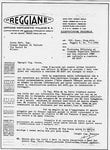
Here is the letter "riservatissimo-personale"= "personal, top secret" from Eng. Bobbato to Count Caproni , with the request of two jumo engines. If someone wants, I can translate it.
__________________ All that is gold does not glitter,
Not all those who wander are lost;
The old that is strong does not wither,
Deep roots are not reached by the frost.
From the ashes a fire shall be waken,
A light from the shadows shall spring;
Renewed shall be blade that was broken,
The crownless again shall be king.
John Ronald Reuel Tolkien |
| |
05-31-2006, 04:05 AM
|
#45 | | Senior Member
Join Date: Dec 2005 Location: Manziana Field, near Rome
Posts: 260
| The Re.2007 (assuming the existance of the project during the war) was not a twin engined aircraft, but a single engined one, as you can see in the famous post-war cutaway ( http://tanks45.tripod.com/Jets45/His...007/Re2007.htm ).
It's projected prestations were greately inflated. In the mid fifties, Sergio Stefanutti's AERFER Sagittario II, had the same weight and prestations of those projected for the Re.2007 (2500 kg, 1050 km/h), but to achieve them, he used a RR Derwent engine, with 1600 kg thrust (179% that of a Jumo 004 B). Wiewing at the very clean line of this aircraft, I don't believe Longhi could do something so better in the forties.
Some of Max Cappone's objections to te existance of the project during the war (as the words of Commander De Prato, or the "impossibility" to use parts of the fuselage of Re.2006 to fit a jet engine) seems specious to me but, at the best, they never hope to wiew one Re.2007 fly first of the end of the war.
The major part, if not all, of the italian's aircraft projects started after 8 september 1943 (not those started first, but not yet ready at the day of the armistice) had, as principal objective of the ingeneers, that of not being deported to Germany and, as principal objective of the owners, that of having something ready for the post-war era. Producing usable aircrafts, was not really an objective. Re.2007 is not an exception.
__________________
Last edited by Dogwalker : 06-01-2006 at 09:24 AM.
|
| | | Thread Tools | Search this Thread | | | | | Display Modes | Linear Mode |
Posting Rules
| You may not post new threads You may not post replies You may not post attachments You may not edit your posts HTML code is Off | | | All times are GMT -5. The time now is 12:05 PM. |  | |