ADS NOT DISPLAYED TO REGISTERED USERS.
+ Reply to Thread
Page 7 of 8 FirstFirst 1 2 3 4 5 6 7 8 LastLast
Results 91 to 105 of 107
Like Tree2Likes

Spanish Civil War: Republican Air Force (FARE)

Between the wars 1918-1939 Discuss Spanish Civil War: Republican Air Force (FARE) in the Other Eras forums; Albert Baumler was born in Bayonne, New Jersey, on 17 April 1914. He did his primary and basic training at ...

  1. #91
    Senior Member gekho's Avatar
    Join Date
    Jan 2010
    Location
    Spain
    Posts
    2,815
    Country
    Spain

    Mercenary Pilots: Albert John ‘Ajax’ Baumler

    Albert Baumler was born in Bayonne, New Jersey, on 17 April 1914. He did his primary and basic training at Randolph Field from June 1935 to February 1936, and then did his advanced training at Kelly Field from 19 February to 17 June 1936. He was however eliminated on the latter date, at which he had 205 hours and 30 minutes of training time and a total of 319 hours and 15 minutes flying time. On 15 October 1936 he received a commercial transport rating. He resigned his Army Air Corps commission and made his way to Spain.

    In Spain he flew for the Spanish government from 27 December 1936 to 15 July 1937. He qualified on the I-15 on 7 February 1937 and was assigned to Kosokov’s Escuadrilla, which was equipped with I-15 Chatos. At 11:30 on 16 March his patrol flew a sortie from Soto Madrid. In the Brihuega-Valdesor-Pajares sector the patrol met a formation of Fiat CR.32s. In the ensuing combat Baumler shared a CR.32 with A. N. Zeitsoff. It seems that totally two CR.32s were claimed in this combat for no losses. Four days later, on 20 March he attacked a group of three Italian SM.81 bombers escorted by five Fiat CR.32s. Baumler claimed a Fiat 10 kilometer southeast of Brihuega.

    On 17 April he was on his second mission of the day, operating from a base near Sarrion, Teruel, when his group intercepted a formation of Heinkel He51 pursuits. Giving chase to the enemy, Baumler crippled a Heinkel; as he did not see it crash, he was awarded with only a probable victory. He did, however, obtain credit for a subsequent "kill" in this same combat. Kosokov’s Escuadrilla converted to Polikarpov I-16 Moscas in the end of May and Baumler qualified on the I-16 on 1 June 1937. On 2 June he claimed a CR.32 in flames over the San Ildefonso-Segovia area. Operating from Castejon on 14 June, he claimed another Fiat over Huesca. At 16:45 on 8 July he was part of a group out of Chozas Madrid to escort ten Rasante light bombers to Quejormas, when his group engaged an enemy force of bombers and fighter escorts. In the ensuing combat he claimed a probable Fiat CR.32. Baumler returned to the US in the end of July after having claimed 2 biplane victories and a total of 4. Totally during his time in Spain he flew 174 hours and 35 minutes. While flying for the Spanish government he earned $1,500 a month plus $1,000 for each aircraft shot down.


    After his return to the US he rejoined the Army, being commissioned to Second Lieutenant and rated as a pilot on 30 September 1938. When the recruitment of pilots for the AVG in China started in March 1941, Baumler signed up for this unit as one of the 100 pilots recruited. However he ran afoul on Ruth Shipley at the State Department, who refused him a passport on the grounds that he had violated his previous travel documents by flying for a foreign government. Instead he was posted to AMISSCA (United States Military Mission to China) flying with spare parts for the AVG on the Pan Am Clipper, which left for Hawaii on the night of 3-4 December 1941. However his intent seems to have been to join the AVG when arriving in Burma.
    He made as far as Wake Island, where he awoke to Japanese bombs, shells and bullets on 7 December. The Pan Am Clipper escaped with twenty-seven bullet holes, none in a vital spot. The cargo was dumped and the aircraft filled with refugees, including Baumler and a dozen of civilian workers, took of for the devastated Hawaii at noon.

    In February 1942 he was serving with the 15th PG, 45th PS, and at the end of the month he had 725 hours and 30 minutes of training time and a total of 1750 hours and 20 minutes flying time. He was sent to the 10th AF in India, and attached to the Flying Tigers for experience. On 4 July 1942 he joined the 23rd FG, 75th FS. He was Commanding Officer of the 74th FS from 11 December 1942 to 18 February 1943. During the Second World War he claimed 5 more victories and he ended the war with 2 biplane victories and a total of 9. He was decorated with two DFCs and one AM. Baumler continued to serve after the war before retiring from the Air Force Reserve in September 1965. Post-war he was decorated with a BS and Commendation Ribbon. He passed away on 2 August 1973 in Denison, Texas.
    Attached Thumbnails Attached Thumbnails Spanish Civil War: Republican Air Force (FARE)-baumler1.jpg  

  2. #92
    World Travelling Doctor? Gnomey's Avatar
    Join Date
    Nov 2004
    Location
    Royal Deeside/Swansea, UK
    Posts
    28,820
    Country
    United Kingdom
    Nice shot!


    "Success is not Final, Failure is not Fatal, it is the Courage to Continue that Counts"
    Sir Winston Churchill

    "To him the People of the World Largely owe the Freedom and Liberties they Enjoy Today"
    Enscription on Hugh Dowding's (AOC Fighter Command 1936-40) statue in London


    My Photo Collections on Flickr

  3. #93
    Senior Member gekho's Avatar
    Join Date
    Jan 2010
    Location
    Spain
    Posts
    2,815
    Country
    Spain

    Mercenary Pilots: Frank Glasgow Tinker

    Frank Glasgow Tinker was a distinguished American mercenary pilot for forces of the Spanish Republic during the Spanish Civil War (1936–1939). A graduate of DeWitt High School and the Naval Academy, Tinker was the top American ace for the Republican Air Force during the Spanish Civil War. Frank Tinker was born on July 14, 1909, in Kaplan, Louisiana, the son of Frank Glasgow and Effie Tinker. He had two sisters. The family moved to DeWitt (Arkansas County) on July 3, 1924. Tinker graduated from high school in DeWitt in 1926 and, at the age of seventeen, joined the U.S. Navy. Tinker spent three years in the navy before receiving a prestigious appointment to the Naval Academy at Annapolis. After graduating from Annapolis in 1933, Tinker was sent to Randolph Field, Texas, for flight training. In six months, he graduated and was transferred to Pensacola, Florida, where he completed his training.

    During 1934–1935, Tinker was stationed with the West Coast Fleet. He served as an observer for the navy and crashed with his pilot on May 15, 1935. Tinker’s only grievance seems to be his prematurely gray hair, which he attributed to this crash. Tinker lasted only six months in the fleet. After a quarrel in Long Beach resulted in a court-martial, Tinker again got into a clash only a couple of months later and had his commission revoked. Later in 1935, Tinker joined the crew of a Standard Oil tanker running from New York to Baton Rouge, Louisiana, as a third mate. By July 1936, Tinker left his job with Standard Oil. Tinker was never married and had no children. By December 16, 1936, Tinker left for Spain to fight with the Republican forces against the Nationalists, led by Francisco Franco, and the fascist nations of Italy and Germany. Earlier, Tinker attempted to join the Ethiopian government as a pilot for Addis Ababa against Benito Mussolini and his invading Italian forces. This failed, as the Ethiopian government had no air force of its own. Tinker believed that Adolf Hitler and Mussolini were involved in what amounted to a military invasion of Republican Spain, and he decided to offer his services as a fighter pilot for the Republican Air Force.

    When Tinker joined the Republican Air Force, it was contrary to the United States’ policy of non-intervention. To circumvent this policy, the Spanish ambassador to Mexico recruited Tinker in secret. This was in response to letters sent by Tinker to the Spanish ambassador in Washington DC and Mexico City, and the Spanish Consul-General in New York City. As Tinker began his clandestine voyage to Spain, he took the alias Francisco Gomez Trejo. During the war, Tinker became a squadron commander and was credited with eight enemy kills, making him an ace. By late August 1937, Tinker returned to the United States. During the Spanish Civil War, Tinker flew with other notable American mercenaries, including Harold Dahl, Orrin Dwight Bell, Derek Dickinson, Jim Allison, Charlie Koch, and Albert Baumler. Tinker has been placed in the American Fighter Aces Association for his eight confirmed kills and recorded compensation totaling $18,500 from his exploits in the Spanish Civil War. His eight confirmed enemy kills of the war placed him at the top among the American pilots.

    After the war, Tinker was a guest speaker in New York on the radio program “We the People,” discussing his feats in civil war Spain. Tinker also wrote a series of articles for the Saturday Evening Post titled “Some Still Live.” The articles were published in book form with the same name in 1938. He wrote a number of other articles including a series for the Arkansas Gazette Magazine describing his voyage from St. Charles (Arkansas County) down the White and Mississippi rivers to New Orleans with his fox terrier. Tinker’s death is reported as a suicide; however this has continued to be controversial. He was found in the Hotel Ben McGehee in Little Rock (Pulaski County) on June 13, 1939, with a .22 caliber weapon lying on a chair three feet from the bed. A bottle of scotch, relics of Tinker’s career with La Patrulla Americana during the Spanish Civil War, and an acceptance letter from the Chinese Air Force were scattered across the room. The letter was the result of correspondence between Tinker and General Claire Chennault. His suicide has been attributed to shellshock from the war and even maltreatment from the U.S. government. Neither has been substantiated, and some even consider his apparent suicide as nonsense, since Tinker was known to carry a .45 Colt with him in his suitcase. Ernest Hemingway, an admirer of Tinker, after learning of Tinker’s suicide, reportedly commented he would have tried to dissuade Tinker from taking his own life if he had known of Tinker’s plight. Tinker was buried in DeWitt with “¿Quien Sabe?” (“Who knows?”) engraved on his tombstone.

    Sources:

    U.S. biplane fighter aces – Frank Tinker
    Frank Glasgow Tinker (1909
    YouTube - First Bf109 Shot Down - Frank Tinker Air Combats in the Spanish Civil War

  4. #94
    Senior Member gekho's Avatar
    Join Date
    Jan 2010
    Location
    Spain
    Posts
    2,815
    Country
    Spain

    Shadows of War

    Shadows of war; The Videogame


  5. #95
    Junior Member
    Join Date
    Jun 2011
    Posts
    1
    Country
    United States
    Thank you, Gehko, for the enormous effort you put into posting both Republican and Nationalist aircraft; I thought I had seen just about all the photos that existed, but you proved to me that I had a lot to learn. If it were ever possible, I would enjoy adding to these pictures some discussion of the colours and markings of aircraft, especially of Nationalist planes. De todos modos, me ha gustado mas de lo que te puedo decir y te lo agradezco de nuevo.

  6. #96
    Senior Member vikingBerserker's Avatar
    Join Date
    Apr 2009
    Location
    South Carolina
    Posts
    17,025
    Country
    United States
    Excellent posts!

    Welcome aboard Johnny.

  7. #97
    Senior Member gekho's Avatar
    Join Date
    Jan 2010
    Location
    Spain
    Posts
    2,815
    Country
    Spain
    Quote Originally Posted by Johnny Curedents View Post
    Thank you, Gehko, for the enormous effort you put into posting both Republican and Nationalist aircraft; I thought I had seen just about all the photos that existed, but you proved to me that I had a lot to learn. If it were ever possible, I would enjoy adding to these pictures some discussion of the colours and markings of aircraft, especially of Nationalist planes. De todos modos, me ha gustado mas de lo que te puedo decir y te lo agradezco de nuevo.
    Thank you for your words; I am happy to see people enjoy my threads. And please feel free to add all the pictures and information you have about the SCW. And of course welcome to our forum.

    Y por cierto, felicidades por tu excelente español.

  8. #98
    Junior Member
    Join Date
    Nov 2008
    Location
    Inowrocław
    Posts
    15
    Country
    Poland
    I have a question about the Tupolev I-4 (ANT-5) did not find any mention of this plane and reportedly took part in the war, as I understand the Republican side.

  9. #99
    Senior Member Sagittario64's Avatar
    Join Date
    Nov 2011
    Location
    Michigan
    Posts
    291
    Country
    United States
    How did the I-15/I-152 fare against its opponents later in the war? i understand some skilled pilots were still flying it during 1937-38. i know that the bf.109 was in force already, and the next year the italians introduced the fiat g.50

  10. #100
    Member kruaxi's Avatar
    Join Date
    Jun 2011
    Location
    Tuscany
    Posts
    76
    Country
    Italy
    Fantastic data. Thanks a lot
    Prudence and justice tell me that in electricity and steam there is more love for man than in chastity and abstinence from meat.

    Anton Chekhov

  11. #101
    Senior Member gekho's Avatar
    Join Date
    Jan 2010
    Location
    Spain
    Posts
    2,815
    Country
    Spain

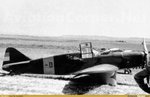
    Gonzalez Gil-Pazo GP-1/2/4

    The González Gil-Pazó GP-1 was a single engine, two seat open cockpit training aircraft, built in Spain in the 1930s to compete for a government contract. Declared the winner, production was curtailed by the Spanish Civil War. Two cabin variants, the González Gil-Pazó GP-2 and GP-4, were also built. The first aircraft produced from the collaboration between Arturo González Gil y Santibañez and José Pazó was the Gil-Pazó No.1. It was, like all of their aircraft, a low wing cantilever monoplane. It was built of wood and metal with plywood skinning, seated two and had an unfaired conventional undercarriage. Reportedly similar to a Miles Hawk, it was powered by an ADC Cirrus engine. Almost no specifications are known, apart from a loaded weight of 778 kg (1715 lb). It first flew in June 1932 and was last recorded at Cuatro Vientos, Madrid in July 1936.

    In 1934 the Director General de Aeronáutica issued a specification for a two seat trainer and Gil-Pazó's response was the GP-1. This "supremely elegant" aircraft, with two open cockpits and a trousered undercarriage was reportedly somewhat like the Miles Hawk Major in appearance. Its wings, of semi-elliptic plan, had a wooden structure and a stressed plywood skin. Flaps were fitted. The fuselage was a steel tube structure, fabric covered at the rear with dural skinning forward. For its first flight in June 1934 it was powered by the same Cirrus engine as the No.1 but this was replaced by a 145 kW (195 hp) Walter Junior inverted in-line engine for the trainer contract competition.

    The competitive trials, against the Loring X, the Hispano HS-34 and the Adaro 1.E.7, assessed the Gil-Pazó GP-1 as the clear winner, so in 1936 González Gil and Pazó received an order for 100 aircraft. These were to be built by AISA, the Talleres Loring factory at Carabanchel Alto, Madrid. None of these had been completed by July 1936 at the start of the Spanish civil war, and with rebel forces approaching Madrid in October, AISA retreated to Alicante. About forty GP-1s were built here during the war in a collaboration with Hispano-Suiza. In 1935-6 the open cockpit GP-1 was developed into two cabin types, the González Gil-Pazó GP-2 and GP-4. Both had raised rear fuselages faired into the cabin tops. The GP-2 was powered by a 97 kW (130 hp) de Havilland Gipsy Major engine and had two seats in tandem. Only one two-seater was built. A second GP-2 was built as a single seater with one, rather than two, cabin side windows each side. The GP-4 was powered by a 97 kW (130 hp) Walter Major engine and carried four people. Only one GP-4 was constructed.

    Two notable flights were made before the Civil War. In January 1936 Ramón Torres and Carlos Coll set a record with their flight from Barcelona to Agadir, Morocco in the two seat GP-2. The single seat GP-2 was flown by Lorenzo Richi in March 1936 from Madrid to Bata in what was then Spanish Guinea at an average speed of 187 km/h (116 mph). About thirty of the forty GP-1s built at Alicante were captured by the Nationalist forces, given military serials and incorporated into Grupo 30. After the war at least twelve of these were given Spanish civil registrations; one remained on the register until 1961. One GP-2 and the sole GP-4 were also on the Spanish civil register until about 1960. The GP-4 had been flown into Nationalist hands by Pazó in September 1936, where it was used for liaison and transport duties.

    Source: González Gil-Pazó GP-1 - Wikipedia, the free encyclopedia
    Attached Thumbnails Attached Thumbnails Spanish Civil War: Republican Air Force (FARE)-gonzalez-gil-pazo-gp-1.jpg  
    Last edited by gekho; 02-16-2013 at 05:29 PM.

  12. #102
    Senior Member gekho's Avatar
    Join Date
    Jan 2010
    Location
    Spain
    Posts
    2,815
    Country
    Spain

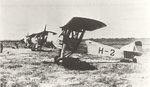
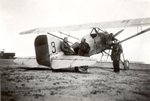
    Hispano Suiza E-30

    The Hispano Suiza E-30 was a trainning aircraft made in Spain for Navy Air Force. The first five units were sent to the San Javier´s Trainning School in 1933. When the Civil War broke out, only 20 examples had been delivered, falling 10 of them in the hands of the Republic. At the beginning they were used as light bombers over the Aragon front, but due to its lack of speed and limited bomb load, they are reasignated to the Observer School of Los Alcazares, that already owned 20 more units built in Albacete. With the end of the war, only 13 units are recovered, joinning those that were on service with the Nationalist Air Force. In the newborn Spanish Air Force (Ejercito del Aire), they were used as liaison and trainning aircrafts, wearing the military code EE-2. They spent the rest of their lives at the Trainning School of Leon, being retired in 1952.
    Attached Thumbnails Attached Thumbnails Spanish Civil War: Republican Air Force (FARE)-3.jpg   Spanish Civil War: Republican Air Force (FARE)-43.jpg  


  13. #103
    Senior Member gekho's Avatar
    Join Date
    Jan 2010
    Location
    Spain
    Posts
    2,815
    Country
    Spain

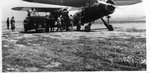
    Consolidated 20A Fleetsters

    The Fleetster received Approved Type Certificate Number 369 on 29 September 1930. It was designed to meet a requirement of the New York, Rio, and Buenos Aires Line (NYRBA) for an aircraft to serve the coastal routes in South America. The Fleetster had a streamlined all-metal monocoque fuselage with a wooden wing. The powerplant was a 575 hp (429 kW) Pratt & Whitney R-1860 Hornet B radial engine. It was available as a landplane or seaplane and could accommodate up to eight passengers, although the three NYRBA aircraft were fitted with two full-width seats each for three passengers.

    A parasol-wing version (the Model 20 Fleetster) was also developed with the wing supported by four short struts. The open cockpit was moved to behind the passenger cabin and the space used as a cargo compartment. Three aircraft were built for NYRBA and a private Canadian customer.
    In 1932 a carrier-borne dive bomber version (Model 18) was evaluated by the United States Navy as the XBY-1, it was not ordered but was the first stressed-skin aircraft; and the first aircraft with so-called "wet wing" integral fuel tanks in the wings; operated by the Navy.

    During the early stages of the SCW, the Republican goverment try to buy desperately aircrafts for it´s airforce. One of it´s suppliers was Mexico, that managed to send some airplanes through the United States. First American shipment sailed from New-York for France on the 28th of December 1936 and consisted of the complete stock of American Airlines Vultees, except for NC-13767 that had crashed in January 1936. These Vultees were accompanied by 3 Consolidated 20A Fleetsters, 5 Lockheed model 9 Orions and 1 Northrop Delta.

    Source: Consolidated Fleetster - Wikipedia, the free encyclopedia
    Attached Thumbnails Attached Thumbnails Spanish Civil War: Republican Air Force (FARE)-lockheed-vega-001.jpg  
    Last edited by gekho; 03-16-2013 at 06:36 AM.

  14. #104
    Senior Member
    Join Date
    Oct 2011
    Location
    Ngatimoti
    Posts
    1,454
    Country
    New Zealand
    Gekho, here's a passage out of Aircraft of the Spanish Civil War 1936 - 1939 by Gerald Howson about the Vega:

    "Only one Locheed Vega flew in the Spanish Civil War. This was a seven passenger Model 5B, NC534M (c/n 103), powered by a 450 hp Pratt & Whitney Wasp radial engine. It was sold in 1929 to the Mexican airline CAT (Corporacion de Aeronautica de Transportes) and re-registered XA-BHI. In 1934 it was sold to Coronel Roberto Fierro Villalobos, then Mexico's foremost pilot, re-engined and re-registered XA-AAD. In December 1936, Fierro, who was by then Director General de Aeronautican in Mexico and a strong supporter of the Spanish Republicans, sold it to the Spanish ambassador in Mexico. Together with a Lockheed Sirius and an Orion, both likewise supplied by Fierro, it sailed for Spain on board the Sil on 22 December 1936, reaching Santander on 12 January 1937. After serving with the Basque air arm for some weeks, the Vega was flown across Nationalist territory to the main Republican zone, where it joined the ranks of LAPE. Its Spanish registration and LAPE fleet number are not recorded. The LAPE pilot Joze Maria Carreras, who flew it frequently, told the author that it had neither engine cowling nor undercarriage spats, and that blotches of green and ochre had been painted on its original red finish by way of camouflage."

    The two aeroplanes in the photo you supplied are not Vegas, but Consolidated 20A Fleetsters. Great thread.
    Last edited by nuuumannn; 03-15-2013 at 09:17 PM.
    Which part of "NO" do you not understand?

  15. #105
    Senior Member
    Join Date
    Oct 2011
    Location
    Ngatimoti
    Posts
    1,454
    Country
    New Zealand
    Identification of the aircraft in the LAPE section illustrations. Airspeed AS.6J Envoy EC-AGE, Douglas DC-2 EC-AAY, Junkers G 24 M-AJAJ, Dougls DC-1 EC-AGN, B.A. Eagle 2 EC-CBC x 2, Ford 4-AT-F Trimotor EC-RRA, Northrop 1C Delta EC-AGC, Spartan Executive EC-AGM, D.H.89 Dragon Rapide EC-AZZ.
    Which part of "NO" do you not understand?

+ Reply to Thread
Page 7 of 8 FirstFirst 1 2 3 4 5 6 7 8 LastLast

Similar Threads

  1. Spanish Civil War: Nationalist Air Force
    By gekho in forum Between the wars 1918-1939
    Replies: 244
    Last Post: 03-03-2013, 04:48 PM
  2. Spanish Civil War Nationalist & Republican Training Aircrafts
    By gekho in forum Between the wars 1918-1939
    Replies: 14
    Last Post: 11-04-2011, 07:50 AM
  3. Spanish Civil War Republican Fighters
    By gekho in forum Between the wars 1918-1939
    Replies: 15
    Last Post: 08-16-2010, 07:00 PM
  4. Spanish Civil War Republican Bombers and Transport Aircraft
    By gekho in forum Between the wars 1918-1939
    Replies: 8
    Last Post: 04-29-2010, 03:35 PM
  5. Replies: 3
    Last Post: 03-18-2010, 05:32 AM

Bookmarks

Posting Permissions

  • You may not post new threads
  • You may not post replies
  • You may not post attachments
  • You may not edit your posts

1 2 3 4 5 6 7 8 9 10 11 12 13 14 15 16 17 18 19 20 21 22 23 24 25 26 27 28 29 30 31 32 33 34 35 36 37 38 39 40 41 42 43 44 45 46 47 48 49 50 51 52 53 54 55 56 57 58 59 60 61 62 63 64 65 66 67 68 69 70 71 72 73 74 75 76 77 78 79 80 81 82 83 84 85 86