ADS NOT DISPLAYED TO REGISTERED USERS.
+ Reply to Thread
Page 1 of 2 1 2 LastLast
Results 1 to 15 of 24

P51 D Antenna Wire

Communication Discuss P51 D Antenna Wire in the Technical forums; Hi all, I'm sure this has probably been discussed ad nauseum somewhere but my search has come up inconclusive. I'm ...

  1. #1
    Senior Member Crimea_River's Avatar
    Join Date
    Nov 2008
    Location
    Calgary
    Posts
    14,469
    Country
    Canada

    P51 D Antenna Wire

    Hi all,


    I'm sure this has probably been discussed ad nauseum somewhere but my search has come up inconclusive.

    I'm trying to figure out whether I should include an antenna wire on my P51 D-5. Some references show antenna wire from top of tail fin to back of seat head rest thru the canopy hood for the SCR-274N radio set on a later model D-20 machine. A study of many photos show some Mustangs with and many without but the ones with the wire all seem to be later model and post war machines.

    Can anyone give me the low-down on this wire? When was it used? Which models or time it was introduced?

    Thanks a lot.

  2. #2
    Benevolens Magister Airframes's Avatar
    Join Date
    Aug 2008
    Posts
    33,212
    Country
    United Kingdom
    An intersting one CR. So far, I haven't seen any pics of WW2 P51D's with the antenna wire actually fitted! I honestly don't know the real answer, but I suspect the use of later VHF radios negated the requirement for the antenna wire, with the mast incorporating the element, as per later Spitfires before whip aerials.
    I asked a RAF ex-Mustang pilot, who'd flown both the P51B/C (Mustang III) and the 'D' (Mustang IV), and he told me his 'D' model did not have a wire.
    On all my models of the 'D', I haven't included a wire, having studied close ups (where available) of the canopy and rear of the armoured plate of the head rest.
    However, I'm sure that someone will have the info, probably Bill (Drgondog), and I'd be interested to learn more too.

  3. #3
    Senior Member Crimea_River's Avatar
    Join Date
    Nov 2008
    Location
    Calgary
    Posts
    14,469
    Country
    Canada
    Well, here are a couple of photos of WW2 machines showing the wire:

    Can't see the wire but if you look closely, the spring attachment on the top of the tail that holds the wire is quite visible.


    I have some others in books (too lazy to scan) but I agree with you that most do not have the wire. However, the Mustang manuals show a wire in diagrams of both early and late radio set installations and it seems that wires show up MORE in post war machines flying in Korea.

    Looking forward to hearing more on this.

    Thanks!

  4. #4
    Benevolens Magister Airframes's Avatar
    Join Date
    Aug 2008
    Posts
    33,212
    Country
    United Kingdom
    Me too! BTW, only in the last pic can I only just make out a wire mounting tensioner - probably just the repro on screen. I did notice though, that the shots are of 15th AF (?) aircraft, Italy based? Maybe radio transmission requirements there required a different aerial set up - all the pics I refered to earlier were 8th AF, in the UK.

  5. #5
    Senior Member Geedee's Avatar
    Join Date
    Dec 2008
    Location
    Wiltshire, UK
    Posts
    2,627
    Country
    England
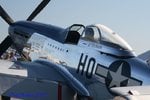
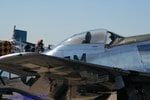
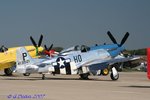
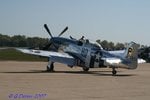
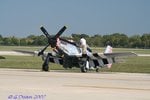
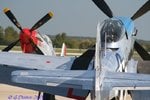
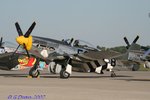
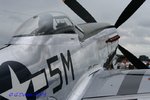
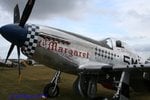
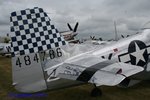
    Dont know if its any help, but Geraldine, Aint Missbehavin, and Cripes A Mighty 3rd either have, or the canopy mods to have fitted, this particular bit of offending wire. One of the pics shows the internal springs from the headrest. I might some more shots, I'll have a look later on.
    Attached Thumbnails Attached Thumbnails P51 D Antenna Wire-img_2401.jpg   P51 D Antenna Wire-img_2585.jpg  

    P51 D Antenna Wire-img_2594.jpg   P51 D Antenna Wire-img_2908.jpg  

    P51 D Antenna Wire-img_3265.jpg   P51 D Antenna Wire-img_3279.jpg  

    P51 D Antenna Wire-img_3284.jpg   P51 D Antenna Wire-img_3286.jpg  

    P51 D Antenna Wire-img_3488.jpg  
    Cheers

    Gary


    My P-51D Cockpit Project http://www.ww2aircraft.net/forum/sta...ect-18113.html

    Life's goal is not to arrive safely at the grave in a well preserved body. But rather to slide in sideways, totally worn out and broken, shouting "Holy cr*p, WHAT A RIDE !!"

  6. #6
    Senior Member Geedee's Avatar
    Join Date
    Dec 2008
    Location
    Wiltshire, UK
    Posts
    2,627
    Country
    England
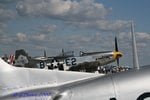
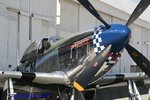
    Last few. Sorry, but I have no idea what D model variants these A/C are.
    Attached Thumbnails Attached Thumbnails P51 D Antenna Wire-img_0268.jpg   P51 D Antenna Wire-img_0269.jpg  

    P51 D Antenna Wire-img_0278.jpg   P51 D Antenna Wire-img_1322.jpg  

    Cheers

    Gary


    My P-51D Cockpit Project http://www.ww2aircraft.net/forum/sta...ect-18113.html

    Life's goal is not to arrive safely at the grave in a well preserved body. But rather to slide in sideways, totally worn out and broken, shouting "Holy cr*p, WHAT A RIDE !!"

  7. #7
    Benevolens Magister Airframes's Avatar
    Join Date
    Aug 2008
    Posts
    33,212
    Country
    United Kingdom
    Some great shots there Gary, and useful stuff, it it proves the wire was fitted.
    One of the problems with restored warbirds, is that the owners very often go to great lengths to get the aircraft as authentic as possible. Unfortunately, this sometimes results in a piece of equipment being fitted that wasn't on the particular aircraft depicted, during it's service in WW2, but might well have been on others of the same type!
    I once built a Spit Mk IX for a friend who had flown one in late 1944 (since deceased unfortunately) and faithfully reproduced the aerial wire, from mast to fin, which, until then, I thought was standard. Although delighted with the model, he did tell me that the radio fit used by his Group no longer used the wire antenna!
    There is no way that I am disputing the fit of the wire on P51D's, but I have seen so many pics, including close-up shots, were there is no sign of the wire, and some of these have had the canopy fairlead opening too.
    It could well be there were different mountings dependant on equipment fit, as I know there were on the P51B/C during its service life, but it really would be interesting to get some solid info on this subject.

  8. #8
    Senior Member drgondog's Avatar
    Join Date
    Jun 2006
    Location
    Scurry, Texas
    Posts
    6,166
    Country
    United States
    8th AF Fighter groups did not (AFAIK) use anything but ARC-3 command radio mast on ANY model D/K model. Ditto B/C except the Malcolm Hood mod imposed a Whip antenna a little further aft than the standard B Mast antenna to accomodate the sliding canopy.

    EDIT - the 15th AF 51B/C did have antenna wire..

    I also don't recall any 8th AF P-47 antenna through the canopy on the -25 and beyond.

    Just talked to a 355th CC who stated that the SCR 522 came with all the -5's the 355th had, although the rarlier SCR-274 Command Radio used the wire range receiver. Eighth AF SOP was to use the SCR 522 for both B and D model's until the introduction of the P-51D-30 and all P-51H.

    The latter had tail warning radar plus Twin masts for ARC-3 command radios - so what you see post WWII/ANG/Korea will frequently have antenna wire.
    Last edited by drgondog; 05-09-2009 at 05:21 PM.

  9. #9
    Benevolens Magister Airframes's Avatar
    Join Date
    Aug 2008
    Posts
    33,212
    Country
    United Kingdom
    Thanks very much Bill. I thought you'd have the answer! It's good to know that I've got my 8th AF Mustang paintings and models right, after all these years of harbouring very slight, but nagging doubts!

  10. #10
    Senior Member Crimea_River's Avatar
    Join Date
    Nov 2008
    Location
    Calgary
    Posts
    14,469
    Country
    Canada
    Thanks everyone for your help. I agree with Airframes that you can't rely on restored birds for this type of stuff.

    I'm modeling a 15th AF subject in Italy summer 1944. Mustang D-5. I'm going to go with no antenna wire as that's what most of the photos seem to indicate.

  11. #11
    Glock Perfection Matt308's Avatar
    Join Date
    Apr 2005
    Location
    Washington State
    Posts
    18,825
    Country
    United States
    Antenna length is based upon broadcast wavelength (for a huge simplicity in statement).

    VHF radios today are line-of-sight and only have a 260m range. Most all are blade antennas. I've often asked the question and have never received the answer, but suspect that many wire aerials might have been for HF transceivers. HF has ability to propogate by bouncing off of the ionosphere and thus can achieve MUCH greater beyond-line-of-sight comm. Today this can be thousands of miles in distance.

    Early VHF tranceivers had average ranges of 60m. I suspect that the early WWII aircraft with long aerials were HF coinciding with their long boradcast wavelengths to achieve comm links at max mission radius. As the war progressed and technology marched on, VHF likely became more efficient. Perhaps this is the reason that mast mounted (blade type) antennas became acceptable for most european operations. For pacific operations, HF likely continued to be necessary due to long distances involved.

    "Some people spend an entire lifetime wondering if
    they made a difference in the world. But, the [U.S.]
    Marines don't have that problem."
    -- Ronald Reagan

    Master of Duplicate Posts

  12. #12
    Senior Member drgondog's Avatar
    Join Date
    Jun 2006
    Location
    Scurry, Texas
    Posts
    6,166
    Country
    United States
    Quote Originally Posted by Matt308 View Post
    Antenna length is based upon broadcast wavelength (for a huge simplicity in statement).

    VHF radios today are line-of-sight and only have a 260m range. Most all are blade antennas. I've often asked the question and have never received the answer, but suspect that many wire aerials might have been for HF transceivers. HF has ability to propogate by bouncing off of the ionosphere and thus can achieve MUCH greater beyond-line-of-sight comm. Today this can be thousands of miles in distance.

    Early VHF tranceivers had average ranges of 60m. I suspect that the early WWII aircraft with long aerials were HF coinciding with their long boradcast wavelengths to achieve comm links at max mission radius. As the war progressed and technology marched on, VHF likely became more efficient. Perhaps this is the reason that mast mounted (blade type) antennas became acceptable for most european operations. For pacific operations, HF likely continued to be necessary due to long distances involved.

    Good observations. Eighth AF doctrine had a radio relay flight over the channel to maintain a command link from Type 16 and other UK based com nets to the escort commanders..

  13. #13
    Senior Member drgondog's Avatar
    Join Date
    Jun 2006
    Location
    Scurry, Texas
    Posts
    6,166
    Country
    United States
    Quote Originally Posted by Crimea_River View Post
    Thanks everyone for your help. I agree with Airframes that you can't rely on restored birds for this type of stuff.

    I'm modeling a 15th AF subject in Italy summer 1944. Mustang D-5. I'm going to go with no antenna wire as that's what most of the photos seem to indicate.
    A lot of the canopies on restored birds are late model canopies from National Guard, Reserve and Post WWII 51's.

    The dash numbers that came home were -15 and above. most of the -5 and -10's (and nearly all of the P-51B/C)were scrapped between July and October 1945. Some of the -20 and -25 were sold to Switzerland but most came home.

    Almost all the ones that came home were upgraded to -30's. The -30's came from factory with antenna wire and you see the factory 'hole' in the canopy in many of the photos above.

    When trying to decide which receiver type was used from one of the WWII photos - go immediately to the tail and look for the spring tensioner at the top of the vert stabilizer - you can see it but frequently not the actual antenna wire itself.
    Last edited by drgondog; 05-07-2009 at 11:02 PM.

  14. #14
    Benevolens Magister Airframes's Avatar
    Join Date
    Aug 2008
    Posts
    33,212
    Country
    United Kingdom
    Good stuff again Bill, thanks. I's forgotten to mention the radio relay aircraft, and the 'repeater' ground stations.
    Matt, you're bang on. Without disclosing 'where, when, why', etc, I have in the past used certain radio equipment where, depending on geographic location and time of day, and where the transmission is 'going to', an 'external source' antenna has had to be used. This quite often meant calculating the antenna length to accommodate the above requirements, and stringing-out the wire, for example up, and between, two trees. In areas devoid ovf vegetation, this could get quite , er, interesting!

  15. #15
    Junior Member
    Join Date
    Jan 2010
    Posts
    1
    Country
    United States
    I'm New to the Warbird Forums and while doing some research for the Mustang ran across you Post concerning The antenna's.
    Since I'm building an RC 1/7 th scale mustang I try to research any details I can to aid in the building. I ran across this Flight manual a Few Months ago and thought it might be of use-

    P-51 Mustang Pilot's Flight Manual - Google Books

+ Reply to Thread
Page 1 of 2 1 2 LastLast

Bookmarks

Posting Permissions

  • You may not post new threads
  • You may not post replies
  • You may not post attachments
  • You may not edit your posts

1 2 3 4 5 6 7 8 9 10 11 12 13 14 15 16 17 18 19 20 21 22 23 24 25 26 27 28 29 30 31 32 33 34 35 36 37 38 39 40 41 42 43 44 45 46 47 48 49 50 51 52 53 54 55 56 57 58 59 60 61 62 63 64 65 66 67 68 69 70 71 72 73 74 75 76 77 78 79 80 81 82 83 84 85 86