Aircraft of World War II - Warbird Forums

Superchargers- how do they work?!?

Engines Discuss Superchargers- how do they work?!? in the Technical forums; Howdy all, I apologise in advance for asking what must seem a stupid and easy question. Thing is, i dont ...


Go Back   Aircraft of World War II - Warbird Forums > World War II - Aviation > Technical > Engines

Reply
 
LinkBack Thread Tools Search this Thread Display Modes
Old 07-07-2008, 03:35 AM   #1
Senior Member
 
<simon>'s Avatar
 
Join Date: Jan 2008
Location: Heyfield, Victoria
Posts: 189
Country:
Superchargers- how do they work?!?

Howdy all,

I apologise in advance for asking what must seem a stupid and easy question.
Thing is, i dont exactly know how superchargers work. Especially when certain engines have a "2 stage supercharger" etc.

Could someone give me a bit of a lesson? I know the basics of an engine but not a lot when it gets more complicated

Thanks
Simon
<simon> is offline  
Digg this Post!Add Post to del.icio.usBookmark Post in TechnoratiFurl this Post!Spurl this Post!Reddit! Wong this Post!
Reply With Quote
Old 07-07-2008, 05:13 AM   #2
Senior Member
 
Clave's Avatar
 
Join Date: Jun 2005
Location: 51st State
Posts: 1,348
Country:
Send a message via ICQ to Clave Send a message via Yahoo to Clave
OK, I will have a go...

When you are sucking air into the engine to mix with fuel for combustion, the amount of air depends on the ambient air pressure. This means you are limiting the power you can get from each piston stroke, because you can't physically get any more air into the cylinders. As you fly at higher altitude, the air pressure is less, so your aircraft actually loses power as you climb...

The 'fix' is to run a very high speed pump which actually compresses the air before it's sucked into the cylinder. Simply put, it is a fan, driven from the engine itself, which sucks air in at 'ambient' pressure and boosts the pressure to above the normal range. More pressure means more oxygen, which means more fuel can be burned, and more power produced. So the supercharger will normally produce more power at all altitudes, but is specially effective high up, as it counteracts the effect of low pressure.

The two-stage supercharger has different gearing settings, and can be switched between different levels of boost. It's important to note that there are negative effects of supercharging along with the power benefits. These are: Overheating - this is the main problem, and can lead to the fuel igniting before it is supposed to. The second is power loss - driving the supercharger unit itself consumes engine power. This is a minor effect though, compared with the huge boost of power that the supercharger brings.

A quick note about Turbochargers:

A turbocharger or 'turbo' does exactly the same thing as a supercharger, the only real difference being that the turbo is driven by exhaust gas instead of mechanical gears or shafts. If anything is called 'turbo' and is say a razor, computer processor, vacuum cleaner, etc. this is basically a lie. Turbo means turbocharger, and if there's no internal combustion engine involved, then the term is meaningless BS...
__________________
Clave is offline  
Digg this Post!Add Post to del.icio.usBookmark Post in TechnoratiFurl this Post!Spurl this Post!Reddit! Wong this Post!
Reply With Quote
Old 07-07-2008, 08:27 AM   #3
Senior Member
 
seesul's Avatar
 
Join Date: Jun 2006
Location: Zlin, Czech Republic
Posts: 1,215
Country:
Send a message via Skype™ to seesul
[quote=Clave;371871]The two-stage supercharger has different gearing settings, and can be switched between different levels of boost. It's important to note that there are negative effects of supercharging along with the power benefits. These are: Overheating - this is the main problem, and can lead to the fuel igniting before it is supposed to. The second is power loss - driving the supercharger unit itself consumes engine power. This is a minor effect though, compared with the huge boost of power that the supercharger brings.
/QUOTE]

Perfectly explained!
was the system (speaking about WW2 engines) that switch from the 1st stage to the 2nd and back always automatic or sometimes manual? Which kind of system did it use? Electromagnetic clutch? Had the pilot a chance to change the boost pressure manually?

Thanx!
__________________


Roman Susil
Zlin, Czech Republic

...a friend of Joe Owsianik, a former left waist gunner from B-17G ''Tail End Charlie" from 2ndBG,20th Sqdn, that was forced to bail out on Aug. 29th, 1944 over my country.
seesul is offline  
Digg this Post!Add Post to del.icio.usBookmark Post in TechnoratiFurl this Post!Spurl this Post!Reddit! Wong this Post!
Reply With Quote
Old 07-07-2008, 09:50 AM   #4
Senior Member
 
Join Date: Dec 2005
Location: Prescott Arizona USA
Posts: 495
A supercharger is driven by the motor so it starts given power at low rpm's

Turbo's ... need the exhaust to get some speed up to get the turbo turning ...so theres some "lag" down low...

Super's give power ..but cost power some to run...And a turbo uses the wasted exhaust gases to make power..


You can control a super better and EZ'er smoother power ... A turbo is harder to control and has a big step in power when the power comes on ...But no lose in power to run the turbo... Alot of super's were hooked to the back of the motors to get a drive point to drive them ... And turbo's like in the P-38 could be but behind the wing and exhaust piping run back to turn a turbo...

Did any country use turbo's but the US..."I" was "thinking" that most used super's...
Haztoys is offline  
Digg this Post!Add Post to del.icio.usBookmark Post in TechnoratiFurl this Post!Spurl this Post!Reddit! Wong this Post!
Reply With Quote
Old 07-07-2008, 10:47 AM   #5
Senior Member
 
Join Date: Apr 2008
Posts: 146
Country:
I think so too. Germany tried to develop high altitude Fw 190s using turbocharged BMW 801s and DB 603s but instead chose the supercharged Jumo 213 for what became the Fw 190 D. Apparently the turbocharged BMWs were very expensive and the "piping" (don't kill me for using this word) would've run across the fuselage and wings (too little space inside the small fighter?).

Was the DB 603 in the Ta-152 C turbocharged? I can't remember, but i think not.

I often wonder, could you say, as a rough generalization, that superchargers offer the simpler solution but are inferior (performance-wise) to the more complex turbochargers at really high altitudes?
KrazyKraut is offline  
Digg this Post!Add Post to del.icio.usBookmark Post in TechnoratiFurl this Post!Spurl this Post!Reddit! Wong this Post!
Reply With Quote
Old 07-07-2008, 11:07 AM   #6
Senior Member
 
Join Date: Feb 2008
Location: Tularosa, NM, USA
Posts: 122
Country:
Quote:
Originally Posted by Clave View Post
OK, I will have a go...

When you are sucking air into the engine to mix with fuel for combustion, the amount of air depends on the ambient air pressure. This means you are limiting the power you can get from each piston stroke, because you can't physically get any more air into the cylinders. As you fly at higher altitude, the air pressure is less, so your aircraft actually loses power as you climb...

The 'fix' is to run a very high speed pump which actually compresses the air before it's sucked into the cylinder. Simply put, it is a fan, driven from the engine itself, which sucks air in at 'ambient' pressure and boosts the pressure to above the normal range. More pressure means more oxygen, which means more fuel can be burned, and more power produced. So the supercharger will normally produce more power at all altitudes, but is specially effective high up, as it counteracts the effect of low pressure.

The two-stage supercharger has different gearing settings, and can be switched between different levels of boost. It's important to note that there are negative effects of supercharging along with the power benefits. These are: Overheating - this is the main problem, and can lead to the fuel igniting before it is supposed to. The second is power loss - driving the supercharger unit itself consumes engine power. This is a minor effect though, compared with the huge boost of power that the supercharger brings.

A quick note about Turbochargers:

A turbocharger or 'turbo' does exactly the same thing as a supercharger, the only real difference being that the turbo is driven by exhaust gas instead of mechanical gears or shafts. If anything is called 'turbo' and is say a razor, computer processor, vacuum cleaner, etc. this is basically a lie. Turbo means turbocharger, and if there's no internal combustion engine involved, then the term is meaningless BS...
Simon, wasn't a silly question at all. I certainly learned something!
Karl Sitts is offline  
Digg this Post!Add Post to del.icio.usBookmark Post in TechnoratiFurl this Post!Spurl this Post!Reddit! Wong this Post!
Reply With Quote
Old 07-07-2008, 11:08 AM   #7
Senior Member
 
SoD Stitch's Avatar
 
Join Date: Jun 2007
Location: Pine Mountain Lake, California
Posts: 728
Country:
Quote:
Originally Posted by Haztoys View Post
You can control a super better and EZ'er smoother power ... A turbo is harder to control and has a big step in power when the power comes on...
...

Actually, you can control a turbocharger to some degree by varying the amount of exhaust that goes out the wastegate; the wastegate is usually controlled by an exhaust valve that regulates how much of the engine's exhaust goes to the turbo, and how much simply gets dumped overboard (hence the "waste" part of wastegate). With the wastegate closed, 100% of the exhaust goes to the turbo; with the wastegate open, only a very small percentage of the exhaust goes to the turbo. IIRC, on the original turbosuperchargers (that's what they called them originally), the wastegate was controlled manually by the pilot, but there were too many problems with overboosting (and the consequent destruction of a very expensive engine!), so an automatic system was devised (don't know all of the details on that; I'm sure someone else here probably knows a lot more than I do about this).

Quote:
But no lose in power to run the turbo...
And, actually, there is a small penalty for a turbo; the amount of exhaust backpressure with a turbo is somewhat greater than in a normally aspirated engine, so the piston has to work a little harder to get the exhaust out of the cylinder. However, compared to a supercharger, this is negligible so, in essence, you are almost getting "something for nothing".
__________________
SoD Stitch is offline  
Digg this Post!Add Post to del.icio.usBookmark Post in TechnoratiFurl this Post!Spurl this Post!Reddit! Wong this Post!
Reply With Quote
Old 07-07-2008, 01:45 PM   #8
Member
 
Old Wizard's Avatar
 
Join Date: Mar 2008
Location: Lethbridge AB
Posts: 47
Country:
Quote:
Originally Posted by SoD Stitch View Post
...
And, actually, there is a small penalty for a turbo; the amount of exhaust backpressure with a turbo is somewhat greater than in a normally aspirated engine, so the piston has to work a little harder to get the exhaust out of the cylinder. However, compared to a supercharger, this is negligible so, in essence, you are almost getting "something for nothing".
Nowadays there are there are some ingenious folks who turn turbo-chargers into jet engines!
Old Wizard is offline  
Digg this Post!Add Post to del.icio.usBookmark Post in TechnoratiFurl this Post!Spurl this Post!Reddit! Wong this Post!
Reply With Quote
Old 07-07-2008, 02:09 PM   #9
Senior Member
 
Join Date: Oct 2006
Posts: 849
Country:
Hi Stitch,

>However, compared to a supercharger, this is negligible so, in essence, you are almost getting "something for nothing".

Hm, if we're talking high-performance aircraft, that's not really accurate. The turbo-supercharger exploits the energy that remains in the hot, fast-moving exhaust gases expelled from the engine, sure - but the piston engines of the era were usually equipped with jet exhausts that exploited the same energy to gain additional thrust.

At high speed, this thrust gain would be considerable - it could add the equivalent to 500 shaft horse power to an engine in the 2000 HP class. The penalty was much less extra weight than required for a turbo-supercharger, and some additional backpressure just as with the turbo-supercharger.

The turbo-supercharger's strengths were fuel economy for the cruise and very high altitude operations, while mechanically-driven superchargers with ejector exhausts were lighter and had an advantage to high speeds.

As a quick rule of thumb, one could say that the turbo-supercharger was better suited for bomber aircraft and the mechnically-driven supercharger better for fighter aircraft. However, that's just summing up the general tendency - there were a lot of successful aircraft types that violated this rule :-)

Regards,

Henning (HoHun)
HoHun is offline  
Digg this Post!Add Post to del.icio.usBookmark Post in TechnoratiFurl this Post!Spurl this Post!Reddit! Wong this Post!
Reply With Quote
Old 07-07-2008, 02:28 PM   #10
Senior Member
 
seesul's Avatar
 
Join Date: Jun 2006
Location: Zlin, Czech Republic
Posts: 1,215
Country:
Send a message via Skype™ to seesul
Quote:
Originally Posted by SoD Stitch View Post
...

Actually, you can control a turbocharger to some degree by varying the amount of exhaust that goes out the wastegate; the wastegate is usually controlled by an exhaust valve that regulates how much of the engine's exhaust goes to the turbo, and how much simply gets dumped overboard (hence the "waste" part of wastegate). With the wastegate closed, 100% of the exhaust goes to the turbo; with the wastegate open, only a very small percentage of the exhaust goes to the turbo. IIRC, on the original turbosuperchargers (that's what they called them originally), the wastegate was controlled manually by the pilot, but there were too many problems with overboosting (and the consequent destruction of a very expensive engine!), so an automatic system was devised (don't know all of the details on that; I'm sure someone else here probably knows a lot more than I do about this).


And, actually, there is a small penalty for a turbo; the amount of exhaust backpressure with a turbo is somewhat greater than in a normally aspirated engine, so the piston has to work a little harder to get the exhaust out of the cylinder. However, compared to a supercharger, this is negligible so, in essence, you are almost getting "something for nothing".
Todayīs turbos have also a control system called variable geometry...the exhaust chamber volume of the turbocharger is automaticaly changed by the control system so in case of need- smaller volume= higher exhaust gas speed=higher turbine rpm=higher boost pressure, bigger volume=lower gas speed=lower rpm=lower boost pressure...
__________________


Roman Susil
Zlin, Czech Republic

...a friend of Joe Owsianik, a former left waist gunner from B-17G ''Tail End Charlie" from 2ndBG,20th Sqdn, that was forced to bail out on Aug. 29th, 1944 over my country.
seesul is offline  
Digg this Post!Add Post to del.icio.usBookmark Post in TechnoratiFurl this Post!Spurl this Post!Reddit! Wong this Post!
Reply With Quote
Old 07-08-2008, 03:06 AM   #11
Senior Member
 
<simon>'s Avatar
 
Join Date: Jan 2008
Location: Heyfield, Victoria
Posts: 189
Country:
Wow! What a reply!

Thanks for that everyone!
Another piece of knowledge I can hopefully pass on to others

Thanks again
Simon
__________________
Control tower to aircraft that just landed - "Bear right, next intersection"

Pilot - "Roger, we have him in sight"

Last edited by <simon> : 07-08-2008 at 03:47 AM.
<simon> is offline  
Digg this Post!Add Post to del.icio.usBookmark Post in TechnoratiFurl this Post!Spurl this Post!Reddit! Wong this Post!
Reply With Quote
Old 07-08-2008, 03:14 AM   #12
Senior Member
 
seesul's Avatar
 
Join Date: Jun 2006
Location: Zlin, Czech Republic
Posts: 1,215
Country:
Send a message via Skype™ to seesul
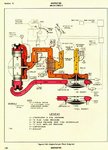
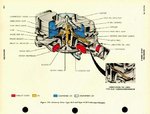
does anyone have a drawing or picture of the supercharger drive on a B-17 (R-1820 engine)? Iīm curious how did it work as the engine was in the vertical position and the supercharger in horizontal position so they didnīt have common axis...on my opinion...
On the engines with the supercharger mounted on its back itīs clear...
__________________


Roman Susil
Zlin, Czech Republic

...a friend of Joe Owsianik, a former left waist gunner from B-17G ''Tail End Charlie" from 2ndBG,20th Sqdn, that was forced to bail out on Aug. 29th, 1944 over my country.
seesul is offline  
Digg this Post!Add Post to del.icio.usBookmark Post in TechnoratiFurl this Post!Spurl this Post!Reddit! Wong this Post!
Reply With Quote
Old 07-08-2008, 04:13 AM   #13
Senior Member
 
Join Date: Mar 2005
Posts: 258
A supercharger can be thought of as an air pump. They are usually centrifugal type for aircraft engines, apart from the axial one on the Napier Nomad. The air enters at the middle of the supercharger impeller where it is flung outwards and gathers speed. At the outer edge of the impeller is a diffuser ring which slows down the air and increases the pressure and density before it is fed to the cylinder.

A two (or more) speed supercharger has different gearing which alters the speed at which the impeller rotates. This gives different pressure ratios which correspond to different full throttle altitudes. This is why graphs of hp/altitude usually have a saw tooth shape with one or more peaks. The German DB series engines used a hydromatic system instead of gears which doesn't give the saw tooth form as the transmission is continuously variable - but it is less efficient than a simple gear so sucks a bit more power out of the engine.

A two (or more) stage supercharger is more efficient than a single stage, especially when high pressure ratios (= high altitude) are needed. It is more efficient to split the compression up into multiple stages. The extra stage to the engine adds weight however so it isn't a simple case.

The US type of turobcharged setup used both a turbocharger and a supercharger. Essentially it can be thought of as a two stage supercharger, but only one of the stages draws power from the engine. Air enters the turbocharger first where it is compressed and then sent along a duct to the supercharger which is mounted behind the engine where it is compressed again before being fed to the cylinders.

There was also a US two stage supercharged setup that featured a clutch so that one of the stages could be decoupled at lower altitudes. I'm not so keen on this as it adds length and weight but has no real gain.

As a rule of thumb, the turbocharger is best suited for aircraft below around 350mph and the supercharged setup above this. The turbocharger removes the energy from the exhaust stream to provide energy for compression. In an unsupercharged engine this can be used with ejector exhausts to directly give thrust. The ejector exhausts on the Spitfire XIV gave an extra 47mph (maximum) so their effect is quite considerable.
red admiral is offline  
Digg this Post!Add Post to del.icio.usBookmark Post in TechnoratiFurl this Post!Spurl this Post!Reddit! Wong this Post!
Reply With Quote
Old 07-09-2008, 02:35 PM   #14
Junior Member
 
Join Date: Jun 2007
Posts: 2
Country:
Quote:
Originally Posted by red admiral View Post
...ejector exhausts on the Spitfire XIV gave an extra 47mph (maximum) ...
Can you quote a reference/source for this? I would like to read more about it. Thanks.
dairwin is offline  
Digg this Post!Add Post to del.icio.usBookmark Post in TechnoratiFurl this Post!Spurl this Post!Reddit! Wong this Post!
Reply With Quote
Old 07-09-2008, 02:54 PM   #15
Moderator
 
Micdrow's Avatar
 
Join Date: Aug 2006
Location: Wisconsin
Posts: 2,558
Country:
Quote:
Originally Posted by seesul View Post
does anyone have a drawing or picture of the supercharger drive on a B-17 (R-1820 engine)? Iīm curious how did it work as the engine was in the vertical position and the supercharger in horizontal position so they didnīt have common axis...on my opinion...
On the engines with the supercharger mounted on its back itīs clear...
Here are a couple of diagrams from the B-17 erection and maintance manual. Hope they help
Attached Images
File Type: jpg supercharger.jpg (203.4 KB, 64 views)
File Type: jpg super charger 2.jpg (138.9 KB, 62 views)
__________________

"Valor does not mean Hero."
Micdrow is offline  
Digg this Post!Add Post to del.icio.usBookmark Post in TechnoratiFurl this Post!Spurl this Post!Reddit! Wong this Post!
Reply With Quote
Reply


Thread Tools Search this Thread
Search this Thread:

Advanced Search
Display Modes

Posting Rules
You may not post new threads
You may not post replies
You may not post attachments
You may not edit your posts

vB code is On
Smilies are On
[IMG] code is On
HTML code is Off
Trackbacks are On
Pingbacks are On
Refbacks are On


All times are GMT -5. The time now is 09:50 PM.


Powered by vBulletin
Copyright ©2000 - 2008, Jelsoft Enterprises Ltd.
SEO by vBSEO 3.1.0
   

AVIATION TOP 100 - www.avitop.com Avitop.com


1 2 3 4 5 6 7 8 9 10 11 12 13 14 15 16 17 18 19 20 21 22 23 24 25 26 27 28 29 30 31 32 33 34 35 36 37 38 39 40 41 42 43 44 45 46 47 48 49 50 51 52 53 54 55 56 57 58 59 60 61 62 63 64 65 66 67 68 69 70 71 72 73 74 75 76 77