ADS NOT DISPLAYED TO REGISTERED USERS.
+ Reply to Thread
Page 1 of 5 1 2 3 4 5 LastLast
Results 1 to 15 of 65

Ki-100 peformance

Flight Test Data Discuss Ki-100 peformance in the Technical forums; I found these data in j-aircraft: 【V-Max(km/h / m)】  500 / 1000  520 / 2000  539 / 3000  543 / ...

  1. #1
    Senior Member
    Join Date
    Jul 2005
    Posts
    186

    Ki-100 peformance

    I found these data in j-aircraft:


    【V-Max(km/h / m)】
     500 / 1000
     520 / 2000
     539 / 3000
     543 / 3210
     536 / 4000
     551 / 5000
     575 / 6000
     578 / 6140
     568 / 7000
     556 / 8000
     542 / 9000
     527 / 10000

    【Climb to(m / minutes】
     1000 / 1'12"
     2000 / 2'13"
     3000 / 3'08"
     4000 / 4'29"
     5000 / 6'00"
     6000 / 7'25"
     7000 / 8'56"
     8000 / 10'57"
     10000 / 20'00"

    Posted by Hiroyuki Takeuchi. No details on aircraft condition, fuel or power used. I have compared the performance to other estimations and a Ki-61 test.

  2. #2
    Senior Member krieghund's Avatar
    Join Date
    Sep 2006
    Location
    Riyadh
    Posts
    600
    Country
    United States
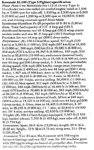
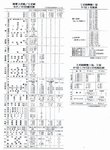
    Here is some more info..........How's your Japanese?
    Attached Thumbnails Attached Thumbnails Ki-100 peformance-green.jpg   Ki-100 peformance-page54-ki-100-famous-airplanes.jpg  


  3. #3
    Creator of Interesting Threads tomo pauk's Avatar
    Join Date
    Apr 2008
    Posts
    4,476
    Country
    Croatia
    Hi, alejandro,

    The green line at your graph goes as far as 700 km/h (Ki-61-II). Any good data about that?

  4. #4
    Senior Member
    Join Date
    Jul 2005
    Posts
    186
    Hello Krieghund & Tomo Pauk

    Thanks for the information, my japanese is a bit rusty. . Do you have the book's title (or document) for the second page you uploaded.

    Tomo Pauk, the data you refer to comes from a TAIC manual. I do not have any evidence of Ki-61-II being tested in the US, thus I assume its an estimation based on the Ki-61-I performance and II extra power. However, in my opinion is very optimistic. Ki-61-II was plagued by engine power, and Ki-61-I did give loads of trouble as well. As a matter of fact, the ones tested by the US Navy was probably the best maintained sample in the whole pacific (better fuel, great attention to setup and use of as many spare parts as possible as it was the only sample available).

    http://www.ww2aircraft.net/forum/air...ram-27545.html (Ki-61 Tony speed-altitude diagram)

  5. #5
    Senior Member krieghund's Avatar
    Join Date
    Sep 2006
    Location
    Riyadh
    Posts
    600
    Country
    United States
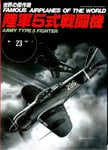
    Yes here is the cover, I think the engines manufactured by Aichi were better built than by Kawasaki. The M6A1 Seiran's AE1T Atsuta 32 could produce 1700 HP, quite a feat for a DB601 class engine.
    Attached Thumbnails Attached Thumbnails Ki-100 peformance-pages-ki-100-famous-airplanes.jpg  

  6. #6
    Creator of Interesting Threads tomo pauk's Avatar
    Join Date
    Apr 2008
    Posts
    4,476
    Country
    Croatia
    The Japanese themselves state max speed at 610 kmh (in table provided by krieghund) for the -II (Ha-140 engine, under 1500 HP). As for the US table's from the link you gave, it contains a disclaimer that figures written there are not from the tests, but from 'fragmentary documentation & extrapolation from engine specs'.
    Anyway, if we take a look what German, Italian & British planes were doing with similar power & drag (ie. 380-400 mph for Spit V, 109G-6, Italian 5 series), the US table about Tony II looks definitely wrong.

  7. #7
    Senior Member
    Join Date
    Mar 2008
    Posts
    495
    Country
    United States
    The Japanese had a tendency to state their maximum speeds under "Military Power" as versus the US approach of stating performance under "War Emergency Power". Sometimes the often quoted performance number is not what we expect. The most glaring example of this is the max speed of a J2M3 Raiden which is often quoted at 371 mph. This number is accurate but it was while carrying a drop tank. Without the drop tank, the tested aeroplane achieved 407 mph which is quite credible in my opinion.

    The Ki-61 in either version was quite a sleek looking design. With similar installed power to the Me 109E, the Ki-61-I achieved about the same speed. It seems to me that with very similar installed power to the Me 109G, it should achieve similar speeds as well. The 109G was about a 400 mph aircraft plus or minus a couple MPH. The typically quoted 387 mph was of a Me 109G-6/R-6 which carried a cannon pod under each wing.

    - Ivan.

  8. #8
    Senior Member
    Join Date
    Jun 2009
    Location
    Connecticut
    Posts
    5,302
    Country
    United States
    Quote Originally Posted by Ivan1GFP View Post
    The Japanese had a tendency to state their maximum speeds under "Military Power" as versus the US approach of stating performance under "War Emergency Power".

    - Ivan.
    The problem here is that not all engines had a "War Emergency Power" rating. And many of the ones that did have a "WER", the rating was at a lower altitude were the the air was enough thicker that the "top" speed of the aircraft did not change. If "top" speed was achieved at 20,000ft with Military power XXX then WER at 14,000ft of XXX + 15% does nothing for the speed at 20,000ft and above although it will improve speed at sea level to 14,000ft and above tapering off the higher you go. WIth the air that much thicker at 14,000ft the plane may go faster at WER than at MIL power at that altitude but it still may not be faster than the plane goes at 20,000ft.

    WER usually depended on excess supercharger capacity at the lower altitudes, fuel or water/alcohol that would allow higher than "normal" boost without detonating, and a cooling system that will handle the extra heat for X number of minutes. Plus the engine had to be strong enough to stand the power without breaking.
    US engines like the R-1820, R-1830, R-2600 never (or rarely) got WER ratings and the R-2800 only got it with water/alcohol.

    Different countries may have had different definitions of "Military" power however.

  9. #9
    Senior Member
    Join Date
    Mar 2008
    Posts
    495
    Country
    United States
    Perhaps we should use different terms then:

    How about Max continuous, 30 minute, 5 minute and 1 minute ratings? Except for the 1 minute (typically a "Take-Off" power) rating, just about everyone had a rating that corresponded to these though the terminology might be different. 30 minute might be the same as "Climb" power.

    Consider the discussion over at J-aircraft about the max speed of the A6M2 Model 21 Zero. Their stated max speed is 316 mph at military power. US Testing of Koga's A6M2 arrived at 332 mph in an aircraft that admittedly was not in perfect shape.
    I know they have some issues with translating the Japanese throttle settings to corresponding US settings in that discussion.

    - Ivan.

  10. #10
    Senior Member razor1uk's Avatar
    Join Date
    Dec 2008
    Location
    Tamago no Chie, (B'ham, UK)
    Posts
    730
    Country
    United Kingdom
    Country II
    England
    US speed figures afiaa, were nearly always for clean aircraft at WEP or near limit of relialbe higher power settings; for fighters, where as the aerial military arms of Japan, more often used the more normally loaded configuaration without WEP for theirs, giving a better idea of actual operational performance; easier to work out ranges and flight times over long distances for missions.
    For camparison sake, those whom prefer US aircraft, maybe should ignore their own non-operationally loaded figures with WEP.
    Last edited by razor1uk; 11-06-2011 at 09:23 AM.

  11. #11
    Senior Member
    Join Date
    Jun 2009
    Location
    Connecticut
    Posts
    5,302
    Country
    United States
    Things changed with time.
    US didn't adopt WER settings until late 1942 or early 1943. ALL early performance figures were done at either Military power (5min or 15 min) or "normal" (max continuous) power which either had a ONE hour or no time limit. Time to altitude figures were often done with the first 5 minutes of the climb at Mil Power and the remainder of the climb at "Normal" power.
    Then there is a transition period in which max speed may or may not be quoted with "WER" depending on the plane and then you have the late war war period were almost all if not all fighters had a WER rating.

    Again with the Japanese, you have to know if there was a WER rating or not. Some Sakae engines had a water/alcohol system, the early ones did not. When engaged on the later engines that would be the equivalent of WER. If the engine was not fitted with with the system there is NO WER.

    "A6M2 Model 21 Zero. Their stated max speed is 316 mph at military power." It may not be the same as "U.S." military power, it may be max continuous power.

    U.S. Military power was often the same rpm and manifold pressure as take-off power. While it had a time limit it could be used as often as required subject to the time limit and REQUIRED no extra notes in log book or maintenance inspections/procedures, UNLIKE WER use. EACH use of WER had to logged and depending on the engine (and time period) inspections or maintenance procedures were modified to take into account the use of the WER. Use of WER could trigger more frequent spark plug changes (sometimes after every use) and drastically shorten the life of the engine before it was pulled for routine overhaul, at least until more experience was gained.
    Without knowing what the Japanese (or other countries) procedures were it is difficult to say if their WER settings were equivalent to the American ones.

  12. #12
    Senior Member
    Join Date
    Mar 2008
    Posts
    495
    Country
    United States
    Untitled Document

    This article gives a bit of insight about the Sakae 21 engine as installed in the A6M2 Model 21 Type 0.
    I believe most of this article is credible though the translations of throttle settings are a bit off.

    The statement here is that Koga's Zero was tested at 35 inches MAP (+150 mm). My calculations put +150 mm at 35.8 inch MAP.

    The article also comments that there was an "Overboost" setting at 38 inches or +250 mm. My calculations put 37.8 inches at +200 mm. To me, this seems like the equivalent of our War Emergency Power.

    As you pointed out, there was no Water / Alcohol injection system for the Sakae 21, but I don't see how that precludes it from having a War Emergency setting.

    - Ivan.
    Last edited by Ivan1GFP; 11-10-2011 at 07:28 AM.

  13. #13
    Senior Member
    Join Date
    Jun 2009
    Location
    Connecticut
    Posts
    5,302
    Country
    United States
    The author of the article seems to be confusing or blurring "military or 30 minute rated power" as they are not the same thing. and "not over boost (roughly “war emergency power” in U.S. terminology)" is also a bit confusing.

    For an example see: http://www.zenoswarbirdvideos.com/Im...39/P39SEFC.pdf

    The 1000hp at 2600rpm and 39.2 in is the "Normal" or 30 min rating (actually US engines did not usually have a 30 min rating, it was often either 60 minutes or until the fuel ran out=max continuous)
    For this engine the next step is "military power" 1150hp at 3000rpm and 44.5inches. In this case it has a 15 min rating but many US engines had a 5 min rating at MIL power.
    Next step is the "take-off" rating, in many cases it was the same as "Military power" and is usually 5 min. The use of MIL or T-O power triggered NO EXTRA maintenance procedures and instances of use were NOT logged in the aircraft's records. In this case it was allowed to use 1200hp and 50.5in of boost which is certainly "over boost" compared to Military power.
    The WER rating is 1420hp using 57in of manifold pressure.

    As an example of how terminology changed see: http://www.zenoswarbirdvideos.com/Im...25/B25SEFC.pdf

    Please note there is no "military" or WER on the chart. But the "Maximum Emergency" rpm and manifold pressure and power output are those of later R-2600 engines that have "Military" ratings. Again, please note the time limits and please note that "take-off power" required more "boost" than MAX emergency power, by roughly 50-75mm.

    This is just different terminology by the US Army depending on the date in the war. Trying to compare to other countries rating systems or procedures can get really difficult. The British used the 30 minute rating and I believe the Germans did too. I don't know if an engine that can go for 30 minutes at power level XXX can go longer or if it introduces wear problems. ALL these power levels were subject to temperature limits. exceeding oil, coolant, or cylinder temperature would call for throttling back regardless of the time limit.
    Many engines were Throttled to less than full power for take-off in normal conditions. Being able to "overboost" in difficult conditions for a few moments or even several minutes is not quite the same thing as a WER setting.

    I do not disagree with the fact that the tests of the Zero with less than full rpm and boost do not reflect it's true performance but I do have strong reservations about the "terminology" used.

    As in this sentence. "Sakai distinguished between normal full power speed (316 m.p.h.) and over boost (345 m.p.h.)."

    In US use "normal full power" can mean the MAX continuous rating, which in the late 1930s was considered the engines "normal" rating.

    You are NOT going to pick up roughly 10% in speed by increasing the manifold pressure by 8.5%. For instance if our plane needs 1000hp to do 345mph it will only need 742hp to do 316mph.

    Another problem with this article is that it fails to take altitude into account. The Sakae 21 engine used a two speed supercharger instead of the single speed of the Sakae 12.

    Zeros with Sakae 21s were deployed into combat areas in the Spring of 1942 which makes depending on combat reports to confirm the speed of the Zero 21 a bit of a problem. How did the F4F or P-39 pilot KNOW which engine was in the Zero he was chasing or was chasing him?

  14. #14
    Senior Member
    Join Date
    Mar 2008
    Posts
    495
    Country
    United States
    Oops. My Goof.
    I meant to write Sakae 12 because that was the engine installed in the A6M2 Model 21 that is described here. Single speed supercharger.

    Surprisingly the A6M3 Model 32 and Model 22 which used the Sakae 21 did not appear to offer any significant speed increase. In fact in US Tests, the A6M5 wasn't significantly faster either (335 mph) even though what is typically listed for the type is 351 mph. There are lots of data points for various models of this aircraft and many of them don't fit together very well.

    I know I am going a bit off topic, but the only point I was trying to make here was that there WAS a WEP setting in the earlier Sakae engines before the Water / Methanol injection in the Sakae 31.

    - Ivan.

  15. #15
    Senior Member
    Join Date
    Jul 2003
    Location
    Rancho Cucamonga, California, U.S.A.
    Posts
    1,695
    Country
    United States
    My reference for the performance of Japanese aircaft comes from the book, "General View of Japanese Military Aircraft in the Pacific War," by Nippon, Gunyokio No Zenbo. I have both the Japanese text and the English text. The Japanese text was first published in 1953. The English text was first published in 1956.

    It gives to takeoff rating of the engine, but no indication of WER or of power at the max speed/ altitude combination or at what opwpoer was used to attain the speed. However, max speed is USUALLY attained at the maximum height at which the power system can maintain maximum power. The "WER"rating should not be used because it was NEVER intended as normal operation ... but many Allied performance tests did use the WER rating.

    The A6M5 Model 52 is quote as 565 kph at 6,000 meters, which is 351 mph at 19,685 feet.

    This text was compiled by the saff of Aireview" by Kantosha, Tokyo, Japan and is a treasure of information, especially if you read Japanese! I don't but have friends who do.

+ Reply to Thread
Page 1 of 5 1 2 3 4 5 LastLast

Similar Threads

  1. Blackburn Skua was it that bad?
    By fastmongrel in forum Aviation
    Replies: 247
    Last Post: 01-29-2010, 10:25 AM

Bookmarks

Posting Permissions

  • You may not post new threads
  • You may not post replies
  • You may not post attachments
  • You may not edit your posts

1 2 3 4 5 6 7 8 9 10 11 12 13 14 15 16 17 18 19 20 21 22 23 24 25 26 27 28 29 30 31 32 33 34 35 36 37 38 39 40 41 42 43 44 45 46 47 48 49 50 51 52 53 54 55 56 57 58 59 60 61 62 63 64 65 66 67 68 69 70 71 72 73 74 75 76 77 78 79 80 81 82 83 84 85 86