ADS NOT DISPLAYED TO REGISTERED USERS.
Meredith Effect and the P-51
| Flight Test Data Discuss Meredith Effect and the P-51 in the Technical forums; Hi Colin,
>I would like to see this document, do you have access to it?
Von Gersdorff et al. does ... |
-
Hi Colin,
>I would like to see this document, do you have access to it?
Von Gersdorff et al. does not have a facsimile of the patent, only a description and a sketch.
>My scepticism if I may, is that in 1915, aeroplanes were barely fast enough to fully exploit an air pump, recovered cooling losses would be minimal; how well did this Dusenkuhler work?
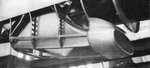
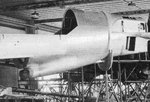
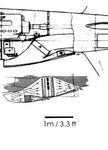
"Duesenkuehler", if you don't have any Umlauts :-) Junkers actually implemented his patent in the Junkers J.1, a cantilever-wing stressed-skin all-metal monoplane fighter. It was rather fast for its time, but of course the very smooth skin (steel - not the corrugated light alloy skin Junkers came up with later) and the complete absence of struts and bracing wires played a big role, too.
(The steel fighter is not to be confused with the corrugated light-alloy skin Junkers J.4 which entered service as Infanterieflugzeug J.I ... in the latter designation, the "I" of "Infanterieflugzeug" is abbreviated as a "J" to satisfy a typographic convention.)
>I would suggest Messerschmitt buried his scoops in the lower wing to reduce the spoil on the Bf109's clean lines, not to augment the air pump effect in any way
I don't know the reason Messerschmitt suggested wing radiators were superior, and I'm not going to speculate (unless I can come up with something intelligent ;-)
>Fairly well known? Possibly. Does its seeming absence not imply by logical deduction that the technique wasn't fully understood by other designers?
You have to take a rather close look at a type to be able to tell whether it incorporated a jet cooler or not as the relevant details would always be hidden under a fairing. Which type do you think of specifically when you mention the jet cooler's absence?
Regards,
Henning (HoHun)
-