![]() |
| |||||||
| Flight Test Data This is a section for flight test data. Any test data from any country of any era. This is mainly for reference and to answer questions about aircraft performance based of flight test data. |
![]() |
| | LinkBack | Thread Tools | Display Modes |
| | #1 |
| Senior Member Join Date: Nov 2006 Location: East end
Posts: 339
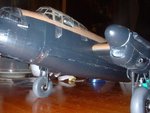
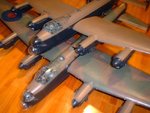
| Performance figures of Lancaster Hello all, I have been wondering about how the performance figures of the Avro Lancaster shown on the each books has been found or defined. The only thing I knew is that there are no exact performance value, such as top airspeed at specific altitude, maximum range at each weights and climbing performances, clearly printed on the official manuals. Also how the actual bombing operations during ww2 were planned? That shall include very precisely timed arrival over target, hence the navigation, and fuel plannings for the each aircraft types stationed at each different air bases. TIA My second Lanc with bulged bomb bay doors will be 80% complete by the next weekend's hobby show.
__________________ Guy Gibson; "Hello P-popsie. Are you all right?" "I think so leader... |
| | |
| | #2 |
| Senior Member Join Date: Feb 2007 Location: Melbourne, Victoria
Posts: 7,678
| They look superb mate Sure Micdrow will have some figures and other material worth seeing
__________________ |
| | |
| | #3 |
| Senior Member Join Date: Oct 2006
Posts: 1,765
| Hi Ppopsie, >I have been wondering about how the performance figures of the Avro Lancaster shown on the each books has been found or defined. Do you perhaps have the propeller diameter and the reduction gear ratio for the Merlin XX engines used on the Lancaster? Other than that, a data point for a defined flying condition (weight and power condition) would be helpful. Regards, Henning (HoHun) |
| | |
| | #4 |
| “Archive” ![]() Join Date: Aug 2006 Location: Wisconsin
Posts: 5,222
| Hi guys, try these out.
__________________ ![]() "Valor does not mean Hero." Last edited by Micdrow; 05-10-2008 at 03:15 PM. |
| | |
| | #5 |
| Senior Member Join Date: Oct 2006
Posts: 1,765
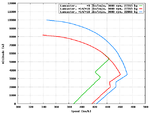
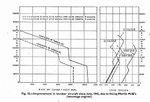
| Hi again, >Do you perhaps have the propeller diameter and the reduction gear ratio for the Merlin XX engines used on the Lancaster? Other than that, a data point for a defined flying condition (weight and power condition) would be helpful. Here is a quick analysis for a Lancaster with Merlin XX engines. It's based on the assumption that the engine and the propeller is the same as on the Hawker Hurricane (0.477 reduction gear ratio, 10' 9" propeller diameter) and that the Lancaster is fitted with flame dampers that eliminate exhaust thrust. The data point I used for calibrating the speed chart is from Karlheinz Kens, "Flugzeuge des 2. Weltkrieges", and displayed as the top speed of the red curve in the diagram. Regards, Henning (HoHun) |
| | |
| | #6 |
| Senior Member Join Date: Nov 2006 Location: East end
Posts: 339
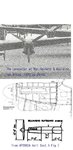
| Thanks everybody, Thanks Micdrow-sama as usual. I looked into manuals for the American airplanes like the B-17F and surely there are plenty of performance data and calculation examples are shown for various flight configulations. These are quite similar to today's way. But there are no such detailed examples shown in the Lancaster manual. Also I note that the determination of inflight CG positions is not included in the pilot's and engineer's notes and left to ground personnel. Quite interestingly there are no mentioning about the size of the propeller in the Lanc's manual too, whilst the actual figure is specified in the first part of the Hurricane manual. Therefore I managed to get the size for my model from various photographs and information. You could see a drawing of the outer nacelle which is from production drawings and believed to be fairly accurate. The actual diameter of the spinner can be measured from this. Applying the size of the spinner to the upper photo, I calculated the diameter to 82.4mm in 1/48 scale, and is almost 13 feet in actual dimentions but this value does not correspond with the figure shown on the lowermost drawing also from the Lancaster manual. However it was appearently for packing and transportation purposes and might have not indicate the sizes very accurately. I personally see the performance values shown in various books and refrences are possibly from, for example, Jane's but how did Jane's-san got that figures remains.
__________________ Guy Gibson; "Hello P-popsie. Are you all right?" "I think so leader... |
| | |
| | #7 |
| Senior Member Join Date: Oct 2006
Posts: 1,765
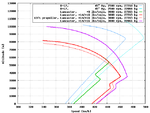
| Hi Ppopsie, >But there are no such detailed examples shown in the Lancaster manual. Hm, it's my impression that from the handful of small tables and simple diagrams in the typical British Pilot's Notes, it should be possible to prepare the same kind of elaborate tables you find in most USAAF manuals. The BuAer Standard Aircraft Characteristics seem to resemble the British Pilot's Notes in their basic approach - I figure that maybe the USAAF meant to remove one step in the flight planning process by spelling it all out in tables, thus eliminating one opportunity to screw up (It seems that the Luftwaffe approach was a bit like the USAAF approach, though their tables weren't quite as large.) >Applying the size of the spinner to the upper photo, I calculated the diameter to 82.4mm in 1/48 scale, and is almost 13 feet in actual dimentions but this value does not correspond with the figure shown on the lowermost drawing also from the Lancaster manual. Using the 13 ft, my performance estimate based on the same data point changes a bit since the propeller loses a bit of efficiency due to high tip Mach numbers. However, that's just for the 5 min emergency settings I listed - at 2650 rpm in the cruise, even the larger propeller would be slow enough to achieve full efficiency. I have also added the B-17F to the diagram, though I'm not quite sure I have properly understood the relevant Cruise Control Chart ... maybe my figures are off for this one. Regards, Henning (HoHun) |
| | |
![]() |
| Thread Tools | |
| Display Modes | |
| |