ADS NOT DISPLAYED TO REGISTERED USERS.

View Poll Results: weaker wing, 109 or Spitfire?

Voters
56. You may not vote on this poll
  • Messerschmitt Bf109

    34 60.71%
  • Supermarine Spitfire

    22 39.29%
Closed Thread
Page 1 of 8 1 2 3 4 5 6 7 8 LastLast
Results 1 to 15 of 115

Wing breakage: 109 or Spitfire?

Polls Discuss Wing breakage: 109 or Spitfire? in the World War II - Aviation forums; Simple opinion poll: Which plane (in your educated opinion) was more likely to have a wing break off in an ...

  1. #1
    Senior Member claidemore's Avatar
    Join Date
    Jan 2008
    Location
    British Columbia, Canada
    Posts
    683
    Country
    Canada

    Wing breakage: 109 or Spitfire?

    Simple opinion poll: Which plane (in your educated opinion) was more likely to have a wing break off in an identical condition high G pullout? Me109 or Spitfire? Feel free to back up your opinion with data, anecdotes, etc.

    The trouble with most people isn't what they don't know....it's what they do know that simply isn't so.

  2. #2
    Senior Member
    Join Date
    Mar 2006
    Location
    Phila, Pa
    Posts
    4,443
    Country
    United States
    109. Wings were bolted on while the Spitfires were attached to the fuselage using a layering technique. Ended up being like a leaf spring in it's design. Also made it costly to manufacture.

    The bolt on processes made the 109 wings easier to fix also, just unbolt and replace. The Me was made with ease of fixing in mind. The Spitfire was not. It really shows up in the wings.

    But if I were pulling 6+ G in either one, I'd go with the Spitfire.

  3. #3
    Senior Member
    Join Date
    Mar 2009
    Posts
    2,899
    Country
    United Kingdom
    There was no option for "I have absolutely no idea" Lol. .
    Steve

  4. #4
    Banned dunmunro1's Avatar
    Join Date
    Dec 2009
    Posts
    107
    Country
    Canada
    Read the section entitled:
    Diving speeds compared
    Spitfire Mk IX versus Me 109 G - Flight Testing

  5. #5
    Senior Member drgondog's Avatar
    Join Date
    Jun 2006
    Location
    Scurry, Texas
    Posts
    6,170
    Country
    United States
    There are at least three components of loads one has to look at to make an analytical judgment about high G pullouts.

    First the assumptions:
    1. Each (109 and Spit) are at the gross wt the airplane was designed to.
    2. The stresses are calculated for a.) axis symmetric pullout, b.) aero loads (Q factor) based on velocity and density
    3. The design criteria and analysis are available.

    If for, example, the Spit and the 109 are each designed with Limit loads of 8g at 7,000 pounds and 12G Ultimate at the same weight then the primary TEST modality is to load up the wings on a static test stand so that 56,000 (7Kx pounds are applied to the primary load bearing structure (usually the spar/fuse connect) to see if the structure has exceeded the elastic limit deformation. Ditto, gradually, up to 84,000 (7Kx12)pounds of load to check for failures in the primary load paths.

    Aero loads were not easily analyzed because little was known about aero elastic effects. For example the aerodynamic pressure distribution normal to the wing was assumed but usually had only fair relevance to real world distribution behind a prop wash, in turbulance with indicial gusts, with wing torsing about it's centroidal axis (usually not quite the main spar/bending moment load carrier), and wing deflecting vertically as the load is applied.

    The lower drag of the Spit wing would give it an edge for top dive speed and greater threshold of Q loads, but that doesn't address pullout G's

    This latter section of analysis was particularly thorny when contemplating the behavior of the wing in the aforementioned '8G' pullout where the loads would NOT be entirely symmetrical because of rudder trim effects, causing high stresses elsewhere (like the tail carry through structure in both the vertical stabilizer and the fuselage beam cap/shear panel design).

    So two questions arise. One - are the two aircraft designed to the same load limits as function of gross design weight for analysis, and two- are the two ships being compared at the same relative design gross weight.

    If the answer is 'yes to both' then the ultimate question is 'which of the design teams more conservative in their assumptions for a straight, assymetrically loaded, pullout. When you throw in rudder, wing stiffness and aileron deflections the stiffness of aft fuselage and overall wing become the final determinant.

    Answer to original question? Nobody on this forum has the data, the original analytical structural analysis documents or Static Test results to truly give an informed answer

  6. #6
    Senior Member drgondog's Avatar
    Join Date
    Jun 2006
    Location
    Scurry, Texas
    Posts
    6,170
    Country
    United States
    Quote Originally Posted by timshatz View Post
    109. Wings were bolted on while the Spitfires were attached to the fuselage using a layering technique. Ended up being like a leaf spring in it's design. Also made it costly to manufacture.

    The bolt on processes made the 109 wings easier to fix also, just unbolt and replace. The Me was made with ease of fixing in mind. The Spitfire was not. It really shows up in the wings.

    But if I were pulling 6+ G in either one, I'd go with the Spitfire.
    Tim - in reality the method of attaching the wings should make no real difference given equal load carrying capability of the tension/shear fasteners. Both design teams would have aircraft/pilot safety uppermost in mind for both Limit and Ultimate desing loads.

    The problem with attaching two wing halves at the centerline (like a Mustang) is that the primaryload fasteners are big ass bolts - which should be pre-loaded and safety wired to prevent a 'prying separation' when the wings deflect outboard due to vertical loads.

    Having said this, the simplest and most efficient design from structures view is one continuous wing from wing tip to wing tip where there are no discontinuities in the wing spar. Not very elegant for repair or manufacturing considerations, however.

  7. #7
    Senior Member
    Join Date
    Mar 2006
    Location
    Phila, Pa
    Posts
    4,443
    Country
    United States
    Quote Originally Posted by drgondog View Post
    Tim - in reality the method of attaching the wings should make no real difference given equal load carrying capability of the tension/shear fasteners. Both design teams would have aircraft/pilot safety uppermost in mind for both Limit and Ultimate desing loads.

    The problem with attaching two wing halves at the centerline (like a Mustang) is that the primaryload fasteners are big ass bolts - which should be pre-loaded and safety wired to prevent a 'prying separation' when the wings deflect outboard due to vertical loads.

    Having said this, the simplest and most efficient design from structures view is one continuous wing from wing tip to wing tip where there are no discontinuities in the wing spar. Not very elegant for repair or manufacturing considerations, however.
    Spoken like a true engineer Not sure if you are one DD, but if you aren't, you missed your calling.

    Both this post and the one before it were very informative. Agree that with everything in it (especially the part about the fasteners should make no difference and the loading). On the drawing board and in the shop, aircraft are built to a specific load. Loads have tolerences, exceed them and that's all she wrote.

    In truth, there are a multitude of points to consider when handling high G loads and without turning this into an engineering tutorial (which I am not in anyway qualified to do), I'd go with the Spitfire wing design over the 109 if I had to make an offhand choice. More resilience in the design.

  8. #8
    Senior Member drgondog's Avatar
    Join Date
    Jun 2006
    Location
    Scurry, Texas
    Posts
    6,170
    Country
    United States
    Tim - I did that stuff for a living when I was young and impressionable. MS Aero from UT and six plus at Lockheed and Bell

  9. #9
    Senior Member
    Join Date
    Mar 2006
    Location
    Phila, Pa
    Posts
    4,443
    Country
    United States
    Quote Originally Posted by drgondog View Post
    Tim - I did that stuff for a living when I was young and impressionable. MS Aero from UT and six plus at Lockheed and Bell
    That'll do it.

    When were you at Lockheed? Middle 80s by any chance?

  10. #10
    A4K
    A4K is offline
    Senior Member A4K's Avatar
    Join Date
    Dec 2007
    Location
    The back of beyond
    Posts
    10,467
    Country
    New Zealand
    Country II
    Hungary
    Read once that a kiwi pilot was the first to find out you CAN rip the wing off a Spitty! Fighting during the Battle of Britain, pulled too steep and fast a dive trying to evade a 109 - goodbye starboard wing...

  11. #11
    Banned Kurfürst's Avatar
    Join Date
    Mar 2005
    Location
    Aquincum, Pannonia Prima
    Posts
    1,076
    Country
    Hungary
    IMHO the poll doesn't make much sense. To my best knowledge the absolute (break) load limits for both aircraft were pretty much the same at 10-12 G maximum, depending on variant and test result. So as long these limits are not exceeded, the answer is 'neither', and if much exceeded, the answer is 'both'. Imposing such loads is not easy anyway, as the pilot will probably loose consciousness at around 5-7G..

    However looking at the question 'Which plane (in your educated opinion) was more likely to have a wing break off in an identical condition high G pullout?', other aspects need to be examined, too, namely, control characteristics in high G conditons.

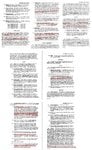
    From the structural safety point of view, the Spitfire's control characteristics could be, under certain high G conditions such as discussed here, become fairly dangerous to the aircraft if not handled with great care. The Spitfire II manual below has all the details and dangers noted, but in short it suffice to say that the elevator control was far too sensitive, the pilot could easily overstress the airframe by exposing it to sudden high G loads that the airframe could not withstand. Such problem of an over sensitive controls were not present on the 109.
    Attached Thumbnails Attached Thumbnails Wing breakage: 109 or Spitfire?-diving_limits_spit2.jpg  

  12. #12
    Senior Member Juha's Avatar
    Join Date
    Jan 2007
    Location
    Helsinki
    Posts
    3,045
    Country
    Finland
    Hello
    I don’t recall any wing failures on FAF’s 109Gs during the war. One G-2 was lost when its pilot tried to disengage by a deep dive, plane probably went over max allowed speed and lost its elevators during pull-out, plane crashed, pilot KIA. And of course some 109s were lost to unknown causes. Clearly more losses happened because of engine failures. But from march 44 onwards Finns always checked the fastment of tailplane of new 109G-6s they got from Germany.

    But FAF had rather few 109s, From Spring 43 to Spring 44 one laivue/sqn/gruppe, TOE 30 planes but usually badly understrength, on 1.1.44 it had only 13 109s serviceable + 3 in maintenance, from Spring 44 onwards two laivuetta/sqns/gruppen later a couple more sqns also got at least some, during heavy battles of Summer 44 say 30-60 Bf 109Gs serviceable daily.

    Early 109G-6s designed load was 6,2G /3100kg(normal) and 5,6G / 3300kg (for ex. /R6 with two MG 151/20 gunpods). For later reinforced G-6s, or earlier when reinforced, figures were 7,0G / 3100kg and 6,5G / 3300kg.

    Juha

    PS Kurfürst, You surely know that as in case of 109 also Spitfires wing were reinforced time to time during its production life. And yes, British modified the elevator controls during the production of Mk V, but as Germans found out when they began their test program on diving behaviour of 109 after unexplained losses in front-line units, the question wasn't only on elevators but also on ailerons.
    Last edited by Juha; 01-06-2010 at 07:25 AM.

  13. #13
    Senior Member claidemore's Avatar
    Join Date
    Jan 2008
    Location
    British Columbia, Canada
    Posts
    683
    Country
    Canada
    Quote Originally Posted by Kurfürst View Post
    IMHO the poll doesn't make much sense.
    This poll is a 'simple opinion poll'. In another thread statements were made that the majority of people's opinion was that the 109 wing was stronger than the Spitfires. This poll is a quick and easy way to establish just what popular opinion on these forums is on the subject.

    As of this post; it's 2 to 1 in favor of the Spitfire.
    The trouble with most people isn't what they don't know....it's what they do know that simply isn't so.

  14. #14
    Senior Member
    Join Date
    Apr 2007
    Location
    Finland
    Posts
    281
    Country
    Finland
    Quote Originally Posted by Kurfürst
    IMHO the poll doesn't make much sense.
    I agree.
    I think these polls are more as for fun, rather as for discussion.
    AFAIK early BF109F had some problems, as the Spitfires (especially the V), Merlin Mustangs etc.
    This from the Navy magazine (the F6F and F4U were supposed to be very strong):

  15. #15
    Senior Member drgondog's Avatar
    Join Date
    Jun 2006
    Location
    Scurry, Texas
    Posts
    6,170
    Country
    United States
    Yes Timppa.

    I suspect there were far more failures in a dive due to asymmetrical loads imposed by rudder and ailerons, than wing per se.

    The Mustang Definitely fit that category - and too many encounter reports of 109s and 190s breaking up in a diving chase appeared to be in circumstances of turning and rolling in the dive - causing either a tail to fail or a main spar to fail.

Closed Thread
Page 1 of 8 1 2 3 4 5 6 7 8 LastLast

Bookmarks

Posting Permissions

  • You may not post new threads
  • You may not post replies
  • You may not post attachments
  • You may not edit your posts

1 2 3 4 5 6 7 8 9 10 11 12 13 14 15 16 17 18 19 20 21 22 23 24 25 26 27 28 29 30 31 32 33 34 35 36 37 38 39 40 41 42 43 44 45 46 47 48 49 50 51 52 53 54 55 56 57 58 59 60 61 62 63 64 65 66 67 68 69 70 71 72 73 74 75 76 77 78 79 80 81 82 83 84 85 86