![]() |
| |||||||
| Weapons Systems Tech. Technology behind the weapons and systems within aircraft. |
![]() |
| | LinkBack | Thread Tools | Display Modes |
| | #121 |
| the old Sage ![]() Join Date: May 2004 Location: Platonic Sphere
Posts: 11,110
| and through interviews with Herr Herget both missions that he flew this insect the cannon failed to operate - what a bunch of experimental crap
__________________ Rip it up ! |
| | |
| | #122 |
| Banned Join Date: Jun 2007 Location: Pine Mountain Lake, California
Posts: 981
| I understand Watson's Wizzers captured one of these in Germany at the end of the War and, supposedly, shipped it back to the USA; do you know what became of it? |
| | |
| | #123 |
| Senior Member Join Date: Nov 2006 Location: Elbląg/Poland
Posts: 227
| The "V083" prototype was lost on 30th June 1945 during ferry flight from Melun to Cherbourg where was planned to load onto a H.M.S. Reaper escort carrier. Durning the flight engine broke down after lost of turbine blades. The vibration caused uncontrollable dive and plane crashed but german pilot, Ludwig Hofmann, bailed out at low altitiude and survived. |
| | |
| | #124 |
| Senior Member Join Date: Jun 2006 Location: London Ontario Canada
Posts: 303
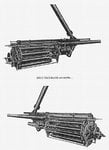
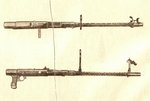
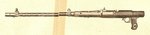
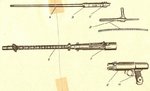
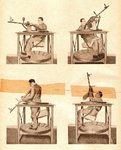
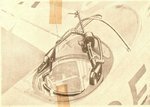
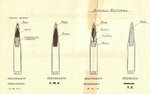
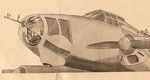
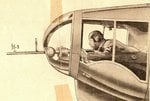
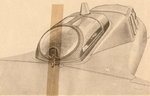
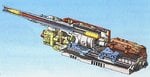
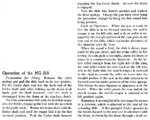
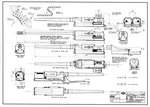
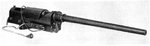
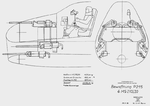
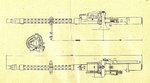
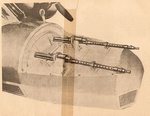
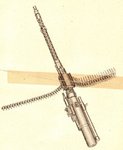
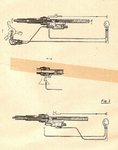
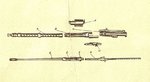
| This from the book German Aircraft guns ww1-ww2 by Edward j hoffschmidt Last edited by Micdrow; 08-23-2007 at 06:33 PM. Reason: to reduce the size of the pictures. |
| | |
| | #125 |
| Senior Member Join Date: Jun 2006 Location: London Ontario Canada
Posts: 303
| Sorry for the size I just got this new canon 600 printer and do not no how to down size. |
| | |
| | #126 |
| the old Sage ![]() Join Date: May 2004 Location: Platonic Sphere
Posts: 11,110
| maybe have the images downloaded to someone elses PC and then put into your photobucket act so you can have it reduced further for the site
__________________ Rip it up ! |
| | |
| | #127 |
| “Archive” ![]() Join Date: Aug 2006 Location: Wisconsin
Posts: 5,222
| I reduced the size pictures above. Hope that helps
__________________ ![]() "Valor does not mean Hero." Last edited by Micdrow; 08-23-2007 at 06:34 PM. |
| | |
| | #128 | ||
| Senior Member | Quote:
Quote:
| ||
| | |
| | #129 | |
| Senior Member | Quote:
| |
| | |
| | #130 | |
| Senior Member | Quote:
5cm ammunition for BK 5 & MK 214: The rimmed 50x420mm cartrigde was the same used in the tanks guns, externally it have also the same measures of the pak 38 but was not interchangeable with this because his electric primer. 5cm Panzergranate 39: ![]() Well know armor piercing capped, high explosive tracer ammo, projectile weight 2,06 kg, muzzle speed 823 m/s. Penetration: 58 mm of rolled armor at 500 meters 5 cm Panzergranate 40: Armor piercing composite rigid, aluminium envelope. projectile weight 0,95 kg, Muzzle speed 1140 m/s. Penetration 73mmm armor at 500 m. 5 cm Sprenggranate L-spur. Explosive fragmentation round, projectile weight 1,96 kg, explosive filling 550 m/s. Muzzle speed 550 m/s. 5cm minengesschos L-spur m-zerleger. ![]() Even it sound superflous to design a thin walled round for this calibre the performance of the 50mm mine was impressive. 920 m/s of initial speed. The filling was no less than 350 grams of nitropenta wich means it can destroy any aircraft with a single hit. total weight of the projectile 1,76 kg. Provided with tracer and self-destruction element. 5cm Minen cutaway. ![]() First image above taken form the Tony Williams website. | |
| | |
| | #131 |
| Senior Member | Rheinmetall Borsig BK 7,5 (I): ![]() Following a similar way as with the earlier BK 5 the Rheinmetall team adapted the terrestrial antitank Pak 40 75mm gun to an airborne use. There were two versions of the 7,5cm airborne anti-tank gun, both based on the PaK 40. The original version, still known as the PaK 40, was installed in the Ju 88. This had a vertical magazine but was only semi-automatic - there was a loader in the fuselage who pulled a lever (or something) to load each round It was no doubts what was going to be the use of this weapon, the target was to destroy armored vehicles even the heaviest ones. The gun would be capable to defeat tanks in wich the MK-101 bullets just bounce as tennis balls. The way of functioning in the fully automatic variant was the long recoil assisted with a pneumatic sistem. Feeding was done from a carrousel like 12 rounds 75mm circular shaped magazine. BK 7,5 in Junkers projeckt. ![]() The first experimentation with this cannon took place in late 1942 when some JU-88A-4 were modificated as P-1 variant, this bomber deleted the bomb bay and carried instead a heavy bulge with the BK-7,5. Due the large loss of performance all the instalation was jettisonable by means of 4 small explosive charges. In case of being pursuited by fighters the Junkers could drop the weapon and regain some speed. Ju-88P-1 III/KG 1, eastern Front November 1942. ![]() The Ju-88P-1 was used by some KG attacks groups and tested by the great ace Hans Rudel but due the excesive clumsiness of the airplane it was not a success. A small batch of He-177s were also equipped with the BK 7.5 for maritime attack: He-177A-3/R5 |
| | |
| | #132 |
| Senior Member | BK-7,5 in Hs-129B. ![]() Despite the failure of the Ju-88 the luftwaffe insisted and sought another more reliable gun platform for the BK. The outcomer was the Hs-129 "Fliegende Pak", a BK-7,5 was placed in a experimental Hs-129B in late 1943 and that make the birth of the B-3 variant. The B-3 installed the 75mm automatic gun in a bulgeous belly pod and his 12 shot rotating magazine fully embeded in the fuselage. The empy cases were ejected in the rear of the bulge. ![]() ![]() This mounting was not jettisonable and due the Hs-129 never received his promised Isotta-Fraschini 1000hp radials it reduced the max speed about 48 mk/h. The gun was aimed by a Zielfenrohr 4x telescopic gunsight placed below the normal reflex Revi C-12. Despite the performace shortcomings the mounting was reliable and powerful, most of the 26 B-3 manufactured were used by the attack squadron SlachtGeschwader 9 (SG 9) over East Prussia, Poland and the Reich territory in the closing months of 1944 and 1945. HS-129B-3 ![]() In several cases they achieved kills over heavies like the Iosif Stalin tank with a single shot. The total weight of the BK 7,5 and his feeder in this variant was 1200 kg and his rate of fire 30-35 round per minute. |
| | |
| | #133 |
| Senior Member | Experimental weapons, Recoiless cannons: Gerät 104 Münchhausen. ![]() With the objective to destroy the naval supremacy dsiplayed by the Royal Navy compared with the Kriegsmarine at the beginning of of the war a massive cannon was developed in 1939-40 with the target of attacking british battleships and other strongly armored objectives. The "element 104" was a weapon with an impressive caliber of 356 mm, designed to attack the ships with an armor piercing explosive war head. Obviously the enormous recoil forces of a conventional gun of that caliber made it inadequate for its aeronautical use. For that reason it use the principle of the recoilless weapons, in this case allowing to of escape to gases of the firing by behind and that as well dragged capsula of propellant with a counterbalance, this balanced the two forces annulling the recoil. The barrel: The tube was made of chromium nickel molybdenum steel, it had a right hand twist. A belt for reinforcement was located in the zone where the propellant was deflagrated. The overall length was more than 10 meters. ![]() (drawing from:'German Aircraft Guns: WWI - WWII', Edward J. Hoffschmidt, WE Inc. 1969) The ammunition of 356 mm: The projectile of 35,56 cm was an armor-piercing shot of chromium steel with an explosive charge of TNT in the base and slowed down fuze of impact to allow him to explode within the ship once obtained the penetration. The driving band of the projectile was pre-engraved and it match the grooves of the barrel. This diminished the amount stress of the tube in the firing and therefore allowed a tube of thinner walls but of smaller weight. In order to introduce the ammunition two halves of the G-104 were unscrewed. The weight of the projectile was of 700 kg and the initial speed about 320 meters per second. In order to prove if the weapon were really recoiless it was tested ffrst on a car over of narrow railroad. The results were satisfactory (in some ocation the barrel moves slightly forwards after shot) The next stage was the probes in a fake aircraft body. In tests with false nose and tail of Do-17, notice the ammunition load of 356mm down completes with propellant and counterbalance to the left. ![]() After shooting the gases slightly damaged the covering of fuselage in spite of the gas baffle plates located in each end. Nevertheless this problem was not serious and the weapon and the test continues until 1941 even was teorically proposed its use in the Ju-88, and He-177. |
| | |
| | #134 |
| Senior Member | And one more image of the Gerät 104. ![]() Probably the development of this anti-ship weapon was dropped in favor of the guided weapons like the Hs 293 and Ruhrstal FX 1400. |
| | |
| | #135 |
| “Archive” ![]() Join Date: Aug 2006 Location: Wisconsin
Posts: 5,222
| I would not want to be in the receiveing end of that thing.
__________________ ![]() "Valor does not mean Hero." |
| | |
![]() |
| Thread Tools | |
| Display Modes | |
| |