![]() |
| |||||||
| Weapons Systems Tech. Technology behind the weapons and systems within aircraft. |
![]() |
| | LinkBack | Thread Tools | Display Modes |
| | #16 |
| Senior Member | Continuing with the Vickers...( Windsock Mini datafile) Last edited by CharlesBronson; 04-23-2009 at 09:20 PM. |
| | |
| | #17 |
| Senior Member | .... |
| | |
| | #18 |
| Junior Member Join Date: Nov 2006
Posts: 21
| Very interesting details about synchronizing gears! Is there further stuff on: Alkan-Hamy (operating on Trigger) Challenger (operating on Firing button) Sopwith-Kauper (operating on Trigger) Lavrov and Dybovsky (operating on ?) Birkigt (operating on Trigger and mountend on Spad XIII and also VII(?)) or other synchronizing devices? Moreover, how many "engine mountend" cams were placed on that Nieuport showing the Alkan-Hamy gear? Jjust the one we can see (like the first Fokker) or two? Finally, what are the sources of the posted images/texts ? Thanks a lot in advance for the answer(s). Last edited by bruno_; 04-26-2009 at 07:05 AM. |
| | |
| | #19 |
| Senior Member | The source I think is already posted. More information you can find in "The machine gun" Vol I and the excellent book of Tony Williams about ww1 guns, I must say not all say the same about of sychronization devices. Last edited by CharlesBronson; 04-26-2009 at 12:35 PM. |
| | |
| | #20 |
| Senior Member | Vickers 11mm First aircraft heavy machinegun ever. Actually designed by Vickers, but made in USA and used mostly by the France air Arm in ww1 and some in US Army Air Corps. Employed mostly in ballon and Zeppelin hunt due the larger incendiary capacity of its ammunition in Spads and some Niueports. ![]() It wasnt particulary powerful but served as inspiration for late designs as the T.u.F and M2 HMGs. Muzzle comparative, cal 11mm and .303. ![]() Action: short recoil Caliber: 11x59R Rate of fire: 600 rpm Muzzle velocity: 590-610 mps. Ammunition: |
| | |
| | #21 |
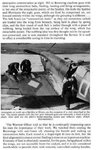
| Senior Member | Notes on Early Spifire armament( I) : Machineguns: Extract from: Armament of British Aircraft 1909-1939 H. King /Putnam books |
| | |
| | #22 |
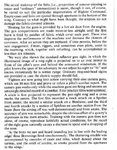
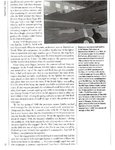
| Senior Member | Notes on Early Spifire armament (II) : Hispano gun in Mark I: Early installations...and troubles. |
| | |
| | #23 | |
| Senior Member Join Date: Nov 2004
Posts: 273
| Quote:
__________________ Tony Williams: Military gun and ammunition website | |
| | |
| | #24 | |
| Senior Member | Quote:
Rare video of the C.O.W 37mm long recoil cannon : YouTube - C.O.W. 37mm cannon fitted to Blackburn Perth flying boat | |
| | |
| | #25 |
| Senior Member | CB, this is some great data!
__________________ "Those who forget the past are condemned to repeat it" "Those who dwell in the past, condemn the future" ![]() |
| | |
| | #26 |
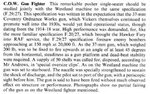
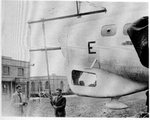
| Senior Member | You welcome A little more on 37mm gun In October 1918, the COW gun was installed in the rear cockpit of an Airco D.H.4, fixed and aimed up. The angle of the installation in at least one ( A2168 ) was about 80 degrees. The gun fired through a hole in the upper wing. The idea was to use this weapon against the large German bombers and Zeppelins, and after some reinforcement to prevent blast damage, testing was successfull. Three D.H.4s with COW guns were put into service. They carried a crew of two; the gunner in the aft cockpit not only loaded the weapon – the breech was inconveniently close to the cockpit floor – but also fired it on a signal from the pilot, who aimed with a ring-and-bead sight. Though two were sent to France, they did not see any combat before the war ended. (A2168 is recorded as flying a sortie against German Gotha bombers in August 1917, but that was presumably still without the COW gun.) The french however were by far more entuasiatic about it and used in several Voisin airplanes. Last edited by CharlesBronson; 08-13-2009 at 11:53 PM. |
| | |
| | #27 |
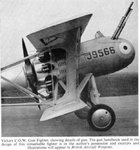
| Senior Member | Schräge Musik isnt german: The F29/27 specifications and fighters: This called for an aircraft armed with the 37mm Coventry Ordnance Works (COW) cannon that had been evolved during World War I and was thought to have potential as an anti-bomber weapon. The COW gun was to be mounted at an upward angle of at least 45° from the horizontal, with the idea that the fighter would approach enemy bombers from below and astern. Both Westland and Vickers submitted designs: Vickers Type 161: Last edited by CharlesBronson; 08-14-2009 at 09:28 AM. |
| | |
| | #28 |
| Senior Member | Very nice!!
__________________ "Those who forget the past are condemned to repeat it" "Those who dwell in the past, condemn the future" ![]() |
| | |
| | #29 |
| Junior Member Join Date: Oct 2009 Location: Helsinki
Posts: 9
| I bet this is common knowledge (is it?), but Spitfire Mk.I's .303 machineguns were targeted so that they all shot in the area of 2 feet in diameter at 250 yards. This meant that one second burst sent 10 lb of metal to that area, if well adjusted and fired. -Robert Jackson: Spitfire (book) This information changed my view of Spitfire's "ineffective" armament.
__________________ "Huns from the sun! Tally-Ho!" |
| | |
| | #30 |
| Senior Member Join Date: Nov 2004
Posts: 273
| The armament of the RAF fighters was initially harmonised at 400 yards - not because they expected the shooting to be done at that distance, but because at shorter distances this provided a spread of fire which could cover the fuselage and engines of a twin-engined bomber. They reduced the harmonisation range to 250 yards when they found out that they needed to maximise concentration of fire to have any effect. Even so, some bombers escaped with hundreds of bullet holes in them.
__________________ Tony Williams: Military gun and ammunition website |
| | |
![]() |
| Thread Tools | |
| Display Modes | |
| |