Aircraft of World War II - Warbird Forums


Go Back   Aircraft of World War II - Warbird Forums > World War II - Aviation > Technical > Weapons Systems Tech.

Weapons Systems Tech. Technology behind the weapons and systems within aircraft.

Reply
 
LinkBack Thread Tools Display Modes
Old 11-17-2008, 12:29 PM   #1
Senior Member
 
Join Date: Nov 2004
Posts: 273
RAF guns and ammunition

This might be of interest:

The Development of RAF Guns and Ammunition from WW1 to the Present Day

A new article on my website, at RAFHS 08
__________________
Tony Williams: Military gun and ammunition website
Tony Williams is offline  
Digg this Post!Add Post to del.icio.usBookmark Post in TechnoratiFurl this Post!Spurl this Post!Reddit! Wong this Post!
Reply With Quote
Old 11-17-2008, 04:36 PM   #2
Senior Member
 
Join Date: Oct 2006
Posts: 1,765
Hi Tony,

>The Development of RAF Guns and Ammunition from WW1 to the Present Day

Thanks, quite interesting! :-)

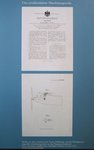
Here a translation of the patent for an interrupter gear, granted to Franz Schneider on July 15, 1913 (according to a reproduction on display on the Deutsches Museum in Munich):

"Imperial Patent Bureau

Patent Document

No. 276396

Class 77 h Group 5

Franz Schneider in Johannesthal near Berlin

Trigger device for firearms aboard aircraft

Patented in Imperial Germany from July 15, 1913 on.

Object of the invention is a device for facilitating firing between the propeller blades without doing them any harm. For this purpose, the firearm is mounted directly in front of the pilot and behind the propeller, and it can be mounted flexibly within certain limits.

To avoid damage to the propeller, it is intended to use an interrupter mechanism for the trigger. This interrupter device is kept in continuous rotation by the propeller shaft and blocks the trigger each time when a propeller blade is in front of the weapon muzzle. Accordingly, the firing of the gun can only take place through the gap between the propeller blades.

On the drawing, an execution example of the invention is shown.

Figure 1 depicts the front part of the aircraft in side view, while

Figure 2 shows a illustrative view of the cam disk.

The weapon, in the execution example shown as a rifle, is in some suitable manner fixed to a mounting connected advantageously to the engine and can be trained within certain limits laterally and up and down. A lever e mounted on a fixed bearing f moves behind the trigger of the gun, while the lower end of the lever contacts the cam disk A (see figure 2). This cam disk is driven by the propeller shaft a by conical gear wheels b and the vertical shaft c and is designed so that it pushes the lever e against the trigger of the gun while a blade of the propeller is in front of the rifle muzzle. In the instant the propeller blades have cleared the muzzle, the firearm can be triggered.

Naturally, the blocking of the trigger can be achieved in many other ways, and the invention is not limited to the described layout.

Patent Claims:

1. Trigger mechanism for firearms on aircraft, characterized by an interrupter mechanism for the trigger of the firearm which is placed behind the motion plane of the propeller blades, which engages the trigger through a device driven by the propeller shaft as long as a propeller blade is in front of the muzzle of the firearm.

2. Device according to claim 1, characterized by the device consisting of a cam disk d, driven by the propeller shaft, that prevents triggering the firearm by means of a blocking lever e when a propeller blade is in front of the firearm's muzzle.

Attached 1 sheet of drawings."

Note that it does not describe how the firing is commenced after shooting, a problem solved by Lübke, who designed the synchronizer gear for Fokker. In my opinion, this might explain why the name "interrupter gear"/"Unterbrechergetriebe" stuck - the idea and the name had been around before the more sophisticated synchronizer gear was designed to fulfill the job.

Karlheinz Kens in his "Flugzeuge des Ersten Weltkrieges" ('WW1 aircraft') mentions that Fokker was cleared of obligations to pay license fees to Schneider in a lawsuit. I'd guess the solution of the practical problem of commecing firing after an interruption might have something to do with it.

Kens also mentions that Fokker had to pay license fees anyway - to August Euler, who had patented the idea of using a fixed forward-firing weapon from an aircraft, using the flight controls to aim the weapon by aiming the entire aircraft.

One of your books is titled "Flying Guns" ... well, August Euler was the man who invented the concept :-)

Regards,

Henning (HoHun)
Attached Images
File Type: jpg PE2008A18_037_34_bearbeitet-1.jpg (188.4 KB, 170 views)
HoHun is offline  
Digg this Post!Add Post to del.icio.usBookmark Post in TechnoratiFurl this Post!Spurl this Post!Reddit! Wong this Post!
Reply With Quote
Old 11-17-2008, 11:43 PM   #3
Senior Member
 
mudpuppy's Avatar
 
Join Date: Mar 2008
Location: Appalachian Foothills in Virginia
Posts: 187
Thanks for posting the article, Tony. I'm getting ready to turn in and this'll be something good to read.
Derek
mudpuppy is offline  
Digg this Post!Add Post to del.icio.usBookmark Post in TechnoratiFurl this Post!Spurl this Post!Reddit! Wong this Post!
Reply With Quote
Old 11-18-2008, 04:16 AM   #4
Senior Member
 
kool kitty89's Avatar
 
Join Date: Aug 2007
Location: San Jose, CA
Posts: 2,412
Was the aircooled Vickers Mk.III used excluively on aircraft, or also for ground use?
How competitive was the Vickers in weight and performance with the .303 Browning when the latter was adopted?
Was the ~900 rpm of the Japanese Vickers derivatives (IJN type 97, and IJA Te-1/Type 89 fixed) representative of the ultamate performance of this gun; was the Browning's design inherently superior?

Also, how was the .303 Browning syncronized (Gladiator) with an open bolt? (and without electric priming)

And was there a reason for the cooling holes in the .303 Browning's barrel jacket were long rectangular slots rather than the usual round holes?

Last edited by kool kitty89; 11-18-2008 at 05:30 AM.
kool kitty89 is offline  
Digg this Post!Add Post to del.icio.usBookmark Post in TechnoratiFurl this Post!Spurl this Post!Reddit! Wong this Post!
Reply With Quote
Old 11-18-2008, 04:51 AM   #5
Senior Member
 
Join Date: Nov 2004
Posts: 273
Quote:
Originally Posted by kool kitty89 View Post
Was the aircooled Vickers Mk.III used excluively on aircraft, or also for ground use?
Aircraft only, as far as I know.

Quote:
How competitive was the Vickers in weight and performance with the .303 Browning when the latter was adopted?
Was the ~900 rpm of the Japanese Vickers derivatives (IJN type 97, and IJA Te-1/Type 89 fixed) representative of the ultamate performance of this gun; was the Browning's design inherently superior?
The Vickers was steadily improved in the 1920s and 30s, the Japanese using the Class E, which was capable of up to 900 rpm as you say. The final version was the Class J Central Action, which used a much-modified action to achieve up to 1,250 rpm. This was the one that was beaten by the Browning, I believe, although I don't have details of the competition results. The Class J never sold.

Quote:
Also, is it true that there were versions of the .303 Browning that fired from an open bolt due to problems with cook-off of cordite propelled rounds?
Yes, that's included in my article
__________________
Tony Williams: Military gun and ammunition website
Tony Williams is offline  
Digg this Post!Add Post to del.icio.usBookmark Post in TechnoratiFurl this Post!Spurl this Post!Reddit! Wong this Post!
Reply With Quote
Old 11-18-2008, 04:52 AM   #6
Senior Member
 
Join Date: Nov 2004
Posts: 273
Quote:
Originally Posted by HoHun View Post
Hi Tony,
Here a translation of the patent for an interrupter gear, granted to Franz Schneider on July 15, 1913 (according to a reproduction on display on the Deutsches Museum in Munich):
Thanks for the info, Henning.
__________________
Tony Williams: Military gun and ammunition website
Tony Williams is offline  
Digg this Post!Add Post to del.icio.usBookmark Post in TechnoratiFurl this Post!Spurl this Post!Reddit! Wong this Post!
Reply With Quote
Old 11-18-2008, 05:59 AM   #7
Senior Member
 
kool kitty89's Avatar
 
Join Date: Aug 2007
Location: San Jose, CA
Posts: 2,412
Quote:
Originally Posted by Tony Williams View Post
Quote:
Also, is it true that there were versions of the .303 Browning that fired from an open bolt due to problems with cook-off of cordite propelled rounds?
Yes, that's included in my article
Sorry, I saw that after I posted that. (I edited my post, but aparently not until after you started your response)
How was the .303 Browning synchronized with the open bolt?
kool kitty89 is offline  
Digg this Post!Add Post to del.icio.usBookmark Post in TechnoratiFurl this Post!Spurl this Post!Reddit! Wong this Post!
Reply With Quote
Old 11-18-2008, 07:52 AM   #8
Senior Member
 
Join Date: Nov 2004
Posts: 273
Quote:
Originally Posted by kool kitty89 View Post
How was the .303 Browning synchronized with the open bolt?
The bolt was held back using a separate sear to the firing pin sear. So when the pilot pressed the firing button, the bolt closed, chambering a cartridge. The firing pin was only released by the synchronisation system when the propeller blades were out of the way.

The MG 17 used the same system. So did the MG 131 and MG 151E, except that in these cases there wasn't a firing pin sear but an electrical circuit.

The Lewis never had a firing pin sear, only a bolt sear, so it couldn't provide separate control of the firing pin release. At the end of WW1 the British were experimenting with electrically-primed ammunition (as used by the MG 131 and MG 151E) with the aim of using this to synchronise the Lewis, but the war ended and stopped the work.
__________________
Tony Williams: Military gun and ammunition website
Tony Williams is offline  
Digg this Post!Add Post to del.icio.usBookmark Post in TechnoratiFurl this Post!Spurl this Post!Reddit! Wong this Post!
Reply With Quote
Old 11-18-2008, 06:02 PM   #9
Senior Member
 
CharlesBronson's Avatar
 
Join Date: Jan 2005
Location: Cordoba - Argentina
Posts: 2,999
Send a message via MSN to CharlesBronson
Very good article Tony

The detail of the open bolt for the british Brownings was one that I was discussing sometime ago in the italian guns topic.
__________________


Bronsons´s videos
CharlesBronson is offline  
Digg this Post!Add Post to del.icio.usBookmark Post in TechnoratiFurl this Post!Spurl this Post!Reddit! Wong this Post!
Reply With Quote
Old 11-18-2008, 06:45 PM   #10
Senior Member
 
Join Date: Oct 2006
Posts: 1,765
Hi Tony,

>Thanks for the info, Henning.

You're welcome! I have to admit that I don't own your book on WW1 aircraft armament (yet), so maybe I'd have recognized there's no need to tell you about it had I read your book

Here's a paragraph from Kens' book:

"Fokker's synchronizing gear caused a stir in Germany too. On July 15, 1913 the Swiss Franz Scheinder, designer of LVG, had patented a synchronization system. It hasd been implemented first in the LVG E-IV two-seater designed in late 1914 which was lost during the transfer flight to the frontline trials and fell into oblivion - at least as far as the synchronizing gear was concerned. The same aircraft also featured a flexible machine gun for the observer mounted in a turning ring which under the name 'Schneider ring' soon became standard armament of German reconnaissance aircraft. Due to the similar, but independendly developed synchonisation gears a lawsuit flamed up between Schneider/LVG and Fokker which ended with Fokker being granted all production rights, but also forced him to pay license fees - however, to August Euler. Euler had patented his idea of aiming a fixed machine gun by aiming the aircraft in 1910."

It's worth noting that a large share of Fokker's profits during WW1 was derived from the rights on the synchronization gear.

Regards,

Henning (HoHun)
HoHun is offline  
Digg this Post!Add Post to del.icio.usBookmark Post in TechnoratiFurl this Post!Spurl this Post!Reddit! Wong this Post!
Reply With Quote
Old 11-18-2008, 07:01 PM   #11
Senior Member
 
Airframes's Avatar
 
Join Date: Aug 2008
Posts: 9,030
Thanks for the article Tony. Good to get back 'in' to the armament, as I 'retired' from my lecturing things a year ago this week!
Terry.
Airframes is offline  
Digg this Post!Add Post to del.icio.usBookmark Post in TechnoratiFurl this Post!Spurl this Post!Reddit! Wong this Post!
Reply With Quote
Old 11-19-2008, 06:59 AM   #12
Senior Member
 
kool kitty89's Avatar
 
Join Date: Aug 2007
Location: San Jose, CA
Posts: 2,412
Why didn't the Vickers gun have cook-off probblems with cordite rounds? (did the chamber stay cooler?)
kool kitty89 is offline  
Digg this Post!Add Post to del.icio.usBookmark Post in TechnoratiFurl this Post!Spurl this Post!Reddit! Wong this Post!
Reply With Quote
Old 11-19-2008, 09:00 AM   #13
Senior Member
 
Join Date: Nov 2004
Posts: 273
I expect it might have been because when synchronised, the rate of fire of the Vickers would have been about half that of the Browning.
__________________
Tony Williams: Military gun and ammunition website
Tony Williams is offline  
Digg this Post!Add Post to del.icio.usBookmark Post in TechnoratiFurl this Post!Spurl this Post!Reddit! Wong this Post!
Reply With Quote
Old 04-22-2009, 09:23 PM   #14
Senior Member
 
CharlesBronson's Avatar
 
Join Date: Jan 2005
Location: Cordoba - Argentina
Posts: 2,999
Send a message via MSN to CharlesBronson
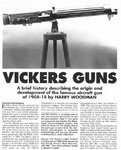
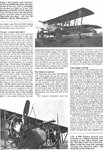
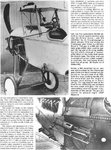
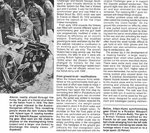
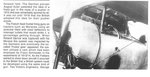
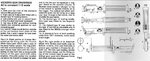
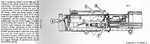
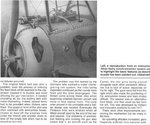
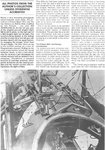
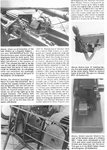
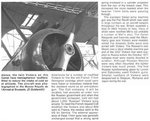
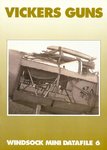
A bit more on the WW1 Vickers:
Attached Images
File Type: jpg 1.jpg (112.4 KB, 165 views)
File Type: jpg 2.jpg (219.1 KB, 165 views)
File Type: jpg 3.jpg (177.6 KB, 165 views)
File Type: jpg 4.jpg (167.8 KB, 162 views)
File Type: jpg 5.JPG (52.4 KB, 165 views)
__________________


Bronsons´s videos
CharlesBronson is offline  
Digg this Post!Add Post to del.icio.usBookmark Post in TechnoratiFurl this Post!Spurl this Post!Reddit! Wong this Post!
Reply With Quote
Old 04-23-2009, 05:37 PM   #15
Junior Member
 
Join Date: Nov 2006
Posts: 21
Breda Safat were open bolt guns. But the sear was "armed" by the bolt during its backward (opening) movement and released by the bolt itself before this component, during its forward (closing) movement, completed its move. Thus, this precious time gain made Breda Safat good for synchronization.
bruno_ is offline  
Digg this Post!Add Post to del.icio.usBookmark Post in TechnoratiFurl this Post!Spurl this Post!Reddit! Wong this Post!
Reply With Quote
Reply


Thread Tools
Display Modes

Posting Rules
You may not post new threads
You may not post replies
You may not post attachments
You may not edit your posts

BB code is On
Smilies are On
[IMG] code is On
HTML code is Off
Trackbacks are On
Pingbacks are On
Refbacks are On


All times are GMT -4. The time now is 03:17 AM.
Powered by vBulletin
Copyright ©2000 - 2009, Jelsoft Enterprises Ltd.
Content Relevant URLs by vBSEO 3.3.0
Ad Management plugin by RedTyger
Design by HTWoRKS


1 2 3 4 5 6 7 8 9 10 11 12 13 14 15 16 17 18 19 20 21 22 23 24 25 26 27 28 29 30 31 32 33 34 35 36 37 38 39 40 41 42 43 44 45 46 47 48 49 50 51 52 53 54 55 56 57 58 59 60 61 62 63 64 65 66 67 68 69 70 71 72 73 74 75 76 77 78 79 80 81 82 83 84 85 86 87 88 89 90 91 92 93 94 95 96 97 98 99 100 101 102 103 104 105 106 107 108 109 110 111 112 113 114 115 116 117 118