![]() |
| |||||||
| Weapons Systems Tech. Technology behind the weapons and systems within aircraft. |
![]() |
| | LinkBack | Thread Tools | Display Modes |
| | #1 |
| Senior Member | USAAF & US Navy Guns since 1930. Whith this topic I want to assemble detailed information about the barrel armament of the US air forces including the Navy and U.S Army from 1930 up to the operations in Irak in 2003. Evidently to cover the entire subject with a decent amount of information per every weapon is not an easy task, fortunately to me the argentine DNA have a fairly big and well know component of excessive self confidence. Last edited by CharlesBronson; 02-28-2009 at 11:33 PM. |
| | |
| | #2 |
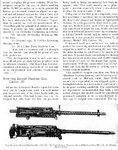
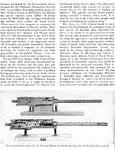
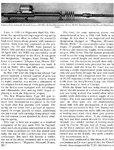
| Senior Member | Development of the Browning Cal .30. First part. |
| | |
| | #3 |
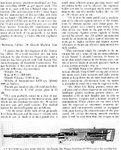
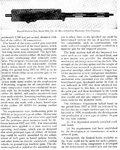
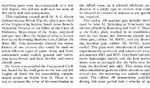
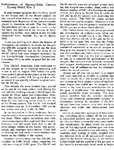
| Senior Member | Wao...sticky with just one post, THAT is confidence. Development of the Browning cal .30 part II. |
| | |
| | #4 |
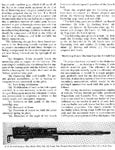
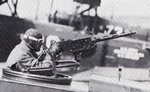
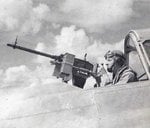
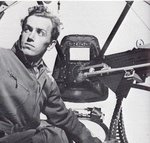
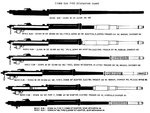
| Senior Member | 2 pictures of the Caliber .30 MG, one in in a Stearman biplane and the other in the rear cockpit of the North America AT-6 texan. Browning Cal .30 characteristics: Action: short recoil sliding breech. Refrigeration; air Feed: disintegrable metalic belt. Rate of fire: 950 to 1000 rpm. 700 to 800rpm in synchronizated mountings. Muzzle velocity: 850 mps ( 2820 fps) - M1918 model - M1924 model, note the slimmer barrel jacket and case/link collectors. Last edited by CharlesBronson; 02-28-2009 at 11:36 PM. |
| | |
| | #5 |
| Senior Member | Browning Caliber 50. The masterpiece of John Moses Browning, one of the best all around use aircraft guns of WW2. Part 1. |
| | |
| | #6 |
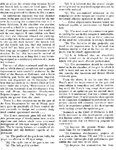
| Senior Member | Browning cal .50 continues By the way, the Armored aeroplane mentioned by Chinn in the early post are the "J" series, made by Junkers, AEG and Albatross. Last edited by CharlesBronson; 02-27-2009 at 06:39 PM. |
| | |
| | #7 |
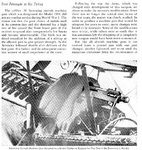
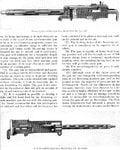
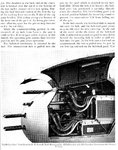
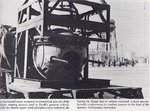
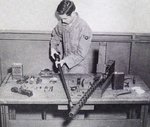
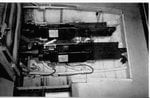
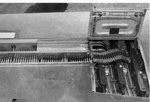
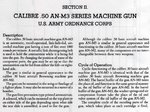
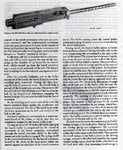
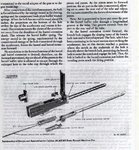
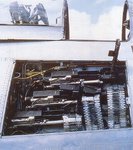
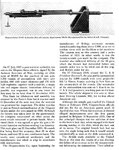
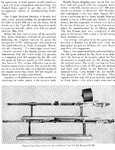
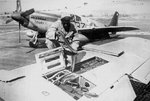
| Senior Member | Browning cal .50 part III Caliber: .50 Browning machine Gun ( 12,7 x 99mm) Action: Short recoil, sliding breech, air cooled. Feed: disintegrable link metalic belt or linkless belt feeder. Rate of fire: 720 to 770 rpm, 400 to 480 in synchronizated mountings. - Twin .50 in the infamous Sperry ball turret. - Nose emplacement in B-17, note the empy linkless belt guide. - Disassembled. - 2 guns in North American P-51A Mustang, the guns layed on a side. - 3 guns inside the left gunbay of North American P-51D, the guns are in upright position. |
| | |
| | #8 |
| Archive ![]() Join Date: Aug 2006 Location: Wisconsin
Posts: 4,850
| Many thanks Charles for your hard work!!!!
__________________ ![]() "Valor does not mean Hero." |
| | |
| | #9 |
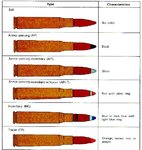
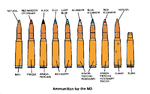
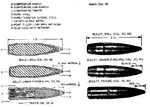
| Senior Member | Thanks, the hard work just began. Ammunition for Browning cal .50 machineguns. Muzzle velocity of the 12,7x99mm varied between 840 to 890 mps. The M2 AP could penetrate 19 mm of rolled homogeneous armor at 150 meters in a 90š incidence, the M8 penetrated 22mm of the same material at 300 meters. The M2 puff on impact had also the same efect of the B-patrone used by the germans complementing the tracers, In fact the tracer ammunition almost desapeared from the belt of USAAF Fighter aircraft deployed in Europe since april 1944 . The Navy fighters and USAAF bombers continue to use it up to the end war . |
| | |
| | #10 |
| Senior Member | Improved variants of the M2 cal .50. Various efforts to speed up the gun resulted in the T36 development by High Standard, which raised the RoF by about 100 rpm and was adopted in late 1944 as the M2A1. Only 8,000 were made before it was replaced by the faster-firing M3 (which was developed by Frigidaire as the M25E3). Only 2,400 M3 guns had been procured by the end of WW2. The M3. |
| | |
| | #11 | |
| Senior Member Join Date: Jun 2006 Location: oregon
Posts: 3,933
| Quote:
CB - Good work. Almost as good as some other specific postings on bionic flotation devices. At Bell, we toyed with Col Chinn's 30mm derivative of the Mk 108 on the marine AH-1J cobra but it's cyclic rate was almost a macth for the natural frequency of the helicopter airframe... that's a 'bad thingy' for crews wishing to match a landing with a take off | |
| | |
| | #12 | ||
| Senior Member | Yup, the Navy fighters of the time use dalmost exclusively .50 MGs, the Army Air Corps P-40, P-39 and others had a combination of light and heavy Brownings however. Quote:
Quote:
M3 in F-86 Sabre. Last edited by CharlesBronson; 03-02-2009 at 08:40 PM. | ||
| | |
| | #13 |
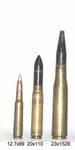
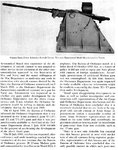
| Senior Member | Hispano 20 mm cannon. The Hispano Suiza HS 404 was a development of Mark Birgkit, swiss engineer of the French-Spanish-Swiss firm in 1936. Both the UK and USA were very interested and purchased Birgkit design modifing it for several fitting and purposes. The caliber was 20x110mm, action type was combined short-recoil/gas, with a tilting breech. Rate of fire originally was 600 rpm later increased in British models. It was installed in P-38, P-39, P-400 and several types of Navy aircraft. |
| | |
| | #14 |
| Senior Member Join Date: Jun 2006 Location: oregon
Posts: 3,933
| It was a factory retained, USMC funded AH-1J. We also tested blast blankets on the ammo bay doors to withstand Zuni 5" launch blast. Didn't work too well. |
| | |
| | #15 |
| Senior Member | Interesting, so you are a retired engineer ? Hispano 20mm part II. |
| | |
![]() |
| Thread Tools | |
| Display Modes | |
| |