parsifal
Colonel
This week marks the official week for celebrating what is known as the "Battle For Australia". Its not a well known celebration. In Australia its an event overshadowed by Anzac day, yet the importance of what it represents should not be dismissed. The week chosen represents that moment in time in 1942 when the Japanese suffered their first clear land defeat in the Pacific War, at a little known place called Milne Bay in new Guinea but the "Battle For Australia, covers a whole range of events from the fall of Singapore to the battles around Buna, Gona and Sanananda. It was a time when Australians felt they stood mostly alone and were forced to face some of their worst fears and nightmares. It was the first time that Australian armed forces, however hesitatingly had to operate under their own resources, and on their own initiative, mostly.
On Sunday February 15, Lieutenant General Tomoyuki Yamashita tightened his stranglehold on Singapore city, blasting it with artillery and incessant air assault. He demanded surrender. Malaya Command, with no air support, short of water and petrol and with its force thrust back into a congested city without any effective counter to the enemy battering from the air, capitulated. Singapore's fall gave Japan her first major victory in the whole campaign just Sixty-nine days after Pearl Harbor.
Nowhere was the magnitude of this disaster realised so quickly and completely as in Australia. Its suddenness came with the force of a thunderclap.
"Just as Dunkirk began the Battle for Britain, so does Singapore open the Battle for Australia" declared the Prime Minister (Mr Curtin). "It is now work or fight as we have never worked or fought before. On what we do now depends everything we hope to do when this bloody test has been survived."
The Battle for Australia was a struggle never before envisaged in this country but yet much of it still remains unknown. It was a struggle that stretched our national resources to the limit; which saw the bombing of mainland Australia; the attack by midget submarines on Sydney Harbour; and raised the spectre of the threat of a possible invasion through Papua New Guinea.
Our sailors, soldiers and airmen and those of our allies fought, and many died in the defence of Singapore, the Battle of Sunda Strait, Timor, the Kokoda Track, Milne Bay, the Battles of the Coral Sea and Midway, in the Solomons and at Savo Island. The men of the Merchant Navy provided invaluable support throughout the island chain and suffered heavy casualties, as did the often unsung heroes, the Coastwatchers.
"THE BOMBING OF DARWIN
The first enemy attack on Australian soil in the history of the Commonwealth of Australia occurred at 9.58am on Thursday 19 February 1942. The small Northern Territory town of Darwin suffered an air-raid attack by 188 Japanese aircraft. At the time of the attack the civilian population numbered less than 2000.
THE BATTLE OF THE CORAL SEA
Fear of Japan's imperialist designs on Australia had been circulating since the early part of the century when Russia had been defeated in the Russo-Japanese War of 1904-05. Stories and melodramas such as Randolph Bedford's play White Australia, or The Empty North red fears of a "Yellow Peril' invading Australia. During the 1930's Japanese documents such as the Greater East Asia Co-Prosperity Sphere sometimes mentioned Australia as a possible colony. Access to Japanese records has led to the realisation that this idea, put forward by the Japanese Navy, had been rejected by their High Command. The purpose of attacks on Darwin and other parts of Australia was to weaken the country's value as an American base. Nevertheless this was unknown to most Australians at the time and a palpable fear persisted.
KOKODA TRAIL I
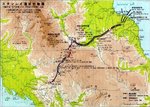
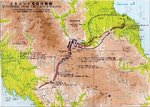
The Japanese had first landed in New Guinea in March, at Lae and Salamaua. Buna and Gona, where the Japanese landed in July, are south of these areas on the north east coast of Papua. 'As the crow flies' the area is less than 200 kilometres from Port Moresby. It is, however, separated from that town by the steep range of the Owen Stanley mountains. The only way over this range was by foot or air. Their losses at the battle of the Coral Sea and Midway had prevented the Japanese from invading Port Moresby by sea. Their objective in July was to approach the garrison town over the precipitous mountain track. The village of Kokoda was about half way between Port Moresby and Buna.
MILNE BAY
In late August, unable to move further down the Kokoda Trail, the Japanese decided to make a second line of attack on Port Moresby. On 25 -26 August they landed at Milne bay on the extreme eastern tip of Papua, about 370 kilometres from Port Moresby. Although under great logistical stress with the fighting on the Kododa Trail, Allied forces were ready for them. Unlike the protracted Kokoda campaign, the Battle of Milne Bay ended in just over ten days.
KOKODA TRAIL II
In August while the Japanese were withdrawing from Milne bay, the Australians on the Kokoda Trail were forced to withdraw from Isurava. Under fierce attack from Japanese forces the Australian retreated to Templeton's Crossing and eventually to lmita Ridge. By this time the appalling conditions and lack of supplies had caused health problems among the Australian troops. Apart from battle wounds and difficulties with adequate medical treatment, soldiers were sick with dysentery, malaria and weakness from insufficient food. The 39th Australian Infantry Battalion had been reduced greatly in strength by death and other casualties. Even those still on their feet were exhausted and under-nourished.
BATTLE OF THE BISMARCK SEA
A Japanese convoy of 16 ships, carrying desperately needed reinforcements and supplies to enable the Japanese to maintain their hold on New Guinea, was sighted on 2nd March, 1943. During the next two days planes from a joint Australian-American strike force repeatedly attacked the convoy, and successfully sank or badly damaged all the Japanese ships. This was the last occasion when the Japanese tried to reinforce significantly their forces in Papua and New Guinea.
BATTLE OF THE BEACHHEADS -BUNA, GONA and SANANANDA
In the mistaken belief that the Japanese were finished General Macarthur, Supreme Commander of South West Pacific Area, ordered an assault by Australian and American troops on the Japanese beachheads. The three villages of Buna, Gona and Sanananda were on the north coast of Papua New Guinea. The Japanese had heavily fortified the villages, and reinforced them with fresh troops. With the sea on one side, and protected by swamps and jungle on the landward side, the 9000 Japanese troops took a heavy toll on the attacking Australians and Americans during the two months of savage fighting that it took to capture the Japanese strongholds.
Deaths as a result of the Kokoda Track and Beachhead battles totalled more than 12,000 Japanese, 2,165 Australians and 930 Americans. More Australians died in Papua than in any other campaign of the war, but the Japanese defenders were virtually eliminated."
On Sunday February 15, Lieutenant General Tomoyuki Yamashita tightened his stranglehold on Singapore city, blasting it with artillery and incessant air assault. He demanded surrender. Malaya Command, with no air support, short of water and petrol and with its force thrust back into a congested city without any effective counter to the enemy battering from the air, capitulated. Singapore's fall gave Japan her first major victory in the whole campaign just Sixty-nine days after Pearl Harbor.
Nowhere was the magnitude of this disaster realised so quickly and completely as in Australia. Its suddenness came with the force of a thunderclap.
"Just as Dunkirk began the Battle for Britain, so does Singapore open the Battle for Australia" declared the Prime Minister (Mr Curtin). "It is now work or fight as we have never worked or fought before. On what we do now depends everything we hope to do when this bloody test has been survived."
The Battle for Australia was a struggle never before envisaged in this country but yet much of it still remains unknown. It was a struggle that stretched our national resources to the limit; which saw the bombing of mainland Australia; the attack by midget submarines on Sydney Harbour; and raised the spectre of the threat of a possible invasion through Papua New Guinea.
Our sailors, soldiers and airmen and those of our allies fought, and many died in the defence of Singapore, the Battle of Sunda Strait, Timor, the Kokoda Track, Milne Bay, the Battles of the Coral Sea and Midway, in the Solomons and at Savo Island. The men of the Merchant Navy provided invaluable support throughout the island chain and suffered heavy casualties, as did the often unsung heroes, the Coastwatchers.
"THE BOMBING OF DARWIN
The first enemy attack on Australian soil in the history of the Commonwealth of Australia occurred at 9.58am on Thursday 19 February 1942. The small Northern Territory town of Darwin suffered an air-raid attack by 188 Japanese aircraft. At the time of the attack the civilian population numbered less than 2000.
THE BATTLE OF THE CORAL SEA
Fear of Japan's imperialist designs on Australia had been circulating since the early part of the century when Russia had been defeated in the Russo-Japanese War of 1904-05. Stories and melodramas such as Randolph Bedford's play White Australia, or The Empty North red fears of a "Yellow Peril' invading Australia. During the 1930's Japanese documents such as the Greater East Asia Co-Prosperity Sphere sometimes mentioned Australia as a possible colony. Access to Japanese records has led to the realisation that this idea, put forward by the Japanese Navy, had been rejected by their High Command. The purpose of attacks on Darwin and other parts of Australia was to weaken the country's value as an American base. Nevertheless this was unknown to most Australians at the time and a palpable fear persisted.
KOKODA TRAIL I
The Japanese had first landed in New Guinea in March, at Lae and Salamaua. Buna and Gona, where the Japanese landed in July, are south of these areas on the north east coast of Papua. 'As the crow flies' the area is less than 200 kilometres from Port Moresby. It is, however, separated from that town by the steep range of the Owen Stanley mountains. The only way over this range was by foot or air. Their losses at the battle of the Coral Sea and Midway had prevented the Japanese from invading Port Moresby by sea. Their objective in July was to approach the garrison town over the precipitous mountain track. The village of Kokoda was about half way between Port Moresby and Buna.
MILNE BAY
In late August, unable to move further down the Kokoda Trail, the Japanese decided to make a second line of attack on Port Moresby. On 25 -26 August they landed at Milne bay on the extreme eastern tip of Papua, about 370 kilometres from Port Moresby. Although under great logistical stress with the fighting on the Kododa Trail, Allied forces were ready for them. Unlike the protracted Kokoda campaign, the Battle of Milne Bay ended in just over ten days.
KOKODA TRAIL II
In August while the Japanese were withdrawing from Milne bay, the Australians on the Kokoda Trail were forced to withdraw from Isurava. Under fierce attack from Japanese forces the Australian retreated to Templeton's Crossing and eventually to lmita Ridge. By this time the appalling conditions and lack of supplies had caused health problems among the Australian troops. Apart from battle wounds and difficulties with adequate medical treatment, soldiers were sick with dysentery, malaria and weakness from insufficient food. The 39th Australian Infantry Battalion had been reduced greatly in strength by death and other casualties. Even those still on their feet were exhausted and under-nourished.
BATTLE OF THE BISMARCK SEA
A Japanese convoy of 16 ships, carrying desperately needed reinforcements and supplies to enable the Japanese to maintain their hold on New Guinea, was sighted on 2nd March, 1943. During the next two days planes from a joint Australian-American strike force repeatedly attacked the convoy, and successfully sank or badly damaged all the Japanese ships. This was the last occasion when the Japanese tried to reinforce significantly their forces in Papua and New Guinea.
BATTLE OF THE BEACHHEADS -BUNA, GONA and SANANANDA
In the mistaken belief that the Japanese were finished General Macarthur, Supreme Commander of South West Pacific Area, ordered an assault by Australian and American troops on the Japanese beachheads. The three villages of Buna, Gona and Sanananda were on the north coast of Papua New Guinea. The Japanese had heavily fortified the villages, and reinforced them with fresh troops. With the sea on one side, and protected by swamps and jungle on the landward side, the 9000 Japanese troops took a heavy toll on the attacking Australians and Americans during the two months of savage fighting that it took to capture the Japanese strongholds.
Deaths as a result of the Kokoda Track and Beachhead battles totalled more than 12,000 Japanese, 2,165 Australians and 930 Americans. More Australians died in Papua than in any other campaign of the war, but the Japanese defenders were virtually eliminated."


 .
.