
Navigation
Install the app
How to install the app on iOS
Follow along with the video below to see how to install our site as a web app on your home screen.
Note: This feature may not be available in some browsers.
More options
You are using an out of date browser. It may not display this or other websites correctly.
You should upgrade or use an alternative browser.
You should upgrade or use an alternative browser.
Lend Lease for Britain
- Thread starter ctrian
- Start date
Ad: This forum contains affiliate links to products on Amazon and eBay. More information in Terms and rules
More options
Who Replied?- Thread starter
- #2
I cannot speak for all the dominions, but I can tell you a little about my own country. In WWI, Australias Prime Minister had said, "we will fight for Britain to the last man and shilling" And very nearly did. In the lead up to WWII, the Australian economy was raidly industrialising. If 1936 is taken as the base year, with an industrial index of 100, then by 1945, that index had grown to over 1500. We were still mainly an agricultural nation, but we could not grow enough sheep and cattle, shear enough wool, harvest enough wheat, mine and smelt enough iron, dig enough coal or aluminium or copper to meet our domestic and world markets. In 1940 we posted a surplus of over 35m pounds. In the second world war we approached the war from the standpoint of not fighting to the last man and shilling. We would do what was posible with no pain or hurt to the domestic economy however there were never any difficulties for Australia in terms of trade or balance of payment figures. Where we came up short was in manpower. We chose not to invest our surpluses in capital infrastructure. Some of the surplus went to purchase of foreign military equipment, a mix of British and American stuff mostly. But with a surplus the size we had, it was easily within Australias capacity to increase our defence expenditures, and that meant purchase of foreign equipment. We could easily have doubled or tripled our foreign purchases of US equipment, and still not be i too much trouble. That is demonstrated in our 1941 and 1942 expenditures. in that year, the only year that we felt significantly threatened, we really did triple our foreign purchases, as well as increasing domestic production by 1.6 times. And still we did not eat into our reserves.
Australias trade routes were never more threatened than anybody else really, and our balance of payments were certainly never threatened by it. In 1942, when it looked for a time that allied shipping was in trouble, due to the stupidity of Ernest J King, and also because of a Japoanese submarine campaign down the east coast of Australia (that sank 250000 tons of local shipping) plans were well under way to build close to amillion tons of replacement shipping. It was never needed. our brothers in Canada did produce over 1.3 million tons of shipping, and I understand they still had spare capacity as well. It was not needed, and given that the Americans had the economies of scale, the most effieicient industrial base in the world, we fell back into simply payting them for what we needed
Moreover I am certain that the other dominions were in similar good shape financially . There was easily the capacity in the dominions to take up the slack of cash and carry, if the lend lease deal had not been signed. What may have happened with this increased committment earlier in the war is that our economic growth later in the war might have slowed, because of a lack of investment. I dont see that as a big issue however...how many times can you shoot your enemy.....
After the war broke out our first premier, Menzies, wanted to increase our commitment to the ETO, but were overruled, in part I think because the Americans were seen as providing assistance to the British empire. if that support had been witheld, by not signing the LL agreement, I dont think it all unreasonable or unrealistic to assume the Australians, and the other dominions, to increase their wartime committments and simply buy what the british could not. It was well within their capabiliies, based on the figures I have posted.
I can only repeat what I have been saying to you for a while now. Lend lease was a mutual assistance package that helped everyone....the some of the parts together amounted to more than the sum of the parts separately. There would have been some pain if the LL agreement had not been signed, but there was never the slightest chance of the catastrophic collapse that you keep rabbiting on about.
It's interesting to know that a country can fight a war with sheep , cattle, shear , wool and other furry things.And of course it would be easy to mass produce armaments.I can only guess that the people back then were not as sharp as you .Don't you think you should have gone into politics?
Australias trade routes were never more threatened than anybody else really, and our balance of payments were certainly never threatened by it. In 1942, when it looked for a time that allied shipping was in trouble, due to the stupidity of Ernest J King, and also because of a Japoanese submarine campaign down the east coast of Australia (that sank 250000 tons of local shipping) plans were well under way to build close to amillion tons of replacement shipping. It was never needed. our brothers in Canada did produce over 1.3 million tons of shipping, and I understand they still had spare capacity as well. It was not needed, and given that the Americans had the economies of scale, the most effieicient industrial base in the world, we fell back into simply payting them for what we needed
Moreover I am certain that the other dominions were in similar good shape financially . There was easily the capacity in the dominions to take up the slack of cash and carry, if the lend lease deal had not been signed. What may have happened with this increased committment earlier in the war is that our economic growth later in the war might have slowed, because of a lack of investment. I dont see that as a big issue however...how many times can you shoot your enemy.....
After the war broke out our first premier, Menzies, wanted to increase our commitment to the ETO, but were overruled, in part I think because the Americans were seen as providing assistance to the British empire. if that support had been witheld, by not signing the LL agreement, I dont think it all unreasonable or unrealistic to assume the Australians, and the other dominions, to increase their wartime committments and simply buy what the british could not. It was well within their capabiliies, based on the figures I have posted.
I can only repeat what I have been saying to you for a while now. Lend lease was a mutual assistance package that helped everyone....the some of the parts together amounted to more than the sum of the parts separately. There would have been some pain if the LL agreement had not been signed, but there was never the slightest chance of the catastrophic collapse that you keep rabbiting on about.
It's interesting to know that a country can fight a war with sheep , cattle, shear , wool and other furry things.And of course it would be easy to mass produce armaments.I can only guess that the people back then were not as sharp as you .Don't you think you should have gone into politics?

Readie
Chief Master Sergeant
I cannot speak for all the dominions, but I can tell you a little about my own country. In WWI, Australias Prime Minister had said, "we will fight for Britain to the last man and shilling" And very nearly did. In the lead up to WWII, the Australian economy was raidly industrialising. If 1936 is taken as the base year, with an industrial index of 100, then by 1945, that index had grown to over 1500. We were still mainly an agricultural nation, but we could not grow enough sheep and cattle, shear enough wool, harvest enough wheat, mine and smelt enough iron, dig enough coal or aluminium or copper to meet our domestic and world markets. In 1940 we posted a surplus of over 35m pounds. In the second world war we approached the war from the standpoint of not fighting to the last man and shilling. We would do what was posible with no pain or hurt to the domestic economy however there were never any difficulties for Australia in terms of trade or balance of payment figures. Where we came up short was in manpower. We chose not to invest our surpluses in capital infrastructure. Some of the surplus went to purchase of foreign military equipment, a mix of British and American stuff mostly. But with a surplus the size we had, it was easily within Australias capacity to increase our defence expenditures, and that meant purchase of foreign equipment. We could easily have doubled or tripled our foreign purchases of US equipment, and still not be i too much trouble. That is demonstrated in our 1941 and 1942 expenditures. in that year, the only year that we felt significantly threatened, we really did triple our foreign purchases, as well as increasing domestic production by 1.6 times. And still we did not eat into our reserves.
Australias trade routes were never more threatened than anybody else really, and our balance of payments were certainly never threatened by it. In 1942, when it looked for a time that allied shipping was in trouble, due to the stupidity of Ernest J King, and also because of a Japoanese submarine campaign down the east coast of Australia (that sank 250000 tons of local shipping) plans were well under way to build close to amillion tons of replacement shipping. It was never needed. our brothers in Canada did produce over 1.3 million tons of shipping, and I understand they still had spare capacity as well. It was not needed, and given that the Americans had the economies of scale, the most effieicient industrial base in the world, we fell back into simply payting them for what we needed
Moreover I am certain that the other dominions were in similar good shape financially . There was easily the capacity in the dominions to take up the slack of cash and carry, if the lend lease deal had not been signed. What may have happened with this increased committment earlier in the war is that our economic growth later in the war might have slowed, because of a lack of investment. I dont see that as a big issue however...how many times can you shoot your enemy.....
After the war broke out our first premier, Menzies, wanted to increase our commitment to the ETO, but were overruled, in part I think because the Americans were seen as providing assistance to the British empire. if that support had been witheld, by not signing the LL agreement, I dont think it all unreasonable or unrealistic to assume the Australians, and the other dominions, to increase their wartime committments and simply buy what the british could not. It was well within their capabiliies, based on the figures I have posted.
I can only repeat what I have been saying to you for a while now. Lend lease was a mutual assistance package that helped everyone....the some of the parts together amounted to more than the sum of the parts separately. There would have been some pain if the LL agreement had not been signed, but there was never the slightest chance of the catastrophic collapse that you keep rabbiting on about.
It's interesting to know that a country can fight a war with sheep , cattle, shear , wool and other furry things.And of course it would be easy to mass produce armaments.I can only guess that the people back then were not as sharp as you .Don't you think you should have gone into politics?
You forget that Au has a wealth of natural resources.
Coal, iron ore,gold, meat, wool, alumina, wheat etc.
Cheers
John

michaelmaltby
Colonel
"..... It's interesting to know that a country can fight a war with sheep , cattle, shear , wool and other furry things.And of course it would be easy to mass produce armaments.I can only guess that the people back then were not as sharp as you .Don't you think you should have gone into politics?"
Always the smart ass ....
MM
Always the smart ass ....
MM
- Thread starter
- #5
"..... It's interesting to know that a country can fight a war with sheep , cattle, shear , wool and other furry things.And of course it would be easy to mass produce armaments.I can only guess that the people back then were not as sharp as you .Don't you think you should have gone into politics?"
Always the smart ass ....
MM
I never asked you ,did you read all of ''Wages of Destruction '' or just the last chapter? I hear the new version has lots of pictures (kid friendly) if you're interested.

- Thread starter
- #6
You forget that Au has a wealth of natural resources.
Coal, iron ore,gold, meat, wool, alumina, wheat etc.
Cheers
John
That is true but what about industrial capacity? Could they build high performance engines? 100 octane fuel? medium tanks? (not prototype REAL ones) AA guns ? AT guns? Comm equipment? Trucks? Can they build all the components? See how complicated it gets? Especially during a WAR.
michaelmaltby
Colonel
".... I never asked you ,did you read all of ''Wages of Destruction '' or just the last chapter? I hear the new version has lots of pictures (kid friendly) if you're interested"
Always the smart ass.
MM
Always the smart ass.
MM

pbfoot
1st Lieutenant
I think you under estimate the capabilities of some countries which is kinda sadThat is true but what about industrial capacity? Could they build high performance engines? 100 octane fuel? medium tanks? (not prototype REAL ones) AA guns ? AT guns? Comm equipment? Trucks? Can they build all the components? See how complicated it gets? Especially during a WAR.
- Thread starter
- #9
I think you under estimate the capabilities of some countries which is kinda sad
If wishes were horses...
pbfoot
1st Lieutenant
I can't talk for Australia but if you check this out it might surpride youIf wishes were horses...
Canadian industrial production during the Second World war.
•11 billion dollars of munitions
•1.7 million small arms
•43,000 heavy guns
•16,000 aircraft
•2 million tonnes of explosives
•815,000 military vehicles, 50,000 tanks and armoured gun carriers
•9,000 boats and ships
•
Anti-tank and field artillery
•
Naval guns
•
Small arms and automatic weapons
•
Radar sets and Electronics
•
Synthetic rubber
•
Uranium for the 'Manhattan Project'
Lighthunmust
Banned
If wishes were horses...
..... ;I think most of us would know who is the head and who is the tail.
Shortround6
Lieutenant General
From the other thread;
Ctrain.
"How can aircraft in '42 in N.Africa and Far East be bought and paid for by the Brits?"
None of the cars on your block is less than two years old?
Aug 1939 Poland orders 250 Buffaloes. Obviously never filled.
Dec. 1939 Belgium orders 40 Buffaloes and acquires a manufacturing license.
Jan, 1940. The British give Brewster a 9.6 million dollar order for 120 Buffaloes, later increase to 170.
April 1940. Production of the Belgian Buffaloes is started. One is completed in April and six more in May. With the fall of Belgium France is to take over the order.
June 1940. Production of the British 339E aircraft is under way, 2 in May, 9 in June, 22 in July. Production suspended in August as some US navy planes are built.
Sept 1940. First 339E buffaloes are delivered to the RAF in England and the type is rejected for use in Europe. Please note that it took from June until Sept to get planes from the factory in New York to England, re-assembled and test flown.
Dec, 1940 339E production for the British is restarted.
March 1941. Production of 339D Buffaloes for the Dutch starts along side continued production for the British.
May, 1941. The last of the British 339Es are completed. many are sent to Singapore but 32 go to Rangoon. I wonder how long it took to get the Planes from New York to Rangoon?
BTW the Flying Tigers P-40s were landed in Rangoon in June of 1941. They don't see combat until after Pearl Harbor.
First lend lease P-40s are the E-1 model ordered in May of 1941. The First ones show up in Egypt in Oct 1941. First combat action is Jan 1 1942.
The RAF does NOT immediately ground all pre-lend-lease aircraft.
Ctrain.
"How can aircraft in '42 in N.Africa and Far East be bought and paid for by the Brits?"
None of the cars on your block is less than two years old?
Aug 1939 Poland orders 250 Buffaloes. Obviously never filled.
Dec. 1939 Belgium orders 40 Buffaloes and acquires a manufacturing license.
Jan, 1940. The British give Brewster a 9.6 million dollar order for 120 Buffaloes, later increase to 170.
April 1940. Production of the Belgian Buffaloes is started. One is completed in April and six more in May. With the fall of Belgium France is to take over the order.
June 1940. Production of the British 339E aircraft is under way, 2 in May, 9 in June, 22 in July. Production suspended in August as some US navy planes are built.
Sept 1940. First 339E buffaloes are delivered to the RAF in England and the type is rejected for use in Europe. Please note that it took from June until Sept to get planes from the factory in New York to England, re-assembled and test flown.
Dec, 1940 339E production for the British is restarted.
March 1941. Production of 339D Buffaloes for the Dutch starts along side continued production for the British.
May, 1941. The last of the British 339Es are completed. many are sent to Singapore but 32 go to Rangoon. I wonder how long it took to get the Planes from New York to Rangoon?
BTW the Flying Tigers P-40s were landed in Rangoon in June of 1941. They don't see combat until after Pearl Harbor.
First lend lease P-40s are the E-1 model ordered in May of 1941. The First ones show up in Egypt in Oct 1941. First combat action is Jan 1 1942.
The RAF does NOT immediately ground all pre-lend-lease aircraft.
Readie
Chief Master Sergeant
Ok ok...
Lend lease was an agreement between the allies (old,time tested, loyal and trusted friends) to get around a problem. If the President of the USA got a political mile or two from it all then, that's all in the game. Churchill would have done the same if the boot was on the other foot.
Whenever the allies have been in the proverbial we have all rallied around and helped. We did that in WW1 and we are doing it now.
Yes, the UK cannot afford to fight 2 world wars, Korea, Suez, the Falklands, the war on terror etc etc but...somehow we do, Sacrifices are made at home, deals are done but above all , loyalty is prized.
loyalty to our true friends, whatever that cost may be.
I think from all the jibes and sneering comments from forum members in certain countries that they really do not understand the bond we have.
Like it or lump it, that's the way we were, we are and will always be.
Cheers
John
Lend lease was an agreement between the allies (old,time tested, loyal and trusted friends) to get around a problem. If the President of the USA got a political mile or two from it all then, that's all in the game. Churchill would have done the same if the boot was on the other foot.
Whenever the allies have been in the proverbial we have all rallied around and helped. We did that in WW1 and we are doing it now.
Yes, the UK cannot afford to fight 2 world wars, Korea, Suez, the Falklands, the war on terror etc etc but...somehow we do, Sacrifices are made at home, deals are done but above all , loyalty is prized.
loyalty to our true friends, whatever that cost may be.
I think from all the jibes and sneering comments from forum members in certain countries that they really do not understand the bond we have.
Like it or lump it, that's the way we were, we are and will always be.
Cheers
John

parsifal
Colonel
I cannot speak for all the dominions, but I can tell you a little about my own country. In WWI, Australias Prime Minister had said, "we will fight for Britain to the last man and shilling" And very nearly did. In the lead up to WWII, the Australian economy was raidly industrialising. If 1936 is taken as the base year, with an industrial index of 100, then by 1945, that index had grown to over 1500. We were still mainly an agricultural nation, but we could not grow enough sheep and cattle, shear enough wool, harvest enough wheat, mine and smelt enough iron, dig enough coal or aluminium or copper to meet our domestic and world markets. In 1940 we posted a surplus of over 35m pounds. In the second world war we approached the war from the standpoint of not fighting to the last man and shilling. We would do what was posible with no pain or hurt to the domestic economy however there were never any difficulties for Australia in terms of trade or balance of payment figures. Where we came up short was in manpower. We chose not to invest our surpluses in capital infrastructure. Some of the surplus went to purchase of foreign military equipment, a mix of British and American stuff mostly. But with a surplus the size we had, it was easily within Australias capacity to increase our defence expenditures, and that meant purchase of foreign equipment. We could easily have doubled or tripled our foreign purchases of US equipment, and still not be i too much trouble. That is demonstrated in our 1941 and 1942 expenditures. in that year, the only year that we felt significantly threatened, we really did triple our foreign purchases, as well as increasing domestic production by 1.6 times. And still we did not eat into our reserves.
Australias trade routes were never more threatened than anybody else really, and our balance of payments were certainly never threatened by it. In 1942, when it looked for a time that allied shipping was in trouble, due to the stupidity of Ernest J King, and also because of a Japoanese submarine campaign down the east coast of Australia (that sank 250000 tons of local shipping) plans were well under way to build close to amillion tons of replacement shipping. It was never needed. our brothers in Canada did produce over 1.3 million tons of shipping, and I understand they still had spare capacity as well. It was not needed, and given that the Americans had the economies of scale, the most effieicient industrial base in the world, we fell back into simply payting them for what we needed
Moreover I am certain that the other dominions were in similar good shape financially . There was easily the capacity in the dominions to take up the slack of cash and carry, if the lend lease deal had not been signed. What may have happened with this increased committment earlier in the war is that our economic growth later in the war might have slowed, because of a lack of investment. I dont see that as a big issue however...how many times can you shoot your enemy.....
After the war broke out our first premier, Menzies, wanted to increase our commitment to the ETO, but were overruled, in part I think because the Americans were seen as providing assistance to the British empire. if that support had been witheld, by not signing the LL agreement, I dont think it all unreasonable or unrealistic to assume the Australians, and the other dominions, to increase their wartime committments and simply buy what the british could not. It was well within their capabiliies, based on the figures I have posted.
I can only repeat what I have been saying to you for a while now. Lend lease was a mutual assistance package that helped everyone....the some of the parts together amounted to more than the sum of the parts separately. There would have been some pain if the LL agreement had not been signed, but there was never the slightest chance of the catastrophic collapse that you keep rabbiting on about.
It's interesting to know that a country can fight a war with sheep , cattle, shear , wool and other furry things.And of course it would be easy to mass produce armaments.I can only guess that the people back then were not as sharp as you .Don't you think you should have gone into politics?
The context of this question was whether the Dominions had the capacity to pay cash for US armaments. Primary production equals money, although wool is used in a wide range of miltary applications as are most of the minerals we produced.
I never said that it would be easy to produce armements, but the question was do we have the capacity to purchase armamjents. You tried to put Australia and the other dominions in the same financial boat as mother Britain, and I showed you that for Australia, this simply was not the case. Because we were a society industrialising, our military output was a developing one. As it turned out, it was cheaper and more efficient to use US equipment to win the war, than embark on a program of greater home production. But the Australians proved in spades that they were capable of increasing their output of need be, as did the Canadians, and to a lesser extent the other dominions.
In the case of Canada, for example, you may be surprised to hear that the Canadian military production output was greater during the war than that of every European Axis country except Germany, and in the case of Germany, outproduced them in certain key categories, principally motor vehicles. You might be surprised that the biggest user of railway rolling stock outside the Soviet Union was not Germany, or Britain, or the US, it was India, owned and paid for, and receiving foreign exchange to its British owners
parsifal
Colonel
That is true but what about industrial capacity? Could they build high performance engines? 100 octane fuel? medium tanks? (not prototype REAL ones) AA guns ? AT guns? Comm equipment? Trucks? Can they build all the components? See how complicated it gets? Especially during a WAR.
Short answer is yes. About the only thing that you say that is true, is that the western economies are all interlinked and interdependent.
In regardss to the individual items that you mention.
Our sources of fuel were a mix of US and British controlled wells. We did not have any significant refining capacity, though post war we had no problem with that
With regards to high performance engines, Australia produced the Double wasp, the single wasp, the Merlin, and was tooling up to produce the Griffon engine, but decided instead to switch to new jet technologies after the war. Factories were in the process of being prepred for these engines (the Griffons) throughout 1944.
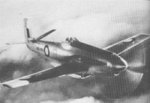
I should also point out that one of the highest performing piston engined aircraft was the Ca 15 Kangaroo. Yes its a prototype, but the only reason we didnt build it was because we could build and use Mustangs. The RAAFs Mustangs were mostly home produced, as were our Mosquitos aircraft, and our Lincoln bombers. Canada was producing substantial numbers of lancasters during the war, so this inference that dominion industry, technology and science is backward somehow is just completely wrong. The canadians produced substantial numbers of Sherman tanks as well as their home designed Ram Tank. Australia wa at the forefront of military technology incidentally. The magnetron, that thing the Germans dearly wanted for themselves, was an Australian invention. We also discovered such advances as penacillin (I can never spell that damn word) the limited slip differential, and a few other innovatioons that I forget now
With regards to tanks sure we did produce tanks they were not protoypes, they were ccepted into service. I will grant you, the production run was low, because the need was low, and we could do it cheaper using US and British imports, but the potential and the factory and the raw materials needed to build the tanks in some quantity if the need arose. I suggest you have a look at the AC-1 Sentinel and the AC3 Sentinel II tanks. Sentinel II was a prototype, but Sentinel I was an operational tank
AA guns, AT guns (up to 17 pdr), armoured cars, Bren Gun carriers, trucks were all produced in Australia in very substantial numbers. Not as big as our Canadian brothers, but substantial, and with considerable potential to build even more if the situation required it
With regard to your comment about things being complicated, I couldnt agree more, but dont you think thats more than a little hypocritical on your part. You are attempting to argue that Britain was Bankrupt, which it wasnt...it had no cash reserves, but income was continuing to flow in and production continuing to go out, and that as a result of that lack of liquidity that would somehow halt the entire military output from Britain. Ther is absolutely no evidence to support that claim, and none provided by you....you just say the first thing that floats into that head of yours.....its very iroibnic to me that you, of all people would say, "its more complicated than that".....jeez, overwhelm me why dont you
Last edited:
michaelmaltby
Colonel
On the evidence, Ctrain is a troll.
MM
MM
parsifal
Colonel
Thats obvious, i agree
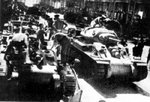
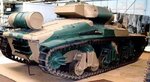
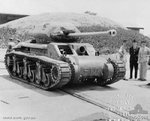
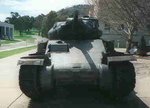
anyway for a little relief from this task, thought I might post some pics of the Sentinel series
Photo I is the Sentinel Is in production some time in early 1942. As I said, not a ptotype.....
Photo II is an ACII with long range tanks fitted. Not sure where this shot was taken, it might be at Chullora museum in Canberra
Phot III is the AC4 protype. the type was developed late 43 and tested in earlyt 1944. Was cleared for production, but never put into production
Photo IV is an AC1, modified to carry the 6 pounder. This was successfully trialled in Feb '43
All in all an intersting tank in my opinion.
anyway for a little relief from this task, thought I might post some pics of the Sentinel series
Photo I is the Sentinel Is in production some time in early 1942. As I said, not a ptotype.....
Photo II is an ACII with long range tanks fitted. Not sure where this shot was taken, it might be at Chullora museum in Canberra
Phot III is the AC4 protype. the type was developed late 43 and tested in earlyt 1944. Was cleared for production, but never put into production
Photo IV is an AC1, modified to carry the 6 pounder. This was successfully trialled in Feb '43
All in all an intersting tank in my opinion.
Attachments
parsifal
Colonel
some further evidence of backward Australian technology. Sorry folks, but this is just too much fun.....
The CA15....could have been in production by mid 1944, but we chose to go with the Mustang instead. Capable in Protype form of speeds approaching 450 mph at level speed, it would have been compettitve even against a Ta152. Guess thats just not good enough for some.........
The CA15....could have been in production by mid 1944, but we chose to go with the Mustang instead. Capable in Protype form of speeds approaching 450 mph at level speed, it would have been compettitve even against a Ta152. Guess thats just not good enough for some.........
Attachments
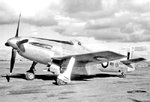
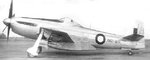
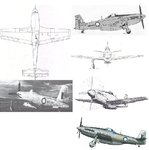
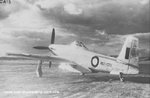
Last edited:
parsifal
Colonel
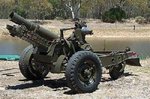
Next, the 25 pounder short
In 1942 Australian and American troops had been roughly handled by the Japanese 70mm howitzers which could be easily transported into the mountainous regions of New Guinea. By contrast our Infantry were forced to rely on mortars and a few 25 pounders that were found very difficult to deploy. The result was the baby 25 pounder, which in fact was a whole new design apart from the breech mechaism. deveoped in record time , it is a very intersting development, that turned our fortunes in the jungle right around
the Short 25-pdr gun was an Australian pack gun version of the British 25 pounder gun/howitzer, developed as a result of experience in the jungles of New Guinea indicating the need for really portable artillery. First produced in 1943, it was a shortened version of the standard 25 pounder, mounted on the Carriage 25-pdr Light, Mark 1. The "Baby 25-pdr" was intended for jungle combat and was used in Southeast Asia and the Pacific, during World War II. The gun could be towed by a light vehicle or broken down into sections, capable of pack transport.
The only resemblance to the 25pdr was the breech mechanism, recoil system, cradle and sights. The trail was simplified, wheels made smaller, and castor added to the end of the trail for easier manhandling. The shield and and platform were discarded, and a heavy spade added to anchor the gun while firing. The gun itself was drastically shortened to 46.69 inches, and a muzzle cap added, which gave a total length of 63.79 inches. Broken into 14 packs the total equipment weight was 3,015 Lbs. It could not be used with supercharge, so the maximum range was only 10,800 yards.
Damn those backward Australians, they persist in developing these useless pieces of kit...and building them ....what were they thinking
In 1942 Australian and American troops had been roughly handled by the Japanese 70mm howitzers which could be easily transported into the mountainous regions of New Guinea. By contrast our Infantry were forced to rely on mortars and a few 25 pounders that were found very difficult to deploy. The result was the baby 25 pounder, which in fact was a whole new design apart from the breech mechaism. deveoped in record time , it is a very intersting development, that turned our fortunes in the jungle right around
the Short 25-pdr gun was an Australian pack gun version of the British 25 pounder gun/howitzer, developed as a result of experience in the jungles of New Guinea indicating the need for really portable artillery. First produced in 1943, it was a shortened version of the standard 25 pounder, mounted on the Carriage 25-pdr Light, Mark 1. The "Baby 25-pdr" was intended for jungle combat and was used in Southeast Asia and the Pacific, during World War II. The gun could be towed by a light vehicle or broken down into sections, capable of pack transport.
The only resemblance to the 25pdr was the breech mechanism, recoil system, cradle and sights. The trail was simplified, wheels made smaller, and castor added to the end of the trail for easier manhandling. The shield and and platform were discarded, and a heavy spade added to anchor the gun while firing. The gun itself was drastically shortened to 46.69 inches, and a muzzle cap added, which gave a total length of 63.79 inches. Broken into 14 packs the total equipment weight was 3,015 Lbs. It could not be used with supercharge, so the maximum range was only 10,800 yards.
Damn those backward Australians, they persist in developing these useless pieces of kit...and building them ....what were they thinking
Attachments
parsifal
Colonel
These backward Australians....I dont know.
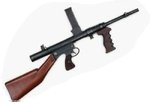
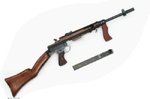
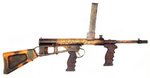
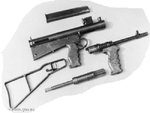
The Owen Gun
Evelyn Owen, an Australian, developed his first automatic weapon, chambered for .22LR cartridge, by 1939, and offered it to Australian army. This weapon was a strange-looking revolver-type contraption with fixed "cylinder" instead of magazine, and thumb-operated trigger. However, by 1940 Owen produced its next design, in somewhat more potent (but still relatively mild) .32ACP / 7.65x17 Browning cartridge. This was more "usual" weapon, with traditional trigger, dual pistol grips and detachable box magazine, inserted under the receiver and inclined rearward and to the left. By 1941, Owen produced several more prototypes, chambered in .45ACP, 9mm Luger and even .38 Special revolver cartridges; this work was done at Lysaghts Newcastle Works in New South Wales, Australia. 9mm prototype, made by Lysaghts, was tested against Thompson and Sten submachine guns, and found superior to both. Adopted in 1942, this gun was manufactured until 1945 in three basic versions, Mark 1-42, Mark 1-43 (or Mark 1 Wood butt), and Mark 2. About 45 000 Owen SMGs were made by Lysaghts, with further production undertaken at other small arms factories including Lithgow. Estimated overall production was about 90000. And these remained in service with Australian forces until 1960s, through World War 2, Korean and Vietnam wars. In general, these weapons were well liked by soldiers due to their robustness, reliability and simplicity. The only downside of Owen SMG was its somewhat heavy weight.
Owen submachine guns are blowback operated, top-fed weapons that fired from open bolt. Receiver is of tubular shape, with the bolt body separated from the cocking handle by the small bulkhead inside. This precluded the dirt to enter the receiver area through the cocking handle slot, but also required the barrel to be made removable, as the bolt and return spring were pulled forward out of receiver. Barrel was held in place by simple latch, located at the front of the receiver, ahead of the magazine housing. Muzzle was equipped with recoil compensator. Pistol grips were made from wood, detachable buttstock was made of steel wire on Mk.1-42 Owens and from wood on later models. Due to the top mounted magazine, fixed sights were offset to the left.
Its basoc characteristics were
Caliber: 9x19mm Luger/Para
Weight: 4.22 kg unloaded
Length: 813 mm
Barrel length: 247 mm
Rate of fire: 700 rounds per minute
Magazine capacity: 32 rounds
Effective range: 100-200 meters
PHoto images
Guess the Australians never got the memo that they were broke, or that they were backward, or that they could only build prototypes
may have done a double post, if so, my apologies
The Owen Gun
Evelyn Owen, an Australian, developed his first automatic weapon, chambered for .22LR cartridge, by 1939, and offered it to Australian army. This weapon was a strange-looking revolver-type contraption with fixed "cylinder" instead of magazine, and thumb-operated trigger. However, by 1940 Owen produced its next design, in somewhat more potent (but still relatively mild) .32ACP / 7.65x17 Browning cartridge. This was more "usual" weapon, with traditional trigger, dual pistol grips and detachable box magazine, inserted under the receiver and inclined rearward and to the left. By 1941, Owen produced several more prototypes, chambered in .45ACP, 9mm Luger and even .38 Special revolver cartridges; this work was done at Lysaghts Newcastle Works in New South Wales, Australia. 9mm prototype, made by Lysaghts, was tested against Thompson and Sten submachine guns, and found superior to both. Adopted in 1942, this gun was manufactured until 1945 in three basic versions, Mark 1-42, Mark 1-43 (or Mark 1 Wood butt), and Mark 2. About 45 000 Owen SMGs were made by Lysaghts, with further production undertaken at other small arms factories including Lithgow. Estimated overall production was about 90000. And these remained in service with Australian forces until 1960s, through World War 2, Korean and Vietnam wars. In general, these weapons were well liked by soldiers due to their robustness, reliability and simplicity. The only downside of Owen SMG was its somewhat heavy weight.
Owen submachine guns are blowback operated, top-fed weapons that fired from open bolt. Receiver is of tubular shape, with the bolt body separated from the cocking handle by the small bulkhead inside. This precluded the dirt to enter the receiver area through the cocking handle slot, but also required the barrel to be made removable, as the bolt and return spring were pulled forward out of receiver. Barrel was held in place by simple latch, located at the front of the receiver, ahead of the magazine housing. Muzzle was equipped with recoil compensator. Pistol grips were made from wood, detachable buttstock was made of steel wire on Mk.1-42 Owens and from wood on later models. Due to the top mounted magazine, fixed sights were offset to the left.
Its basoc characteristics were
Caliber: 9x19mm Luger/Para
Weight: 4.22 kg unloaded
Length: 813 mm
Barrel length: 247 mm
Rate of fire: 700 rounds per minute
Magazine capacity: 32 rounds
Effective range: 100-200 meters
PHoto images
Guess the Australians never got the memo that they were broke, or that they were backward, or that they could only build prototypes
may have done a double post, if so, my apologies
Attachments
Users who are viewing this thread
Total: 1 (members: 0, guests: 1)
Similar threads


- Replies
- 0
- Views
- 822

- Replies
- 36
- Views
- 6K
