
Aircraft of World War II - Warbird Forums


Go Back   Aircraft of World War II - Warbird Forums > World War II - Aviation > Aviation

Aviation Discussion on the aircraft of WWII.

Reply
 
LinkBack Thread Tools Display Modes
Old 11-20-2007, 11:08 AM   #1
Member
 
b17sam's Avatar
 
Join Date: Mar 2005
Location: Gainesville, Florida
Posts: 31
60 year old problem

Can anyone come up with an answer to a problem that has that has vexed me since 1944? I've had wild guesses, improbable theories, but zip that rings true.
Problem: What is the elapsed time for an 88 flak shell to rise to 25000 feet? Educated guesses accepted.
__________________
35 missions on B-17 from 9Sept44 (Ludwigshafen) to 3Feb45 (Berlin)
http://www.b17sam.com
b17sam is offline  
Digg this Post!Add Post to del.icio.usBookmark Post in TechnoratiFurl this Post!Spurl this Post!Reddit! Wong this Post!
Reply With Quote
Old 11-20-2007, 11:49 AM   #2
Senior Member
 
Join Date: Oct 2006
Posts: 1,765
Hi B17sam,

>Problem: What is the elapsed time for an 88 flak shell to rise to 25000 feet? Educated guesses accepted.

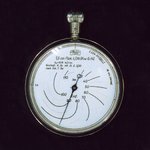
I have no definite answer for you, but here is an interesting picture of a stop watch that in my opinion might have been used to time and cross-check projectile flight times and altitudes.

http://www.museumofworldwarii.com/Im...hometerlge.gif

The numbers are distance in hm (hectometer), so the scale reads from 2 to 11 km.

The interval between the individual numbers increases because the projectile slows down and needs more time to cover the kilometer from 10 to 11 km than the one from 2 to 3 km.

The curved lines mean that there time to target should be indexed with a second variable, and the reading not be taken on the inside at the numbers, but at a defined distance out of the centre.

The curvature indicates that towards the rim, the projectiles slow quicker. That could indicate that the second variable was barrel elevation, as shooting straight up obviously will make the projectile slow down quicker than shooting it in a flat trajectory.

I don't know why there's a second scale - I could speculate it was etched into the glass, and the watch has a replacement glass lacking this scale. No idea!

I can't figure out the purpose of this device, either. I'd say it was for determining burst distance from observation of the projectiles and reading the elevation scale on the gun.

However, the first step in flak shooting probably is range estimation, so the variable this watch could establish should already be established (with greater precision) anyway.

Not that I have any idea of flak artillery procedures!

Regards,

Henning (HoHun)
Attached Images
File Type: jpg 03_Tachometer_lge.jpg (126.5 KB, 130 views)
HoHun is offline  
Digg this Post!Add Post to del.icio.usBookmark Post in TechnoratiFurl this Post!Spurl this Post!Reddit! Wong this Post!
Reply With Quote
Old 11-20-2007, 04:41 PM   #3
Senior Member
 
Aussie1001's Avatar
 
Join Date: Jul 2007
Location: Queensland- Australia
Posts: 917
Send a message via MSN to Aussie1001 Send a message via Skype™ to Aussie1001
would the speed = distance over time be of any use ?
can modify to equal time = distance over speed i think any way might be speed over distance though....
__________________


98% Of teens surround their minds with rap. If you're part of the 2% that stayed with rock, put this on your signature

I am also one of the 2% who does not own a myspace account....
DEFY THE SYSTEM
Aussie1001 is offline  
Digg this Post!Add Post to del.icio.usBookmark Post in TechnoratiFurl this Post!Spurl this Post!Reddit! Wong this Post!
Reply With Quote
Old 11-20-2007, 04:50 PM   #4
Senior Member
 
ToughOmbre's Avatar
 
Join Date: Mar 2007
Location: Jersey Shore
Posts: 3,534
Wouldn't you just divide the altitude (in this case 25,000 ft) by the muzzle velocity (in fps) of the 88 in question, taking into consideration the type of ordnance used? Or are there other laws of physics involved

TO
__________________


“Let's get Enterprise and Hornet turned into the wind."
ToughOmbre is online now  
Digg this Post!Add Post to del.icio.usBookmark Post in TechnoratiFurl this Post!Spurl this Post!Reddit! Wong this Post!
Reply With Quote
Old 11-20-2007, 05:17 PM   #5
Senior Member
 
Join Date: Jul 2004
Posts: 215
Well, you'd want to compensate for the cumulative effect of gravity - can't remember how many m/s^2 that is though.

I actually used to be able to do ballistics - mark of a mis-spent middle age.
mhuxt is offline  
Digg this Post!Add Post to del.icio.usBookmark Post in TechnoratiFurl this Post!Spurl this Post!Reddit! Wong this Post!
Reply With Quote
Old 11-20-2007, 05:32 PM   #6
Senior Member
 
Join Date: Oct 2006
Posts: 1,765
Hi ToughOmbre,

>Or are there other laws of physics involved

Gravity And air resistance, which always makes the problem much more complicated.

I have re-checked my thoughts on the above stop watch (which I posted on another forum a while back), and think my time-to-height explanation makes no sense. I guess the watch is meant for checking oblique shots, and the proposed additional variable would probably be something like elevation angle.

I can work out the gravity bit, but not the air resistance:

Purely vertical shot, 7.5 cm Flak gun, 616 m/s muzzle velocity, air resistance neglected, read "," as decimal point:

Height - Time

1000 m - 1,6 s
2000 m - 3,3 s
3000 m - 5,1 s
4000 m - 6,9 s
5000 m - 8,7 s
6000 m - 10,6 s
7000 m - 12,6 s
8000 m - 14,7 s
9000 m - 16,9 s
10000 m - 19,2 s
11000 m - 21,6 s
12000 m - 24,1 s
13000 m - 26,8 s
14000 m - 29,8 s
15000 m - 33 s

In reality, the 7.5 cm gun is not going to shoot to that height, and the heights it does reach will be reached only in a longer time.

Shooting obliquely will of course also affect flight times since the distance the projectile has to travel until it reaches a certain altitude will be longer.

Note that the flight times under perfect conditions are longer than the 18 s for 360° time the above stop watch takes, and yet there are 100 hm marked on the dial - it can't be altitude!

Regards,

Henning (HoHun)

Last edited by HoHun; 11-20-2007 at 05:33 PM. Reason: 10 km = 100 hm
HoHun is offline  
Digg this Post!Add Post to del.icio.usBookmark Post in TechnoratiFurl this Post!Spurl this Post!Reddit! Wong this Post!
Reply With Quote
Old 11-20-2007, 05:35 PM   #7
Senior Member
 
Join Date: Jan 2007
Location: Montrose, Colorado
Posts: 3,525
The muzzle velocity is, I believe, about 3000 fps but of course the projectile starts slowing down as soon as it leaves the muzzle. If the projectile maintains it's muzzle velocity(which it won't) it would take slightly more that 8 sec to get to 25000 feet. This is only a guess but I am going to say it will take sightly more than 20 sec to reach 25000 feet and will have a velicity of less than 800 fps at that altitude.
renrich is offline  
Digg this Post!Add Post to del.icio.usBookmark Post in TechnoratiFurl this Post!Spurl this Post!Reddit! Wong this Post!
Reply With Quote
Old 11-20-2007, 05:40 PM   #8
Senior Member
 
Join Date: Jul 2004
Posts: 215
Nope, not going to attempt it - air drag has to be fairly significant if the shell can only go to 30-odd k.

Has to be longer than 10 seconds to get to 25k feet though.

Last edited by mhuxt; 11-20-2007 at 05:44 PM.
mhuxt is offline  
Digg this Post!Add Post to del.icio.usBookmark Post in TechnoratiFurl this Post!Spurl this Post!Reddit! Wong this Post!
Reply With Quote
Old 11-20-2007, 05:48 PM   #9
Senior Member
 
Join Date: Jul 2004
Posts: 215
Oh hell, had originally posted that HoHun would spank me with better math. Heheheh here's the offering I edited out:

Info In the anti-aircraft role it fired a 20.3-pound shell at a muzzle velocity of 2,600 ft/s to an effective ceiling of 26,000 feet (at maximum 32,000 ft, 10,600 m).
Gravity -9.8 m/s^2
Feet/metre 1 feet = 0.304 8 meter
MuzzVel 822.96 m
Tgt Alt 7620 m


Second Velocity Alt
0 792 0
1 783 792
2 773 1575
3 763 2348
4 753 3111
5 743 3864
6 734 4608
7 724 5342
8 714 6065
9 704 6780
10 694 7484
11 685 8178


So I thought something around 10 seconds, but that's clearly wrong. The shell is still shown to be going 700 m/s at that point. However, if it can only go another 7,000 feet (~2,100 m), it must in reality be travelling far more slowly. Air resistance.

Bugga.

Last edited by mhuxt; 11-20-2007 at 05:52 PM.
mhuxt is offline  
Digg this Post!Add Post to del.icio.usBookmark Post in TechnoratiFurl this Post!Spurl this Post!Reddit! Wong this Post!
Reply With Quote
Old 11-20-2007, 06:04 PM   #10
Senior Member
 
drgondog's Avatar
 
Join Date: Jun 2006
Location: oregon
Posts: 4,198
Quote:
Originally Posted by mhuxt View Post
Well, you'd want to compensate for the cumulative effect of gravity - can't remember how many m/s^2 that is though.

I actually used to be able to do ballistics - mark of a mis-spent middle age.
If you know the Ballistic coefficient of the 88mm round, and the muzzle velocity - and assume shortest time to 25,000 feet is a vertical (90degree) shot, you can calculate the drag combined with gravitational acceleration for 'slowing forces' and plot velocity loss from muzzle as a function of heighth.

When you gradually angle the gun toward horizon, the gravity contribution as a retarding force is a SIN function where the value of zero degrees from vertical is 1.00 and 90 degrees (level shot) is Zero.

In other words gravity has no effect on drag for a level shot.

Having said that I don't have the data
drgondog is offline  
Digg this Post!Add Post to del.icio.usBookmark Post in TechnoratiFurl this Post!Spurl this Post!Reddit! Wong this Post!
Reply With Quote
Old 11-20-2007, 06:07 PM   #11
Senior Member
 
Join Date: Jul 2004
Posts: 215
"And he puzzled three hours
'til his puzzler was sore.
Then the Grinch thought of something
he hadn't before."

I don't have the ballistic coefficient, but as dragondog says, there must be a way to "back out" the drag effect, if we know the shell can only get to 32,000 feet, at which point its velocity would be zero.

Mnnnnnnnnnnnoooooooougggggggggggghhhh this is gonna hurt...
mhuxt is offline  
Digg this Post!Add Post to del.icio.usBookmark Post in TechnoratiFurl this Post!Spurl this Post!Reddit! Wong this Post!
Reply With Quote
Old 11-20-2007, 06:34 PM   #12
Senior Member
 
drgondog's Avatar
 
Join Date: Jun 2006
Location: oregon
Posts: 4,198
Quote:
Originally Posted by mhuxt View Post
Well, you'd want to compensate for the cumulative effect of gravity - can't remember how many m/s^2 that is though.

I actually used to be able to do ballistics - mark of a mis-spent middle age.
a= g = 32 feet per second per second..
drgondog is offline  
Digg this Post!Add Post to del.icio.usBookmark Post in TechnoratiFurl this Post!Spurl this Post!Reddit! Wong this Post!
Reply With Quote
Old 11-20-2007, 06:39 PM   #13
Senior Member
 
Join Date: Jul 2004
Posts: 215
Hey man, I've been metric since 1974.

9.8 m/s/s or 9.8m/s^2
mhuxt is offline  
Digg this Post!Add Post to del.icio.usBookmark Post in TechnoratiFurl this Post!Spurl this Post!Reddit! Wong this Post!
Reply With Quote
Old 11-20-2007, 06:46 PM   #14
Senior Member
 
Join Date: Jul 2004
Posts: 215
meh

trying to solve

Vtime=Vlauch-gravity*time

When I only know Vtime and Vlaunch (with gravity being equal to gravity and drag)

I knew this would hurt.

Well, so far as I can see, I have to add -56.2 m/s^2 to get a shell launched at 792m/s to be at 0m/s at 9,500m, instead of at 675m/s.

Last edited by mhuxt; 11-20-2007 at 06:48 PM.
mhuxt is offline  
Digg this Post!Add Post to del.icio.usBookmark Post in TechnoratiFurl this Post!Spurl this Post!Reddit! Wong this Post!
Reply With Quote
Old 11-20-2007, 06:48 PM   #15
Senior Member
 
Join Date: Oct 2006
Posts: 1,765
Hi B17sam,

>Problem: What is the elapsed time for an 88 flak shell to rise to 25000 feet?

Here is a pretty good site with a lot of information on Flak:

FLAK Geschütze - Flugabwehrkanone

(It's in German, but follow the blue links, and you'll find actual wartime reports with a lot of drawings and diagrams for which you don't need to understand German.)

This page has drawings of a Flak fuse:

Aktiver Luftschutz bekannt unter der Bezeichnung FLAK - Flugabwehrkanonen Eruierung der Flak in Bochum

The fuses would detonate the projectile before it could reach the highest point of its trajectory - probably because it got so slow up there that hitting was impossible anyway

The average amount of rounds necessary for one kill in WW2:

8.8 cm Flak 36/37: 16000 rounds
8.8 cm Flak 41: 8500 rounds
10.5 cm Flak 39: 6000 rounds
12.8 cm Flak 40: 3000 rounds

(From "Die schwere Flak" by Werner Müller)

Regards,

Henning (HoHun)
HoHun is offline  
Digg this Post!Add Post to del.icio.usBookmark Post in TechnoratiFurl this Post!Spurl this Post!Reddit! Wong this Post!
Reply With Quote
Reply


Thread Tools
Display Modes

Posting Rules
You may not post new threads
You may not post replies
You may not post attachments
You may not edit your posts

BB code is On
Smilies are On
[IMG] code is On
HTML code is Off
Trackbacks are On
Pingbacks are On
Refbacks are On


All times are GMT -5. The time now is 01:34 PM.
Powered by vBulletin
Copyright ©2000 - 2010, Jelsoft Enterprises Ltd.
Content Relevant URLs by vBSEO 3.3.2
Ad Management plugin by RedTyger
Design by HTWoRKS


1 2 3 4 5 6 7 8 9 10 11 12 13 14 15 16 17 18 19 20 21 22 23 24 25 26 27 28 29 30 31 32 33 34 35 36 37 38 39 40 41 42 43 44 45 46 47 48 49 50 51 52 53 54 55 56 57 58 59 60 61 62 63 64 65 66 67 68 69 70 71 72 73 74 75 76 77 78 79 80 81 82 83 84 85 86 87 88 89 90 91 92 93 94 95 96 97 98 99 100 101 102 103 104 105 106 107 108 109 110 111 112 113 114 115 116 117 118 119 120 121 122 123 124 125