ADS NOT DISPLAYED TO REGISTERED USERS.
+ Reply to Thread
Page 1 of 3 1 2 3 LastLast
Results 1 to 15 of 33
Like Tree1Likes

USAAC: Pre-war aircrafts

Between the wars 1918-1939 Discuss USAAC: Pre-war aircrafts in the Other Eras forums; he Air Service had a brief but turbulent history. Created during World War I by executive order, it gained permanent ...

  1. #1
    Senior Member gekho's Avatar
    Join Date
    Jan 2010
    Location
    Spain
    Posts
    2,815
    Country
    Spain

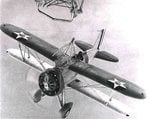
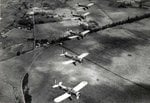
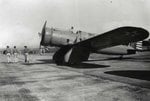
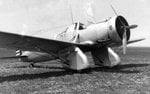
    USAAC: Pre-war aircrafts

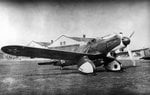
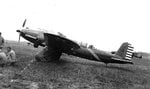
    he Air Service had a brief but turbulent history. Created during World War I by executive order, it gained permanent legislative authority in 1920 as a combatant arm of the line of the United States Army. There followed a six-year struggle between adherents of airpower and the supporters of the traditional military services about the value of an independent Air Force, intensified by struggles for funds caused by skimpy budgets, as much an impetus for independence as any other factor. The Lassiter Board, a group of General Staff officers, recommended in 1923 that the Air Service be augmented by an offensive force of bombardment and pursuit units under the command of Army general headquarters in time of war, and many of its recommendations became Army regulations. The War Department desired to implement the Lassiter Board's recommendations, but the administration of President Calvin Coolidge chose instead to economize by radically cutting military budgets, particularly the Army's. The Lampert Committee of the House of Representatives in December 1925 proposed a unified air force independent of the Army and Navy, plus a department of defense to coordinate the three armed services. However another board, headed by Dwight Morrow, was appointed in September 1925 by Coolidge ostensibly to study the "best means of developing and applying aircraft in national defense" but in actuality to minimize the political impact of the pending court-martial of Billy Mitchell (and to preempt the findings of the Lampert Committee). It declared that no threat of air attack was likely to exist to the United States, rejected the idea of a department of defense and a separate department of air, and recommended only minor reforms that included renaming the Air Service to allow it more prestige.

    In early 1926 the Military Affairs Committee of the Congress rejected all bills set forth before it on both sides of the issue. They fashioned a compromise in which the findings of the Morrow Board were enacted as law, while providing the air arm a "five-year plan" for expansion and development. Maj. Gen. Mason Patrick, the Chief of Air Service, had proposed that it be made a semi-independent service within the War Department along the lines of the Marine Corps within the Navy Department, but this was rejected; only the cosmetic name change was accepted. The legislation changed the name of the Air Service to the Air Corps, "thereby strengthening the conception of military aviation as an offensive, striking arm rather than an auxiliary service."

    The Air Corps Act (44 Stat. 780) became law on 2 July 1926. In accordance with the Morrow Board's recommendations, the act created an additional Assistant Secretary of War to "help foster military aeronautics", and established an air section in each division of the General Staff for a period of three years. Two additional brigadier generals would serve as assistant chiefs of the Air Corps. Previous provisions of the National Defense Act of 1920 that all flying units be commanded only by rated personnel and that flight pay be awarded were continued. The Air Corps also retained the "Prop and Wings" as its branch insignia through its disestablishment in 1947. Patrick became Chief of the Air Corps and Brig. Gen. James E. Fechet continued as his first assistant chief. On 17 July 1926, two lieutenant colonels were promoted to brigadier general for four-year terms as assistant chiefs of Air Corps: Frank P. Lahm, to command the new Air Corps Training Center, and William E. Gillmore, in command of the Materiel Division. The position of the air arm within the Department of War remained essentially the same as before, that is, the flying units were under the operational control of the various ground forces corps area commands and not the Air Corps, which remained responsible only for procurement of aircraft, maintenance of bases, supply, and training. Because of a lack of legally specified duties and responsibilities, the new position of Assistant Secretary of War for Air, held by F. Trubee Davison from July 1926 to March 1933, proved of little help in promoting autonomy for the air arm.


    The Air Corps Act gave authorization to carry out a five-year expansion program. However, the lack of funding caused the beginning of the five-year expansion program to be delayed until 1 July 1927. Gen. Patrick proposed an increase to 63 tactical squadrons (from an existing 32) to maintain the program of the Lassiter Board already in effect, but Chief of Staff Gen. John Hines rejected the recommendation in favor of a plan drawn up by ground force Brig. Gen. Hugh Drum that proposed 52 squadrons. The act authorized expansion to 1,800 airplanes, 1,650 officers, and 15,000 enlisted men, to be reached in regular increments over a five-year period. None of the goals were reached by the end of five years, and neither of the modest increases in airplanes or officers was reached until 1938, because adequate funds were never appropriated in the budget, and the coming of the Great Depression forced reductions in pay and modernization across the board in the Army. Organizationally the Air Corps doubled from seven to fifteen groups, but all were seriously understrength in aircraft and pilots. As units of the Air Corps increased in number, so did higher command echelons. The 2nd Wing, activated in 1922 as part of the Air Service, remained the only wing organization in the new Air Corps until 1929, when it was redesignated the 2nd Bombardment Wing in anticipation of the activation of the 1st Bombardment Wing to provide a bombardment wing on each coast. The 1st Bomb Wing was activated in 1931, followed by the 3rd Attack Wing in 1932 to protect the Mexican border, at which time the 1st became the 1st Pursuit Wing. The three wings became the foundation of General Headquarters Air Force upon its activation in 1935.
  2. #2
    Senior Member gekho's Avatar
    Join Date
    Jan 2010
    Location
    Spain
    Posts
    2,815
    Country
    Spain
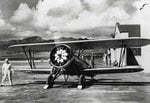
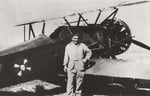
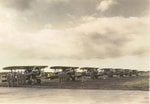
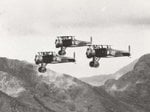
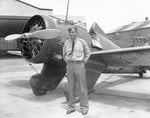
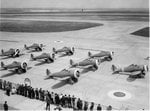
    In 1927 the Air Corps adopted a new color scheme for painting its aircraft, heretofore painted olive drab. The wings and tails of aircraft were painted chrome yellow, with the words "U.S. ARMY" displayed in large black lettering on the undersurface of the lower wings. Tail rudders were painted with a vertical dark blue band at the rudder hinge and 13 alternating red-and-white horizontal stripes trailing. In the early 1930s the painting of fuselages olive drab was changed to blue, and this motif continued until late 1937, when all new aircraft (now all-metal) were left unpainted except for national markings. Most pursuit fighters before 1935 were of the Curtiss P-1 Hawk (1926–1930) and Boeing P-12 (1929–1935) families, and before the 1934 introduction of the all-metal monoplane, most front-line bombers were canvas-and-wood variants of the radial engined Keystone LB-6 (60 LB-5A, LB-6 and LB-7 bombers) and B-3A (127 B-3A, B-4A, B-5, and B-6A bombers) designs.[n 5] Between 1927 and 1934, the Curtiss O-1 was the most numerous of the 19 different types and series of observation craft and its A-3 variant the most numerous of the attack planes that fulfilled the observation/close support role designated by the General Staff as the primary mission of the Air Corps.

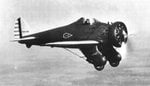
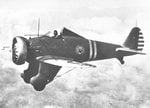
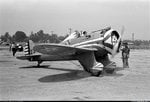
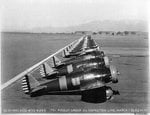
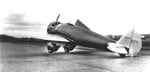
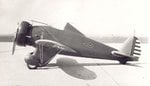
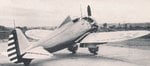
    Transport aircraft of the first ten years of the Air Corps were of largely trimotor design, such as the Atlantic-Fokker C-2 and the Ford C-3, and were procured in such small numbers (66 total) that they were doled out one airplane to a base. As their numbers and utility declined, they were replaced by a series of 50 twin-engine and single-engine small transports, and used for staff duties. Pilot training was conducted between 1927 and 1937 in the Consolidated PT-3 trainer, followed by the Stearman PT-13 and variants after 1937. By 1933 the Air Corps expanded to a tactical strength of 50 squadrons: 21 pursuit, 13 observation, 12 bombardment, and 4 attack. All were understrength in aircraft and men, particularly officers, which resulted in most being commanded by junior officers instead of by majors as authorized. The last open-cockpit fighter used by the USAAC, the P-26, came into service in 1933 and bridged the gap between the biplane and more modern fighters.

    The Air Corps was called upon in early 1934 to deliver the mail in the wake of the Air Mail scandal, involving the postmaster general and heads of the airlines. Despite an embarrassing performance that resulted in a number of crashes and 12 fatalities, the investigating boards that followed recommended organizational and modernization changes that again set the Air Corps on the path to autonomy and eventual separation from the Army. A force of 2,320 aircraft was recommended by one board, and authorized by Congress in June 1936, but appropriations to build up the force were denied by the administration until 1939, when the probability of war became apparent. Instead, the Air Corps inventory actually declined to 855 total aircraft in 1936, a year after the creation of GHQ Air Force, which by itself was recommended to have a strength of 980.

    Source: United States Army Air Corps - Wikipedia, the free encyclopedia

  3. #3
    Senior Member gekho's Avatar
    Join Date
    Jan 2010
    Location
    Spain
    Posts
    2,815
    Country
    Spain

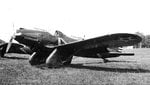
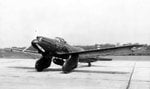
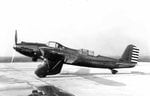
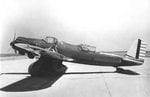
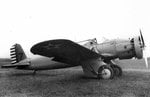
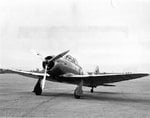
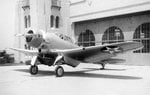
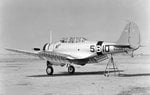
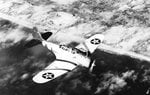
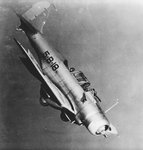
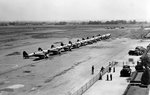
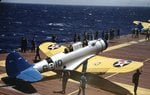
    Curtiss A-8

    The XA-8 won a competition against the General Aviation/Fokker XA-7, after which 13 service test aircraft were ordered (five as YA-8s and eight as Y1A-8s). After the completion of testing, 11 of these aircraft were redesignated A-8. The A-8 was the first Curtiss machine of all-metal low-wing monoplane configuration with advanced features such as automatic leading edge slats and trailing-edge flaps. Four forward-firing .30 in (7.62 mm) machine guns were mounted in the wheel fairings, and an additional weapon of the same calibre was fitted in the observer's cockpit for rear defense. The standard bomb load was four 100 lb (45 kg) bombs. One YA-8 was fitted with a radial engine and designated YA-10, while another was used for testing of the Curtiss V-1570 Conqueror engine as the Y1A-8A. This aircraft was redesignated A-8 upon the completion of testing. 46 aircraft were ordered as A-8Bs, however the order was changed to the Model 60 A-12s before production began. The A-8 created a sensation in US aviation circles when it went into service with the 3rd Attack Group at Fort Crockett, Texas in April 1932. All other standard aircraft were of biplane configuration, and the first monoplane fighter (the Boeing P-26A) did not become operational until eight months later.
    Attached Thumbnails Attached Thumbnails USAAC: Pre-war aircrafts-curtiss-8-001.jpg   USAAC: Pre-war aircrafts-curtiss-8-002.jpg  

    USAAC: Pre-war aircrafts-curtiss-8-003.jpg   USAAC: Pre-war aircrafts-curtiss-xa-8.jpg  

    USAAC: Pre-war aircrafts-curtiss-y1a-8a.jpg   USAAC: Pre-war aircrafts-curtiss-y1a-18.jpg  

    Last edited by gekho; 05-02-2012 at 11:02 AM.

  4. #4
    Senior Member gekho's Avatar
    Join Date
    Jan 2010
    Location
    Spain
    Posts
    2,815
    Country
    Spain

    Curtiss YA-10 Shrike

    The Curtiss YA-10 Shrike was the first YA-8 fitted with a Pratt & Whitney R-1690-9 (R-1690D) Hornet radial engine. The conversion was done in September 1932, and it was found that the aircraft's performance was not degraded by the change of engine, and low-level maneuverability was improved due to lower mass moment of inertia with the short radial engine. The USAAC preferred radials to inline engines for the ground attack role, due to the vulnerability of the latter's cooling system to anti-aircraft fire. The US Navy preferred radials for carrier-borne operations. Upon completion of testing the Army changed an order for 46 A-8B aircraft to the production version of the YA-10, the A-12 Shrike. Following completion of testing, the YA-10 was assigned to the 3rd Attack Group for operational service, then in 1934 it was assigned to the Command and General Staff School. The YA-10 was scrapped in early 1939.The XS2C-1 was the Navy's first two-seat warplane. Since it was not equipped for carrier operations, it remained a prototype.
    Attached Thumbnails Attached Thumbnails USAAC: Pre-war aircrafts-curtiss-ya-10.jpg  

  5. #5
    Senior Member gekho's Avatar
    Join Date
    Jan 2010
    Location
    Spain
    Posts
    2,815
    Country
    Spain

    Morane-Saulnier M.S.234

    The Morane-Saulnier M.S.234 was the designation given to three civil versions of the M.S.230 parasol wing trainer. Two were built from new as M.S.234s and were powered by a 250hp Hispano-Suiza 9Qa engine. One of these aircraft was bought for the US Ambassador to Paris. The third M.S.234 began live as a M.S.130. It was then turned into a racing aircraft, with a Hispano-Suiza 9Qb engine with NACA cowling and was usinged in the 1931 Coupe Michelin air race. In 1933 this aircraft was given a 9Qa engine and was redesignated as the M.S.234 No.2. The aircraft was used by Michel Detroyat for aerobatics displays in the United States and France from then until 1938.
    Attached Thumbnails Attached Thumbnails USAAC: Pre-war aircrafts-ms234.dijon1932.jpg  

  6. #6
    Senior Member gekho's Avatar
    Join Date
    Jan 2010
    Location
    Spain
    Posts
    2,815
    Country
    Spain

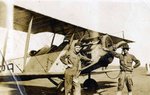
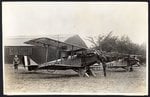
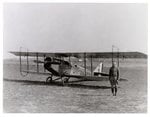
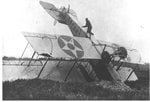
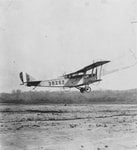
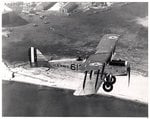
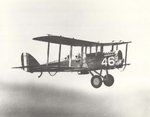
    Curtiss JN-4 Jenny

    The popular Curtiss JN-4 Jenny is a two-seat trainer that was used during World War I on both sides of the Atlantic in large numbers and became one of the best known airplanes ever to be built..The nickname "Jenny" derived from the designation and applies collectively to all variants, although it most often conjures up a picture of the JN-4 models, of which more than 6,440 were built. The "Jenny" originated in England, where B.D. Thomas of the Sopwith Company drew up a design known as the Type J to a Curtiss specification. This was later blended in America, with the Curtiss's own Type N, the resultant prototype being known as the JN. First production model was the JN-2, the small number produced including 10 for the U.S. Army. Just over 100 examples followed of the improved JH-3, most of these were for the R.N.A.S., which received 97.
    The JN-4 series appeared in 1916 and its most significant difference from earlier "Jennies" was the replacement of the former "Derperdussin" method (of separate controls for the rudder and elevators) by a single stick control. These changes were made at the request of the British Authorities. The Jenny JN-4D was a slow aircraft, equipped with a 90-horsepower Curtiss OX-5 engine, while the JN-4H version had a 150-horsepower Wright-Hispano engine. Depending on the source for the statistics, the maximum speed of the Jenny was 75 m.p.h. (120 km/h), the service ceiling was 11,000 ft. (3,353 m), and it had a range of 268 miles (431 km).

    Source: Curtis JN-4 "Jenny"
    Attached Thumbnails Attached Thumbnails USAAC: Pre-war aircrafts-curtiss-jn-4-jenny-001.jpg   USAAC: Pre-war aircrafts-curtiss-jn-4-jenny-002.jpg  

    USAAC: Pre-war aircrafts-curtiss-jn-4-jenny-003.jpg   USAAC: Pre-war aircrafts-curtiss-jn-4-jenny-004.jpg  

    USAAC: Pre-war aircrafts-curtiss-jn-4-jenny-005.jpg  

  7. #7
    Senior Member vikingBerserker's Avatar
    Join Date
    Apr 2009
    Location
    South Carolina
    Posts
    17,013
    Country
    United States
    Another awesome thread, well done!

  8. #8
    Senior Member herman1rg's Avatar
    Join Date
    Dec 2008
    Posts
    688
    Country
    United Kingdom
    Quote Originally Posted by gekho View Post
    The XA-8 won a competition against the General Aviation/Fokker XA-7, after which 13 service test aircraft were ordered (five as YA-8s and eight as Y1A-8s). After the completion of testing, 11 of these aircraft were redesignated A-8. The A-8 was the first Curtiss machine of all-metal low-wing monoplane configuration with advanced features such as automatic leading edge slats and trailing-edge flaps. Four forward-firing .30 in (7.62 mm) machine guns were mounted in the wheel fairings, and an additional weapon of the same calibre was fitted in the observer's cockpit for rear defense. The standard bomb load was four 100 lb (45 kg) bombs. One YA-8 was fitted with a radial engine and designated YA-10, while another was used for testing of the Curtiss V-1570 Conqueror engine as the Y1A-8A. This aircraft was redesignated A-8 upon the completion of testing. 46 aircraft were ordered as A-8Bs, however the order was changed to the Model 60 A-12s before production began. The A-8 created a sensation in US aviation circles when it went into service with the 3rd Attack Group at Fort Crockett, Texas in April 1932. All other standard aircraft were of biplane configuration, and the first monoplane fighter (the Boeing P-26A) did not become operational until eight months later.
    Seems it wasn't just the French that built ugly aircraft!


    Hawker Hurricane as flown by Douglas Bader when in command of 242 Squadron RAF

  9. #9
    Senior Member gumbyk's Avatar
    Join Date
    Apr 2009
    Location
    Blenheim
    Posts
    763
    Country
    New Zealand
    Whats wrong with the A-8? I thought it was a fairly good-looking plane, for the era.
    The need for adventure is intrinsic in human beings. We need it. If we don't have it we will not develop as a species and will die.

  10. #10
    Senior Member gekho's Avatar
    Join Date
    Jan 2010
    Location
    Spain
    Posts
    2,815
    Country
    Spain

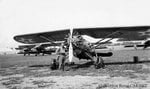
    Curtiss P-1 Hawk

    On 7 March 1925, Curtiss was awarded a contract for 15 production examples of the XPW-8B as the P-1, this being the first fighter to which the company assigned the name Hawk. Externally similar to the XPW-8B, the P-1 was of mixed construction with wooden wings and steel-tube fuselage with fabric skinning, and was powered by a 435hp Curtiss V-1150-1 12-cylinder water-cooled engine. The final five aircraft were completed as P-2s, three of these later being converted to P-1A standards. Follow-on contracts were placed on 9 September 1925 for 25 P-1As (which had a 7.62cm longer fuselage); on 17 August 1926 for 25 P-1Bs (with V-1150-3 engine, larger wheels and modified radiator), and on 3 October 1928 for 33 P-1Cs (with wheel brakes). All these sub-types carried an armament of two 7.62mm guns. In the meantime, the USAAC had ordered advanced trainers utilising the same airframe, these comprising 35 AT-4s (180hp Wright V-720), five AT-5s and 31 AT-5As (220hp Wright R-790), and, in 1929, these were re-engined with the V-1150-3, all 35 AT-4s becoming P-1Ds and four AT-5s and 24 AT-5As becoming P-1Es and P-1Fs respectively. These conversions were essentially similar to the P-1B apart from having only one gun. Four P-1s were supplied to Bolivia, one P-1A went to Japan, and eight P-1As and eight P-1Bs were supplied to Chile.
    Attached Thumbnails Attached Thumbnails USAAC: Pre-war aircrafts-curtiss-p-1-hawk.jpg  

  11. #11
    Senior Member gekho's Avatar
    Join Date
    Jan 2010
    Location
    Spain
    Posts
    2,815
    Country
    Spain

    Curtiss O-1 Falcon

    The first Curtiss biplane to bear the name Falcon was the Liberty-powered Curtiss L-113 (Model 37) which appeared in 1924. It was unsuccessful when evaluated as the XO-1 in competition with the Douglas XO-2 but was accepted for production the following year when re-engined with a 380kW Packard 1A-1500. It was a conventional unequal-span biplane with a wing of wooden construction that incorporated considerable sweep-back on the outer panels of the upper wing. The fuselage showed innovation, being built up from aluminium tubing with steel tie-rod bracing, and the tail unit included a balanced rudder; the sturdy fixed divided landing gear was of tailskid type.

    The new biplane went into production as the O-1 (Model 37A) for observation duties with the US Army. The initial order was for 10 aircraft re-engined with a Curtiss D-12. One of these was completed later as the O-1A with a Liberty engine, and the first O-1 was converted to O-1 Special configuration as a VIP transport. Forty-five examples of the O-1B (Model 37B) were ordered in 1927, this first major production version incorporating such refinements as wheel brakes and an underbelly auxiliary fuel tank which could be jettisoned in flight. They were followed by four O-1C aircraft, part of the O-1B order, converted to serve as VIP transports by enlargement of the rear cockpit and the addition of a baggage compartment. (The designation O-1D was not used).

    In 1929 the US Army ordered 41 of the O-1E (Model 37I) with V-1150E engines developed from the original Curtiss D-12. A number of other improvements included the introduction of oleo-pneumatic shock-absorbers and horn balanced elevators. One O-1E was modified subsequently as a VIP transport becoming redesignated O-1F (Model 37J). The XO-1G (Model 38) replacing the twin Lewis guns on a Scarff mounting that equipped the earlier models by a single gun on a post mounting. Other modifications introduced redesigned horizontal tail surfaces and a steerable tailwheel. The XO-1G was originally an O-1E which had been modified previously to contend as a new US Army basic trainer under the designation XBT-4 (Model 46). Successful tests led to construction of 30 series examples of the O-1G, bringing total O-1 production for the US Army to 127. The O-1 Falcon and its variants saw a decade of service with the observation squadrons of the US Army Air Corps and ended their days with reserve National Guard units. The basic design was adapted also as the A-3 attack biplane which saw considerable use. There were also export versions and a number of commercial Falcons. The basic design proved tough and workmanlike, but its dedication to a variety of less glamorous military and civil roles prevented it from achieving the renown of the contemporary Hawk fighter family.
    Attached Thumbnails Attached Thumbnails USAAC: Pre-war aircrafts-curtiss-0-1.jpg  

  12. #12
    Senior Member gekho's Avatar
    Join Date
    Jan 2010
    Location
    Spain
    Posts
    2,815
    Country
    Spain

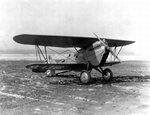
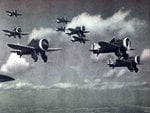
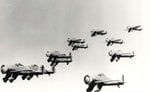
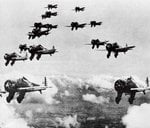
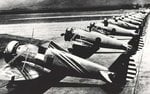
    Boeing P-12

    Developed by the Boeing Aircraft Co. at its own expense, the P-12 was became one of the most successful American fighters produced between the World Wars. Flown by both the Army and the Navy (as the F4B), the P-12 series consisted of an initial version and five additional models, B through F. The early versions used fabric-covered fuselages of bolted aluminum tubing, but the P-12E and F fuselages employed an all-metal, semimonocoque (stressed skin) construction. However, the P-12 did not complete the evolution into an all-metal aircraft because all variants had wooden wings with fabric covering. The U.S. Army Air Corps received its first P-12 in February 1929 and the last P-12F in May 1932. The last of the biplane fighters flown by the Army, some P-12s remained in service until 1941. Boeing produced 366 P-12s for the Army, with more P-12Es built (110) than any other series.

    Source: Factsheets : Boeing P-12E
    For more pics: Boeing P-12/F4b - Holcomb's Aerodrome
    Attached Thumbnails Attached Thumbnails USAAC: Pre-war aircrafts-boeing-p-12-001.jpg   USAAC: Pre-war aircrafts-boeing-p-12-002.jpg  

    USAAC: Pre-war aircrafts-boeing-p-12-003.jpg   USAAC: Pre-war aircrafts-boeing-p-12-004.jpg  

    USAAC: Pre-war aircrafts-boeing-p-12-005.jpg   USAAC: Pre-war aircrafts-boeing-p-12-006.jpg  

    USAAC: Pre-war aircrafts-boeing-p-12-007.jpg  

  13. #13
    Senior Member gekho's Avatar
    Join Date
    Jan 2010
    Location
    Spain
    Posts
    2,815
    Country
    Spain

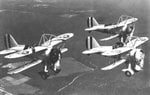
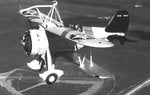
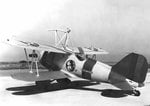
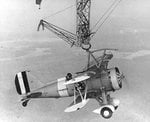
    Curtiss F-9 Sparrowhawk

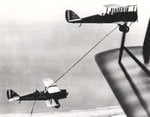
    0perating from U.S. Navy airships during the early 1930s, diminutive Curtiss F9C-2 Sparrowhawks tested one of the more imaginative ideas in aviation history. Deployed with the USS Akron and Macon, they turned these airships into flying aircraft carriers. The airplanes, which could be released and recovered in flight, were to be used for attack, for defense of the airships, and to greatly increase search range for the Navy's giant, helium-filled dirigibles.

    Eight Sparrowhawks were produced for this purpose. The first arrived at Lakehurst Naval Air Station, New Jersey, in June 1932, and experimental trials with airship-based fighter support were brief. The Akron was lost in a storm on April 4, 1933; the Macon crashed off the California coast on February 12, 1935. Before these accidents, not a single Sparrowhawk was lost. However, with only three remaining, and no dirigible from which to operate, the aircraft were relegated to utility flying.
    Attached Thumbnails Attached Thumbnails USAAC: Pre-war aircrafts-curtiss-f-9-sparrowhawk-004.jpg   USAAC: Pre-war aircrafts-curtiss-f-9-sparrowhawk-005.jpg  

    USAAC: Pre-war aircrafts-curtiss-f-9-sparrowhawk-001.jpg   USAAC: Pre-war aircrafts-curtiss-f-9-sparrowhawk-002.jpg  

    USAAC: Pre-war aircrafts-curtiss-f-9-sparrowhawk-003.jpg  

  14. #14
    Senior Member gekho's Avatar
    Join Date
    Jan 2010
    Location
    Spain
    Posts
    2,815
    Country
    Spain

    Curtiss A-12 Shrike

    The Curtiss A-12 Shrike was a ground attack aircraft produced for the US Army Air Corps in 1934. The A-12 was a two-seat all-metal monoplane originally designed as the A-8. Forty six A-8s, powered by a liquid cooled inline engine, had been ordered, but at the same time one of the service test aircraft was given an air-cooled radial engine under the designation A-10. It soon became clear that the air-cooled radial engine was better suited to the ground attack role, as it was less vulnerable to ground fire than liquid cooled engines, and the order for A-8s was replaced by one for the same number of Wright Cyclone powered A-12s. The second major change made to the design of the A-12 saw the gap between the widely separated cockpits of the A-8 eliminated by moving the rear cockpit forward, while the forward cockpit went from being covered to open, a move that was popular amongst pilots of the period. All 46 A-12s were delivered during 1934, they remained in service until 1941.

    The A-12 had a short service life on the Continental United States. They arrived in time to take part in the USAAC’s brief involvement in carrying air-mail in February-June 1934, operating alongside a number of observation aircraft. The A-12 was faster than the observation aircraft, making it more suited for use in the long distances in the centre of the United States, but performed less well in the mountains of the Western Zone. At least one A-12 was lost in a crash during this period. The A-12 was used by the 3rd Attack Group during the December 1935 – the first to see every USAAC wing involved – but by February 1936 the first Northrop A-17s had arrived. These aircraft were faster than the A-12, could fly higher and had a longer range, and soon completely replaced the A-12 in the 3rd Attack Group. The spare aircraft were posted to the 26th Attack Squadron, Hawaii. In September 1939 they were still in use on Hawaii, and in the Panama Canal Department. The last operational American aircraft were based at Pearl Harbor in December 1941, but were never flown in combat. Another twenty A-12s were sold to China in 1936.
    Attached Thumbnails Attached Thumbnails USAAC: Pre-war aircrafts-curtiss-12-001.jpg   USAAC: Pre-war aircrafts-curtiss-12-002.jpg  

    USAAC: Pre-war aircrafts-curtiss-12-003.jpg   USAAC: Pre-war aircrafts-curtiss-12-004.jpg  

    USAAC: Pre-war aircrafts-curtiss-12-005.jpg  

  15. #15
    Senior Member gekho's Avatar
    Join Date
    Jan 2010
    Location
    Spain
    Posts
    2,815
    Country
    Spain

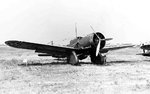
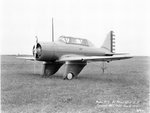
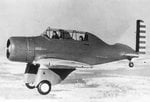
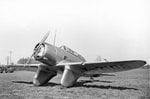
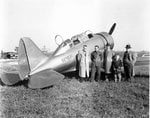
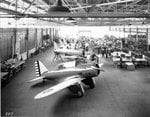
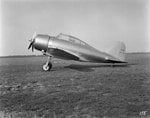
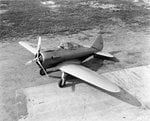
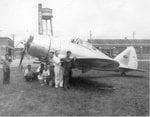
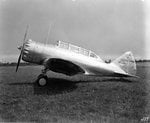
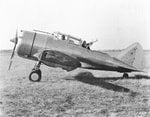
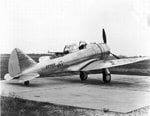
    Seversky BT-8

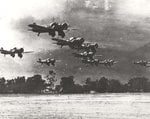
    The origins of the P-35 trace back to the Seversky SEV-3 three-seat amphibian, designed by Alexander Kartveli, Seversky's chief designer and Seversky's first aircraft. The SEV-3 first flew in June 1933 and was developed into the Seversky BT-8 basic trainer, 30 of which were ordered by the United States Army Air Corps (USAAC) in 1935.
    Attached Thumbnails Attached Thumbnails USAAC: Pre-war aircrafts-seversky-bt-8-0012.jpg   USAAC: Pre-war aircrafts-seversky-bt-8-001.jpg  

    USAAC: Pre-war aircrafts-seversky-bt-8-002.jpg   USAAC: Pre-war aircrafts-seversky-bt-8-003.jpg  

    USAAC: Pre-war aircrafts-seversky-bt-8-004.jpg   USAAC: Pre-war aircrafts-seversky-bt-8-005.jpg  

    USAAC: Pre-war aircrafts-seversky-bt-8-006.jpg   USAAC: Pre-war aircrafts-seversky-bt-8-007.jpg  

    USAAC: Pre-war aircrafts-seversky-bt-8-008.jpg   USAAC: Pre-war aircrafts-seversky-bt-8-009.jpg  

    USAAC: Pre-war aircrafts-seversky-bt-8-0010.jpg   USAAC: Pre-war aircrafts-seversky-bt-8-0011.jpg  


+ Reply to Thread
Page 1 of 3 1 2 3 LastLast

Bookmarks

Posting Permissions

  • You may not post new threads
  • You may not post replies
  • You may not post attachments
  • You may not edit your posts

1 2 3 4 5 6 7 8 9 10 11 12 13 14 15 16 17 18 19 20 21 22 23 24 25 26 27 28 29 30 31 32 33 34 35 36 37 38 39 40 41 42 43 44 45 46 47 48 49 50 51 52 53 54 55 56 57 58 59 60 61 62 63 64 65 66 67 68 69 70 71 72 73 74 75 76 77 78 79 80 81 82 83 84 85 86